
Seed Phrase

Seed Phrase: Your Crypto Recovery Backup

Your seed phrase is your crypto’s ultimate backup. More important than passwords, more valuable than the device itself.

A seed phrase is a list of 12-24 words that can restore access to all your cryptocurrency wallets and funds. It’s your master key – lose it and your crypto is gone forever. Write it down and guard it with your life.

How Seed Phrases Work

When you create a crypto wallet, it generates a unique seed phrase from a list of 2,048 possible words. This phrase mathematically generates all your private keys and wallet addresses.

Think of it as a master password that recreates your entire wallet on any compatible device. Your actual wallet app is just an interface – the seed phrase IS your wallet.

These 12-24 words contain enough entropy to make guessing impossible. There are more possible combinations than atoms in the observable universe.
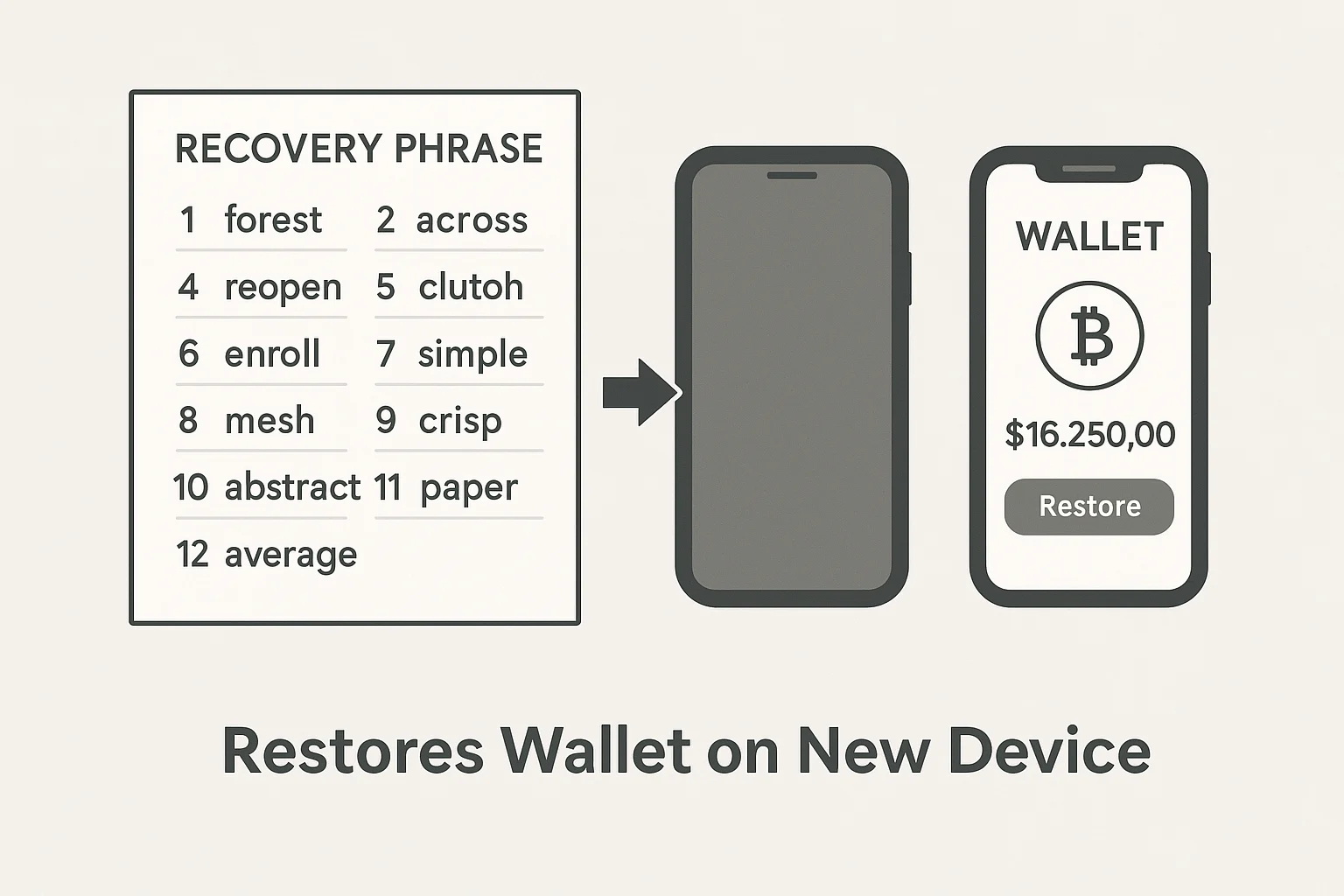
Seed phrase recovery sheet showing 12 words used to restore a crypto wallet on a new device

Real-World Examples

  • Lost phone? Enter your seed phrase into a new wallet app and everything’s restored
  • Hardware wallet breaks? Use your seed phrase with any compatible device
  • Inheritance planning – Your seed phrase lets family access your crypto

Why Beginners Should Care

Seed phrases are your crypto insurance policy. Hardware can break, software can corrupt, but a properly stored seed phrase recovers everything.

Never store seed phrases digitally. Write them on paper or engrave them on metal. Never photograph them. Never store them in cloud services or password managers.

Many crypto users make small purchases to practice wallet recovery with their seed phrase before trusting it with larger amounts.

Related Terms: Private Key, Hardware Wallet, Wallet Recovery, Cold Storage

Back to Crypto Glossary

Similar Posts

  • Layer 1

    Layer 1: The Foundation Blockchain Layer 1 refers to the base blockchain protocol that processes transactions and maintains consensus. It’s the foundation that everything else builds on top of. Layer 1 (L1) is the main blockchain network that handles transaction processing, consensus, and security independently without relying on other blockchains. These are the foundational networks…

  • EVM (Ethereum Virtual Machine)

    EVM (Ethereum Virtual Machine): The World Computer The EVM is the runtime environment where Ethereum smart contracts execute. It’s like having one giant computer that runs the same programs across thousands of machines worldwide. The Ethereum Virtual Machine (EVM) is a decentralized computing environment that executes smart contracts on the Ethereum blockchain. Every Ethereum node…

  • Wallet Security

    Wallet Security: Protecting Cryptocurrency AccessWallet security encompasses all measures taken to protect cryptocurrency wallets from theft, loss, or unauthorized access. It's like comprehensive security for your digital bank account.Wallet security refers to practices, technologies, and procedures used to protect cryptocurrency wallets and their contents from various threats including hacking, phishing, and user error. Proper security is…

  • Public Ledger

    Public Ledger: Transparent Transaction Records Public ledgers record all transactions transparently where anyone can verify the complete history of asset movements. It’s like having a bank statement that everyone can read but no one can forge. A public ledger is a distributed database that records all transactions transparently, allowing anyone to verify and audit the…

  • Base Layer

    Base Layer: Blockchain FoundationThe base layer is the underlying blockchain protocol that provides fundamental functionality like consensus, security, and transaction processing. It's the foundation that everything else builds upon.Base layer refers to the core blockchain protocol that handles basic functions like transaction validation, consensus, and security without relying on external systems. This is Layer 1 infrastructure…

  • Tokenization

    Tokenization: Converting Assets into Digital Tokens Tokenization transforms real-world assets into blockchain-based tokens that can be traded, divided, and managed digitally. It’s like turning everything into tradeable game pieces. Tokenization is the process of converting ownership rights to assets into digital tokens on a blockchain. This enables fractional ownership, easier trading, and programmable functionality for…