
Cold Storage

Cold Storage: Maximum Security for Crypto Assets

Cold storage keeps cryptocurrency private keys completely offline, away from any internet connection. It’s the digital equivalent of storing gold bars in a bank vault rather than your wallet.

Cold storage refers to keeping cryptocurrency private keys on devices or media that have never been connected to the internet. This creates an “air gap” that makes remote hacking impossible since attackers cannot access offline storage remotely.

How Cold Storage Works

Offline key generation creates private keys on devices that have never touched the internet, ensuring the keys cannot be intercepted during creation.

Physical security becomes paramount since attackers would need physical access to steal funds, shifting security from cybersecurity to traditional physical protection.

Transaction signing happens offline, with signed transactions transferred to online devices for broadcast without exposing private keys to internet-connected systems.
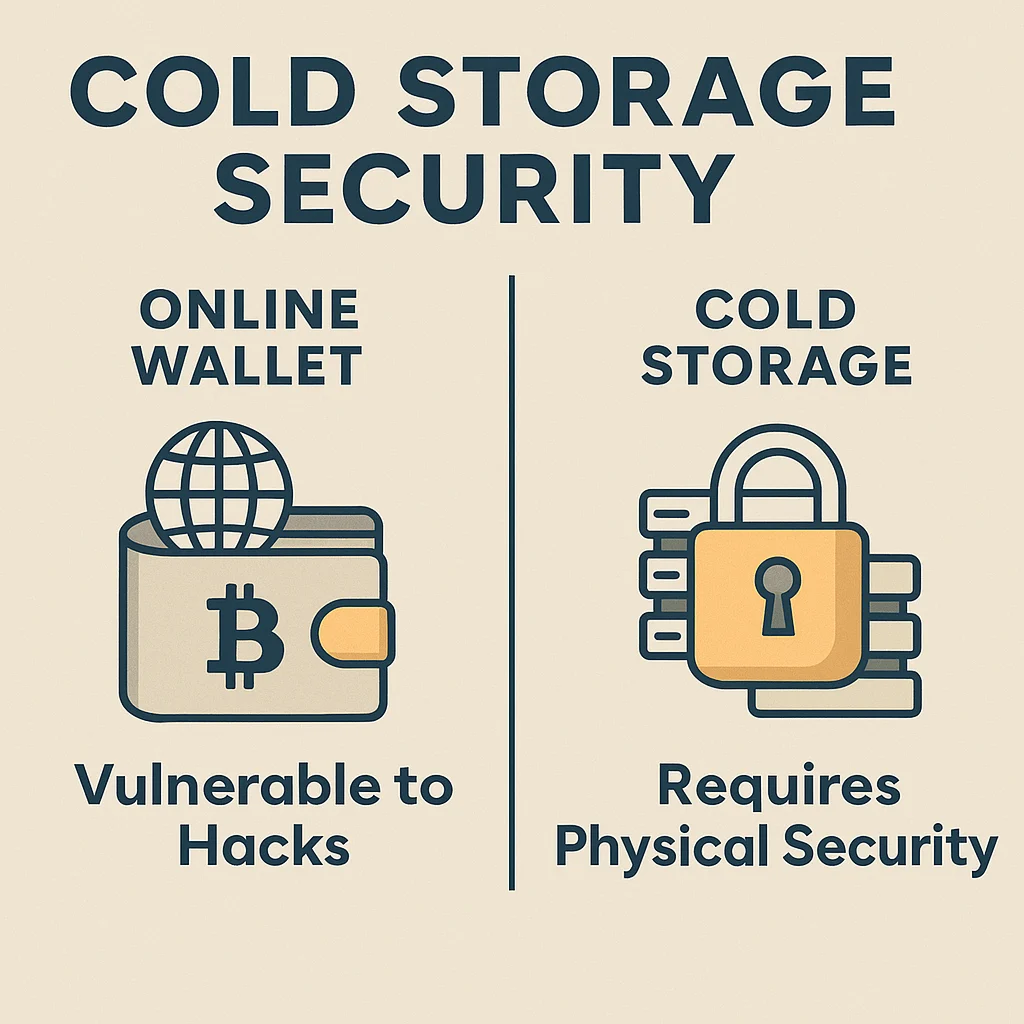
Infographic comparing online wallet vulnerability to hacks with cold storage requiring physical security for crypto assets

Real-World Examples

  • Hardware wallets like Ledger and Trezor provide convenient cold storage for most users
  • Paper wallets store private keys as printed QR codes or written text
  • Steel backups engrave seed phrases on metal plates for fire and flood resistance

Why Beginners Should Care

Exchange hacks happen regularly, making cold storage essential for significant cryptocurrency holdings that you can’t afford to lose completely.

Insurance limitations mean most cold storage losses from user error or theft are not recoverable, making proper setup and backup procedures critical.

Convenience trade-offs exist since cold storage requires more steps for transactions compared to hot wallets, but security benefits usually justify the inconvenience.

Related Terms: Hardware Wallet, Hot Wallet, Private Key, Seed Phrase

Back to Crypto Glossary

Similar Posts

  • Liquidity Pool

    Liquidity Pool: The Fuel That Powers DEX Trading Liquidity pools are why decentralized exchanges work. They’re shared pots of tokens that enable trading without traditional buyers and sellers. A liquidity pool is a collection of tokens locked in a smart contract that provides liquidity for decentralized trading. Instead of matching buy and sell orders, traders…

  • AI Coins

    AI Coins: Cryptocurrency Meets Artificial Intelligence AI coins are cryptocurrencies focused on artificial intelligence applications, data marketplaces, or computational resources for machine learning. They’re betting that AI and crypto will merge into something bigger than both. AI coins are cryptocurrencies that facilitate artificial intelligence development, deployment, or monetization through decentralized networks. These tokens enable AI…

  • Structured Products

    Structured Products: Complex Financial InstrumentsStructured products combine multiple financial instruments to create customized risk-return profiles for specific investment objectives. They're like elaborate recipe combinations that mix different financial ingredients to create unique investment flavors tailored to particular tastes.Structured products are complex financial instruments that combine derivatives, traditional assets, or cryptocurrencies to create customized investment products…

  • Rehypothecation

    Rehypothecation: Reusing Collateral Multiple Times Rehypothecation involves using the same collateral to back multiple obligations simultaneously. It’s like using your house as collateral for three different loans at the same time. Rehypothecation is the practice of using customer assets as collateral for the institution’s own borrowing or trading activities. In DeFi, this creates leverage and…

  • Smart Contract Analysis

    Smart Contract Analysis: Code Security EvaluationSmart contract analysis involves examining blockchain code for vulnerabilities, bugs, and security issues before deployment. It's like having a building inspector check the foundation before construction begins.Smart contract analysis refers to the systematic examination of smart contract code to identify security vulnerabilities, logic errors, and potential attack vectors. This process helps…

  • Proof of Work (PoW)

    Proof of Work (PoW): Bitcoin’s Security Model Proof of Work is how Bitcoin solves the double-spending problem without trusted authorities. It’s energy-intensive by design – that’s a feature, not a bug. Proof of Work is a consensus mechanism where miners compete to solve computationally difficult puzzles to validate transactions and create new blocks. The winning…