
Token Lockup

Token Lockup: Preventing Early Selling

Token lockups prevent allocated tokens from being sold or transferred for specific time periods. It’s like putting your poker winnings in a time-locked safe to prevent impulse spending.

Token lockup is a mechanism that prevents token holders from selling, transferring, or accessing their tokens until predetermined conditions are met. Lockups typically use smart contracts to enforce restrictions automatically.

How Token Lockups Work

Smart contract enforcement makes lockup periods technically immutable, preventing even token holders from accessing funds before unlock conditions are satisfied.

Various trigger types include time-based unlocks, milestone achievements, governance votes, or other on-chain events that automatically release tokens.

Gradual release options may unlock tokens in tranches rather than all at once, smoothing potential market impact from large sales.
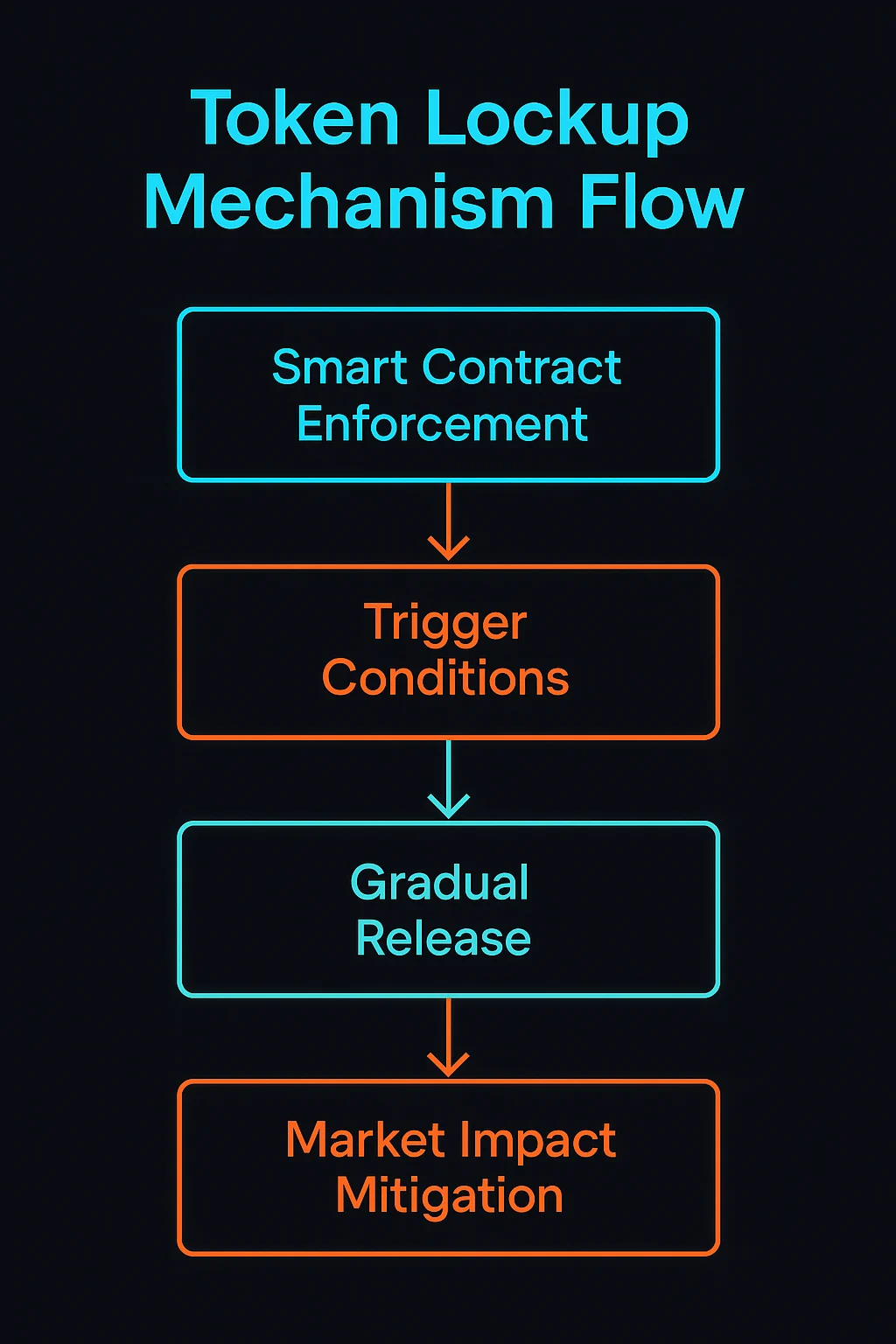
Token lockup flowchart showing smart contract enforcement, trigger conditions, gradual token release, and market impact mitigation

Real-World Examples

  • Team token lockups prevent founders from immediately selling allocations after public token launches
  • Liquidity provider rewards often have lockup periods to ensure continued platform participation
  • Investor protections through lockups that prevent early whale dumping on retail buyers

Why Beginners Should Care

Price stability benefits from lockups that prevent large holders from immediately dumping tokens and crashing prices after launches.

Commitment signaling as teams and investors willing to accept lockups demonstrate confidence in long-term project success.

Unlock events create predictable supply increases that may pressure prices, requiring investors to monitor lockup expiration schedules.

Related Terms: Vesting Schedule, Smart Contract, Supply Shock, Market Stability

Back to Crypto Glossary

Similar Posts

  • Collection

    Collection: Grouped NFT SeriesA collection is a group of related NFTs that share common themes, artwork, or attributes. It's like a series of trading cards or stamps that belong to the same set.A collection refers to a group of related NFTs that share common characteristics, themes, or attributes, typically created by the same artist or…

  • Cryptographic Proof

    Cryptographic Proof: Mathematical VerificationCryptographic proof provides mathematical certainty about the validity of information without revealing sensitive details. It's like proving you know a secret without actually telling anyone what the secret is.Cryptographic proof refers to mathematical techniques that verify the authenticity, integrity, or validity of information using cryptographic methods. These proofs enable trust and verification without…

  • Transaction Signing

    Transaction Signing: Authorizing Blockchain OperationsTransaction signing uses private keys to create cryptographic signatures that authorize blockchain transactions. It's like signing a check with an unforgeable signature that proves you approved the payment.Transaction signing is the process of creating cryptographic signatures using private keys to authorize and authenticate blockchain transactions. This process proves ownership and prevents unauthorized…

  • Recursive Proofs

    Recursive Proofs: Self-Verifying Cryptographic SystemsRecursive proofs are cryptographic proofs that can verify other proofs of the same type, enabling compression and scalability. They're like mathematical matryoshka dolls where each proof contains and verifies other proofs.Recursive proofs are cryptographic systems where proofs can verify other instances of the same proof system, enabling compression of multiple proofs…

  • DCA

    DCA: Dollar Cost Averaging Investment StrategyDCA (Dollar Cost Averaging) involves making regular purchases of cryptocurrency regardless of price to reduce timing risk. It's like buying groceries on the same day each week instead of trying to predict when prices will be lowest.Dollar Cost Averaging (DCA) is an investment strategy that involves purchasing cryptocurrency at regular…

  • MEV (Maximal Extractable Value)

    MEV (Maximal Extractable Value): The Hidden Tax on DeFi MEV is the extra profit that miners and validators can extract by reordering, including, or excluding transactions within blocks. It’s like cutting in line at the blockchain cafeteria. Maximal Extractable Value (MEV) is the additional profit that block producers can capture by strategically ordering transactions, beyond…