
Chain Reorg (Reorganization)

Chain Reorg (Reorganization): Blockchain History Changes

Chain reorgs occur when a blockchain adopts a different version of transaction history, potentially reversing confirmed transactions. It’s like time travel, but messier and more expensive.

A chain reorganization (reorg) happens when a blockchain network adopts an alternative chain of blocks as the canonical history, potentially reversing previously confirmed transactions. This can occur due to network splits, competing miners, or consensus failures.

How Chain Reorgs Work

Competing chains develop when different groups of miners or validators work on different versions of blockchain history simultaneously.

Longest chain rule (or other consensus mechanisms) eventually determines which chain becomes official, potentially orphaning blocks from the alternative chain.

Transaction reversal affects any transactions that were included in orphaned blocks, requiring them to be re-confirmed in the new canonical chain.
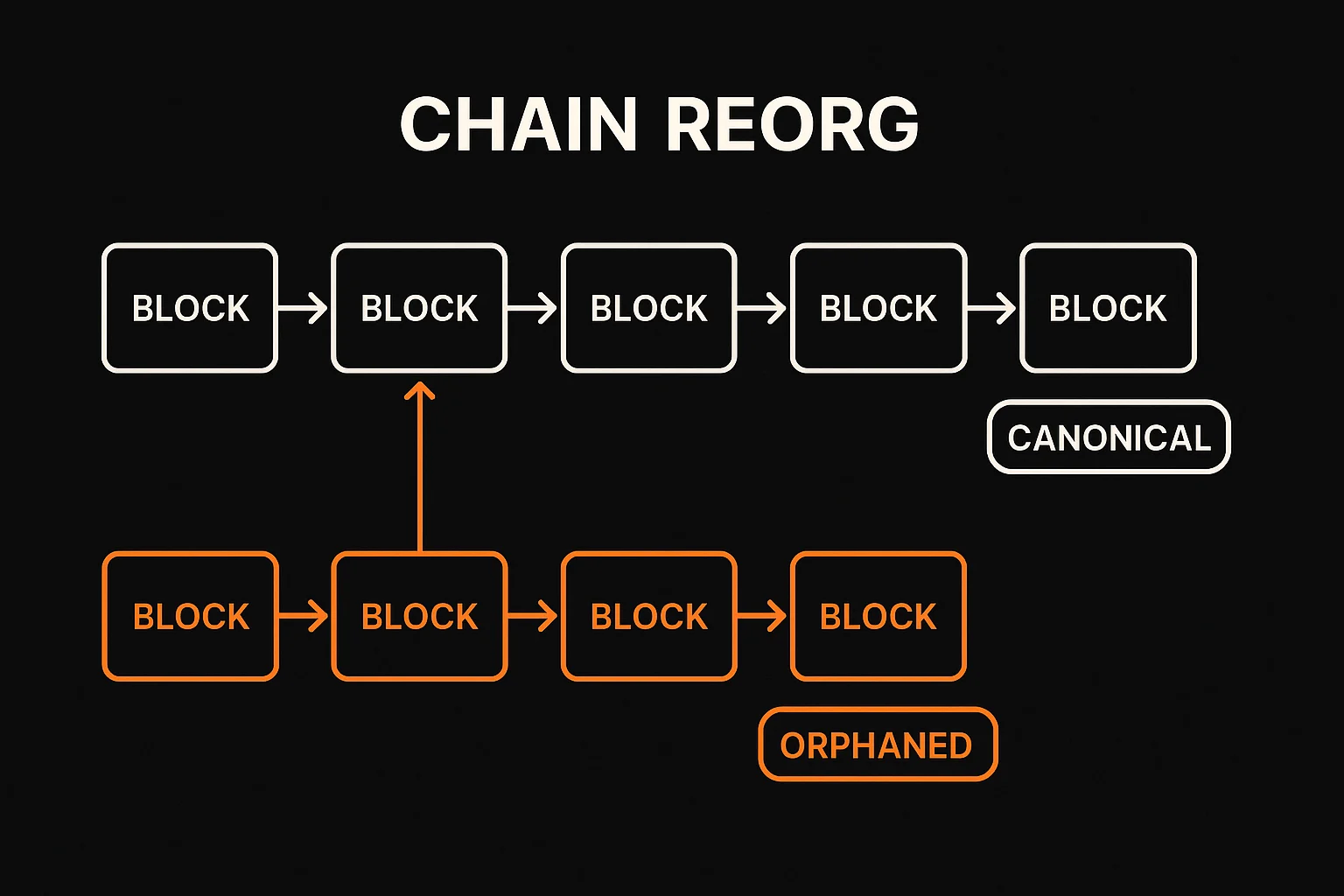
Chain reorganization diagram showing canonical blockchain branch versus orphaned competing branch

Real-World Examples

  • Ethereum Classic experienced deep reorgs during 51% attacks that reversed thousands of blocks
  • Bitcoin Cash has had several reorgs during periods of hash rate instability
  • Polygon faced a 157-block reorg in 2023 due to infrastructure issues

Why Beginners Should Care

Confirmation security requires waiting for multiple block confirmations to reduce the risk of transaction reversal from reorgs.

Exchange impacts as platforms may halt deposits/withdrawals during suspected reorgs to prevent double-spending attacks.

Network stability indicators include reorg frequency and depth, which signal overall blockchain health and security.

Related Terms: 51% Attack, Block Confirmation, Consensus Mechanism, Double Spending

Back to Crypto Glossary

Similar Posts

  • Floor Price

    Floor Price: The Cheapest Entry Point Floor price is the lowest price you can buy into an NFT collection. It’s the most watched metric in NFT trading and often determines a project’s perceived value. Floor price is the lowest listed price for any NFT in a collection on marketplaces. It represents the minimum cost to…

  • Delegation

    Delegation: Assigning Voting or Staking RightsDelegation allows token holders to assign their voting power or staking rights to other participants while retaining ownership. It's like giving someone your vote without giving them your tokens.Delegation refers to assigning voting rights, staking authority, or other token-based powers to third parties while maintaining ownership of the underlying tokens. This…

  • Ethereum Compatibility

    Ethereum Compatibility: Supporting Ethereum StandardsEthereum compatibility enables blockchain networks to run Ethereum applications and support Ethereum-based tools without modification. It's like having different computers that can all run the same software programs.Ethereum compatibility refers to blockchain networks' ability to support Ethereum virtual machine code, development tools, and application standards without requiring modifications. This enables easy migration…

  • Token Allocation

    Token Allocation: Distributing Digital AssetsToken allocation determines how cryptocurrency tokens are distributed among different stakeholders like teams, investors, and communities. It's the blueprint for who gets what in crypto projects.Token allocation refers to the distribution plan for cryptocurrency tokens among various stakeholder groups including development teams, early investors, community members, and ecosystem development funds. This distribution…

  • Circulating Supply

    Circulating Supply: Tokens Available for TradingCirculating supply represents the number of cryptocurrency tokens currently available for public trading and use. It's like counting how much money is actually in circulation versus locked away.Circulating supply refers to the number of cryptocurrency tokens that are publicly available and actively trading in the market. This excludes tokens that are…

  • FOMO (Fear of Missing Out)

    FOMO: The Psychology That Drives Crypto Markets FOMO (Fear of Missing Out) is responsible for more bad crypto decisions than any technical analysis could prevent. It’s the emotional trap that turns rational people into panic buyers. FOMO is the anxiety that others are experiencing rewarding experiences from which one is absent. In crypto, it manifests…