
Floor Price

Floor Price: The Cheapest Entry Point

Floor price is the lowest price you can buy into an NFT collection. It’s the most watched metric in NFT trading and often determines a project’s perceived value.

Floor price is the lowest listed price for any NFT in a collection on marketplaces. It represents the minimum cost to own any piece from that collection, regardless of traits or rarity.

How Floor Price Works

Market sentiment drives floor prices up and down. Positive news, celebrity endorsements, or utility announcements can spike floors. Negative events or broader market downturns crash them.

Supply and demand fundamentals apply. Collections with strong holder communities and low listing rates maintain higher floors than projects where everyone’s trying to sell.

Trait rarity creates price tiers above floor. While floor represents the cheapest NFTs, rare traits can sell for 10x-100x floor price.
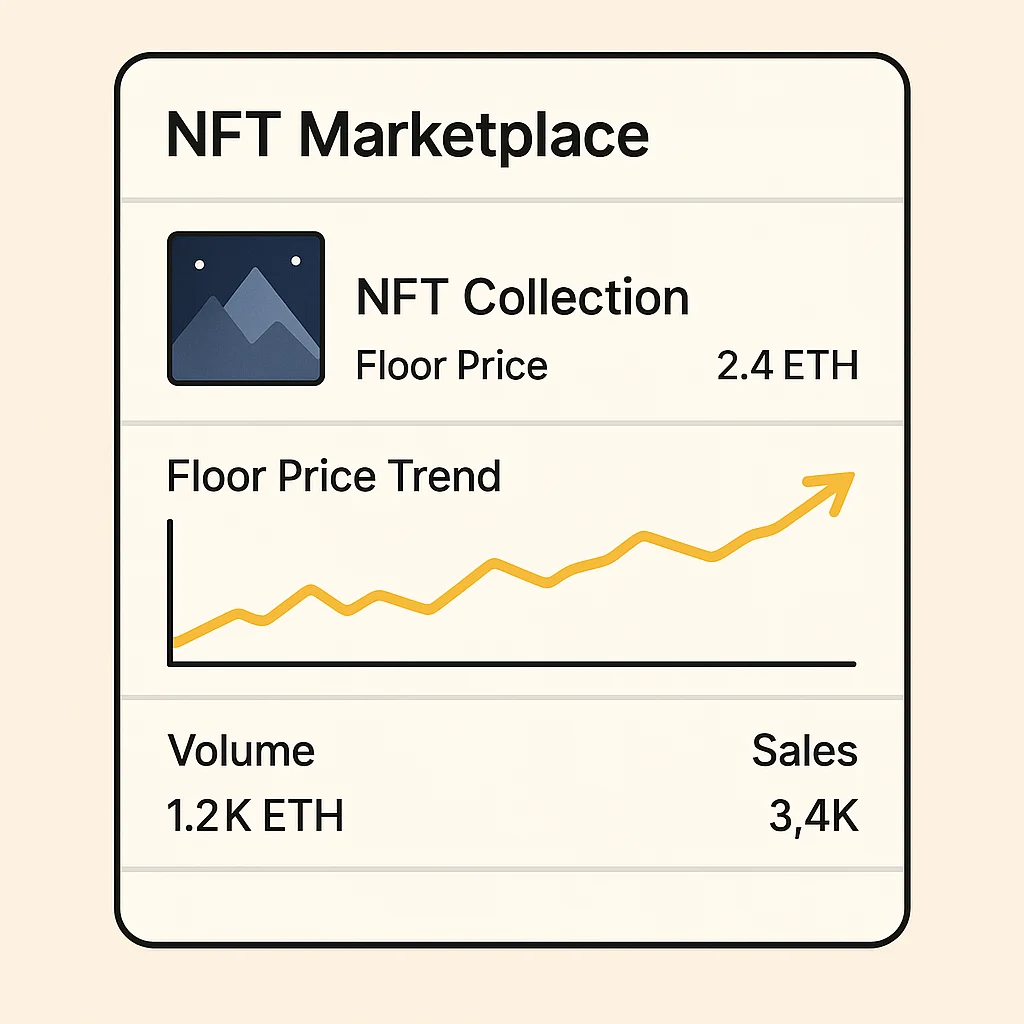
NFT marketplace interface showing collection name, current floor price, price trend chart, and volume and sales data

Real-World Examples

  • Bored Apes floor price peaked at 150+ ETH, now trades around 30-40 ETH
  • CryptoPunks maintain high floors due to historical significance and scarcity
  • Newer collections often see 90%+ floor price declines from mint price

Why Beginners Should Care

Floor price reflects market confidence in a project’s long-term value. Consistently declining floors usually signal community abandonment and project failure.

Don’t chase floors during rapid increases – you’re often buying near temporary peaks. Similarly, rapidly crashing floors rarely indicate good buying opportunities.

Focus on collections with strong communities, real utility, and active development rather than purely speculative floor price movements.

Related Terms: NFT, Marketplace, Rarity, Collection

Back to Crypto Glossary

Similar Posts

  • Rug Pull

    Rug Pull: When Projects Disappear With Your Money Rug pulls are crypto’s version of old-fashioned exit scams. Developers build hype, collect investor money, then vanish into the digital night. A rug pull is when cryptocurrency project developers abandon the project and steal investor funds. The term comes from “pulling the rug out” from under investors…

  • Block Reward

    Block Reward: Miner and Validator Compensation Block rewards are the cryptocurrency payments that miners and validators receive for successfully adding new blocks to the blockchain. It’s how networks incentivize security without charging transaction fees. Block reward is the amount of cryptocurrency awarded to miners or validators for successfully creating and validating a new block on…

  • DPoS

    DPoS: Democratic Blockchain GovernanceDelegated Proof of Stake (DPoS) is a consensus mechanism where token holders vote for representatives who validate transactions on their behalf. It's like electing politicians to make decisions for the community.Delegated Proof of Stake (DPoS) is a consensus mechanism where token holders vote for a limited number of delegates who are responsible…

  • Capitulation

    Capitulation: Market Surrender and Mass SellingCapitulation occurs when investors give up hope and sell their holdings en masse, often marking market bottoms. It's like throwing in the towel when everything seems hopeless.Capitulation refers to the point where investors abandon hope and sell their cryptocurrency holdings in large volumes, typically occurring near market bottoms after prolonged…

  • Cross-Chain Messaging

    Cross-Chain Messaging: Inter-Blockchain Communication Cross-chain messaging enables smart contracts on different blockchains to communicate and trigger actions across networks. It’s like having a universal translator for blockchain conversations. Cross-chain messaging allows smart contracts on different blockchain networks to send data, trigger functions, and coordinate actions across multiple chains. This enables true interoperability beyond simple asset…

  • Smart Contract Analysis

    Smart Contract Analysis: Code Security EvaluationSmart contract analysis involves examining blockchain code for vulnerabilities, bugs, and security issues before deployment. It's like having a building inspector check the foundation before construction begins.Smart contract analysis refers to the systematic examination of smart contract code to identify security vulnerabilities, logic errors, and potential attack vectors. This process helps…