
Block Reward

Block Reward: Miner and Validator Compensation

Block rewards are the cryptocurrency payments that miners and validators receive for successfully adding new blocks to the blockchain. It’s how networks incentivize security without charging transaction fees.

Block reward is the amount of cryptocurrency awarded to miners or validators for successfully creating and validating a new block on the blockchain. These rewards come from newly minted tokens and transaction fees included in the block.

How Block Rewards Work

New token creation through block rewards is often the primary way cryptocurrency enters circulation, following predetermined emission schedules rather than arbitrary printing.

Halving events reduce block rewards periodically to control inflation and maintain scarcity. Bitcoin halves rewards every 210,000 blocks, roughly every four years.

Fee supplements add transaction fees to base block rewards, creating variable compensation based on network usage and user willingness to pay for priority processing.
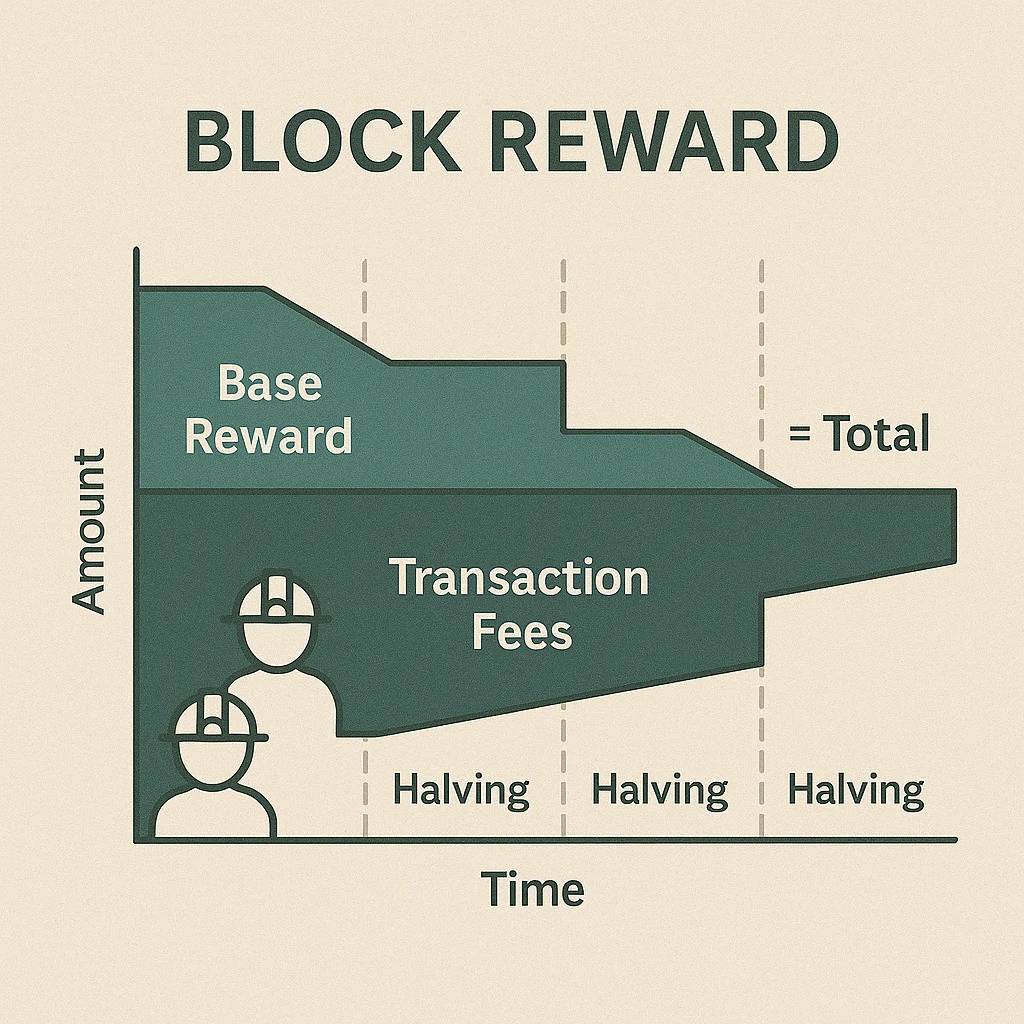
Infographic showing how block rewards are composed of a base reward plus transaction fees, with halving events over time

Real-World Examples

  • Bitcoin currently awards 6.25 BTC per block (next halving to 3.125 BTC expected in 2024)
  • Ethereum switched from mining rewards to staking rewards of ~6% annually
  • Litecoin follows Bitcoin’s model with 12.5 LTC rewards that halve periodically

Why Beginners Should Care

Supply inflation from block rewards affects token economics and long-term value. Higher inflation rates can pressure prices downward if adoption doesn’t keep pace.

Network security depends on adequate block rewards to incentivize miners or validators. Insufficient rewards can lead to reduced security and potential attacks.

Investment timing around halving events often affects price speculation as reduced supply inflation meets existing demand.

Related Terms: Mining, Halving, Staking Rewards, Token Economics

Back to Crypto Glossary

Similar Posts

  • Private Key Security

    Private Key Security: Protecting Your Digital IdentityPrivate key security involves protecting the cryptographic keys that control cryptocurrency access from theft, loss, or compromise. It's like safeguarding the master key to your digital vault.Private key security encompasses all practices and technologies used to protect cryptographic private keys from unauthorized access, theft, or loss. These keys are the…

  • SegWit

    SegWit: Bitcoin's Transaction Efficiency UpgradeSegregated Witness (SegWit) is a Bitcoin protocol upgrade that increased transaction capacity by separating signature data from transaction data. It's like reorganizing luggage to fit more in the same space.SegWit (Segregated Witness) is a Bitcoin protocol upgrade that moves signature data outside the main transaction block, effectively increasing block capacity and…

  • Smart Contract Compatibility

    Smart Contract Compatibility: Cross-Platform Code ExecutionSmart contract compatibility enables applications to run across different blockchain networks without modification. It's like writing software that works on both Windows and Mac without changes.Smart contract compatibility refers to the ability of smart contract code to execute on multiple blockchain platforms without requiring rewrites or significant modifications. This enables broader…

  • Consensus Participation

    Consensus Participation: Supporting Network SecurityConsensus participation involves actively contributing to blockchain network security and decision-making through validation, voting, or other consensus mechanisms. It's like being a jury member for digital transactions.Consensus participation refers to active involvement in blockchain network consensus processes through validation, staking, mining, or other mechanisms that help secure networks and process transactions. Participants…

  • FUD (Fear, Uncertainty, Doubt)

    FUD: Fear, Uncertainty, and Doubt FUD is FOMO’s evil twin. While FOMO makes you buy at peaks, FUD makes you sell at bottoms. Understanding FUD helps you think clearly when markets panic. FUD stands for Fear, Uncertainty, and Doubt – negative sentiment spread to influence crypto prices downward. Sometimes it’s legitimate concerns, often it’s manufactured…

  • WAGMI (We’re All Gonna Make It)

    WAGMI: Crypto’s Battle Cry WAGMI (We’re All Gonna Make It) is crypto’s rallying cry during tough times. It represents community solidarity and shared optimism about long-term success. WAGMI stands for “We’re All Gonna Make It” – a popular crypto community phrase expressing collective optimism about future success despite current market conditions. It originated from bodybuilding…