
FUD (Fear, Uncertainty, Doubt)

FUD: Fear, Uncertainty, and Doubt

FUD is FOMO’s evil twin. While FOMO makes you buy at peaks, FUD makes you sell at bottoms. Understanding FUD helps you think clearly when markets panic.

FUD stands for Fear, Uncertainty, and Doubt – negative sentiment spread to influence crypto prices downward. Sometimes it’s legitimate concerns, often it’s manufactured panic designed to shake out weak hands.

How FUD Works

Legitimate FUD includes real threats like regulatory crackdowns, exchange hacks, or technical vulnerabilities. Smart investors pay attention to genuine risks.

Manufactured FUD comes from competitors, short sellers, or media seeking clicks. They amplify minor issues or spread misleading information to trigger panic selling.

Social media echo chambers amplify both types of FUD. One negative headline becomes a thousand panicked posts, creating self-reinforcing fear cycles.
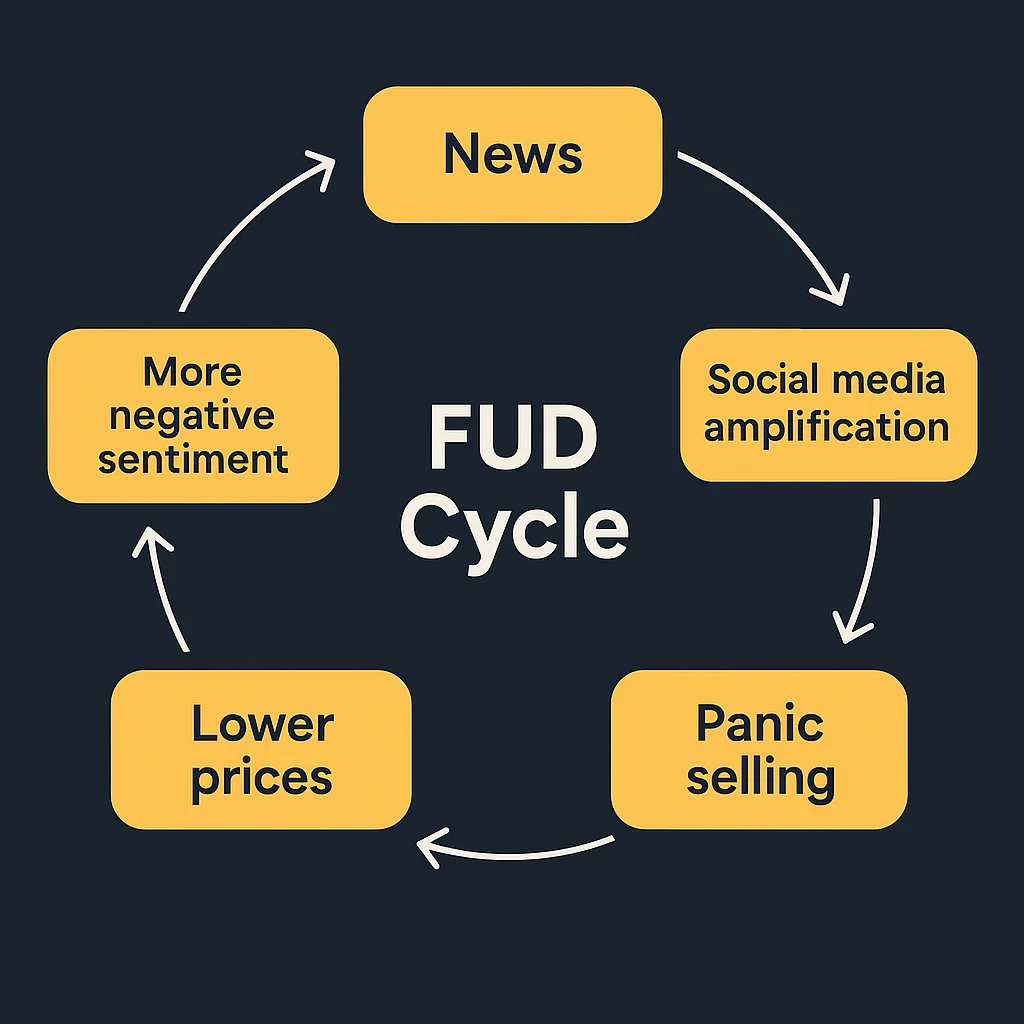
FUD cycle infographic showing news, social media amplification, panic selling, lower prices, and negative sentiment

Real-World Examples

  • China ban news – Recycled every few months, causes temporary price drops
  • Tether collapse fears – Persistent despite ongoing operations
  • Environmental concerns – Bitcoin mining energy usage criticism

Why Beginners Should Care

Learning to distinguish between legitimate concerns and manufactured FUD is crucial for long-term success. Markets overreact to both positive and negative news.

Real risks deserve attention – regulatory changes, technical vulnerabilities, and macroeconomic factors matter. But temporary news cycles often create buying opportunities for patient investors.

Related Terms: FOMO, Bear Market, Paper Hands, Market Manipulation

Back to Crypto Glossary

Similar Posts

  • Cross Chain Communication

    Cross Chain Communication: Blockchain Network MessagingCross-chain communication enables different blockchain networks to exchange information and coordinate actions. It's like having universal translators that help different blockchain languages understand each other.Cross-chain communication refers to protocols and technologies that enable different blockchain networks to exchange data, verify states, and coordinate actions across network boundaries. This enables interoperability and…

  • 51% Attack

    51% Attack: When Consensus Gets Hijacked A 51% attack occurs when a single entity controls the majority of a network’s mining power or stake, allowing them to manipulate transactions and double-spend coins. A 51% attack is when an individual or group controls more than half of a blockchain network’s mining hash rate or staking power,…

  • Marketplace

    Marketplace: Digital Trading PlatformsMarketplaces are platforms where users can buy, sell, and trade digital assets like NFTs, tokens, or services. They're like eBay but for blockchain-based items.A marketplace is a platform that facilitates buying, selling, and trading of digital assets between users, typically including discovery, pricing, and transaction features. These platforms often specialize in specific asset…

  • Price Manipulation

    Price Manipulation: Artificial Market DistortionPrice manipulation involves artificially influencing asset prices through coordinated trading, false information, or market abuse. It's financial fraud adapted for the crypto age.Price manipulation refers to illegal or unethical activities designed to artificially inflate or deflate cryptocurrency prices for profit. These activities exploit market inefficiencies and harm other investors through deceptive practices.How…

  • Shared Security

    Shared Security: Collective Network ProtectionShared security allows multiple blockchain applications or chains to benefit from common security infrastructure rather than maintaining separate validator sets. It's like having a shared security service for multiple buildings.Shared security refers to security models where multiple blockchain networks or applications are protected by a common set of validators or consensus…

  • Liquidation Bot

    Liquidation Bot: Automated Debt Collection Liquidation bots monitor lending protocols for undercollateralized positions and automatically liquidate them for profit. They’re like repo men but for DeFi loans. A liquidation bot is an automated program that monitors DeFi lending protocols for loans that fall below required collateral ratios and triggers liquidations to earn rewards. These bots…