
ATH (All-Time High)

ATH (All-Time High): Peak Performance Markers

ATH represents the highest price a cryptocurrency has ever reached. It’s the mountain top that everyone remembers and hopes to see again.

All-Time High (ATH) is the highest price level that a cryptocurrency has ever achieved throughout its entire trading history. ATHs become psychological resistance levels and reference points for measuring performance.

How ATH Impacts Markets

Psychological resistance forms around previous ATH levels. Many traders take profits near old ATHs, creating selling pressure that can halt or reverse upward momentum.

Media attention peaks around ATH breakthroughs. Breaking to new highs generates headlines and attracts new investors, often fueling further price increases.

FOMO intensifies as assets approach or break ATHs. Retail investors feel urgency to buy before missing out on further gains, often leading to overextended rallies.
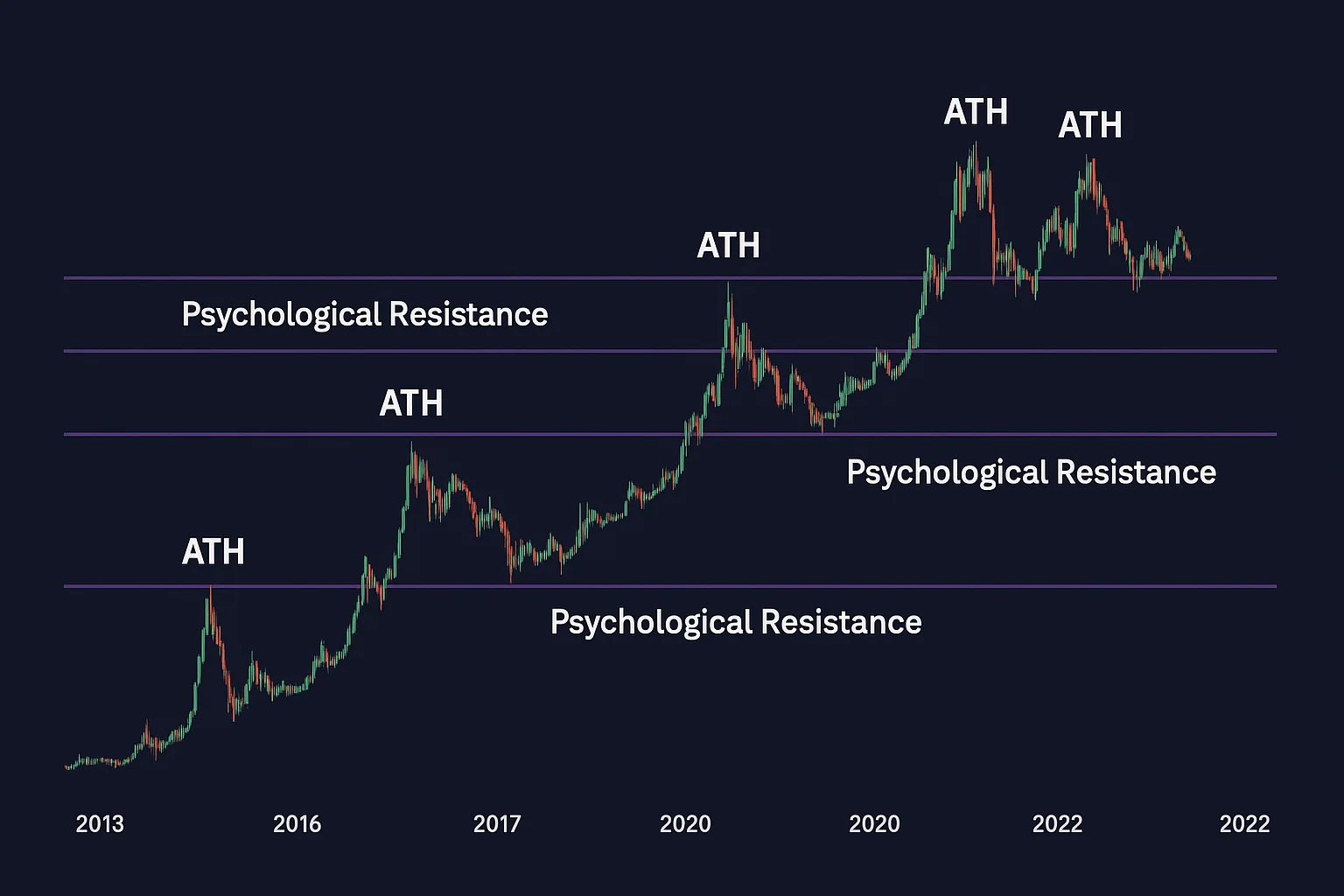
Price chart showing multiple cryptocurrency ATH levels over time with psychological resistance zones

Real-World Examples

  • Bitcoin’s $69,000 ATH in November 2021 remains a key resistance level
  • Ethereum’s $4,800 ATH created a ceiling that took months to break
  • Altcoin ATHs from 2021 remain 80-90% above current prices for most tokens

Why Beginners Should Care

ATHs mark major tops where early investors take profits and new buyers often get trapped. Buying at or near ATHs frequently results in significant losses.

Dollar cost averaging performs better than trying to time ATH breakouts. Consistent buying during accumulation phases beats FOMO buying at peaks.

Use ATH levels as reference points for profit-taking strategies rather than entry signals for new positions.

Related Terms: FOMO, Resistance, Bull Market, Profit Taking

Back to Crypto Glossary

Similar Posts

  • Dust

    Dust: Tiny Amounts That Clog Networks Dust refers to cryptocurrency amounts so small they’re not economically viable to spend due to transaction fees exceeding their value. It’s like having pennies that cost dollars to use. Dust consists of very small amounts of cryptocurrency that cost more in transaction fees to send than their actual value….

  • Mixing Service

    Mixing Service: Shuffling Coins for Privacy Mixing services (or tumblers) pool cryptocurrencies from multiple users then redistribute different coins to break transaction links. It’s like exchanging your marked bills for unmarked ones. A mixing service is a privacy tool that pools cryptocurrencies from multiple users and redistributes them to break the link between sending and…

  • Community

    Community: Decentralized Project StakeholdersCommunity refers to the users, developers, investors, and supporters who participate in and contribute to cryptocurrency projects. They're like the citizens of a digital nation working toward common goals.Community encompasses all stakeholders who participate in cryptocurrency projects including users, developers, investors, validators, and supporters who collectively contribute to project success. Strong communities drive…

  • VPN

    VPN: Virtual Private Network for Crypto PrivacyA VPN creates secure, encrypted connections between your device and the internet to protect privacy and bypass restrictions. It's like having a private tunnel through the public internet highway.A Virtual Private Network (VPN) encrypts internet traffic and routes it through remote servers to hide user location and protect online…

  • Leverage

    Leverage: Borrowing Money to Amplify TradesLeverage lets you control larger positions than your actual capital by borrowing funds from exchanges or platforms. It's like using a lever to lift heavy objects – small movements create big effects.Leverage in cryptocurrency trading allows borrowing funds to increase position sizes beyond available capital, amplifying both potential profits and…

  • Execution Layer

    Execution Layer: Transaction Processing EngineThe execution layer handles transaction processing and smart contract execution within blockchain architectures. It's like the engine that actually does the work in a modular blockchain system.The execution layer is responsible for processing transactions, executing smart contracts, and managing state changes within blockchain networks. In modular architectures, this layer can be optimized…