
FOMO (Fear of Missing Out)

FOMO: The Psychology That Drives Crypto Markets

FOMO (Fear of Missing Out) is responsible for more bad crypto decisions than any technical analysis could prevent. It’s the emotional trap that turns rational people into panic buyers.

FOMO is the anxiety that others are experiencing rewarding experiences from which one is absent. In crypto, it manifests as the urgent need to buy tokens that are rapidly increasing in price, often at the worst possible moment.

How FOMO Works in Crypto

Social media amplifies FOMO dramatically. Seeing others post gains from tokens you don’t own creates psychological pressure to join the party, regardless of fundamentals.

FOMO buying typically happens at peaks. When everyone’s talking about a coin and prices are parabolic, that’s usually when retail investors feel the strongest urge to buy.

This emotion-driven buying often coincides with smart money selling, creating the classic “buy high, sell low” pattern that destroys retail wealth.
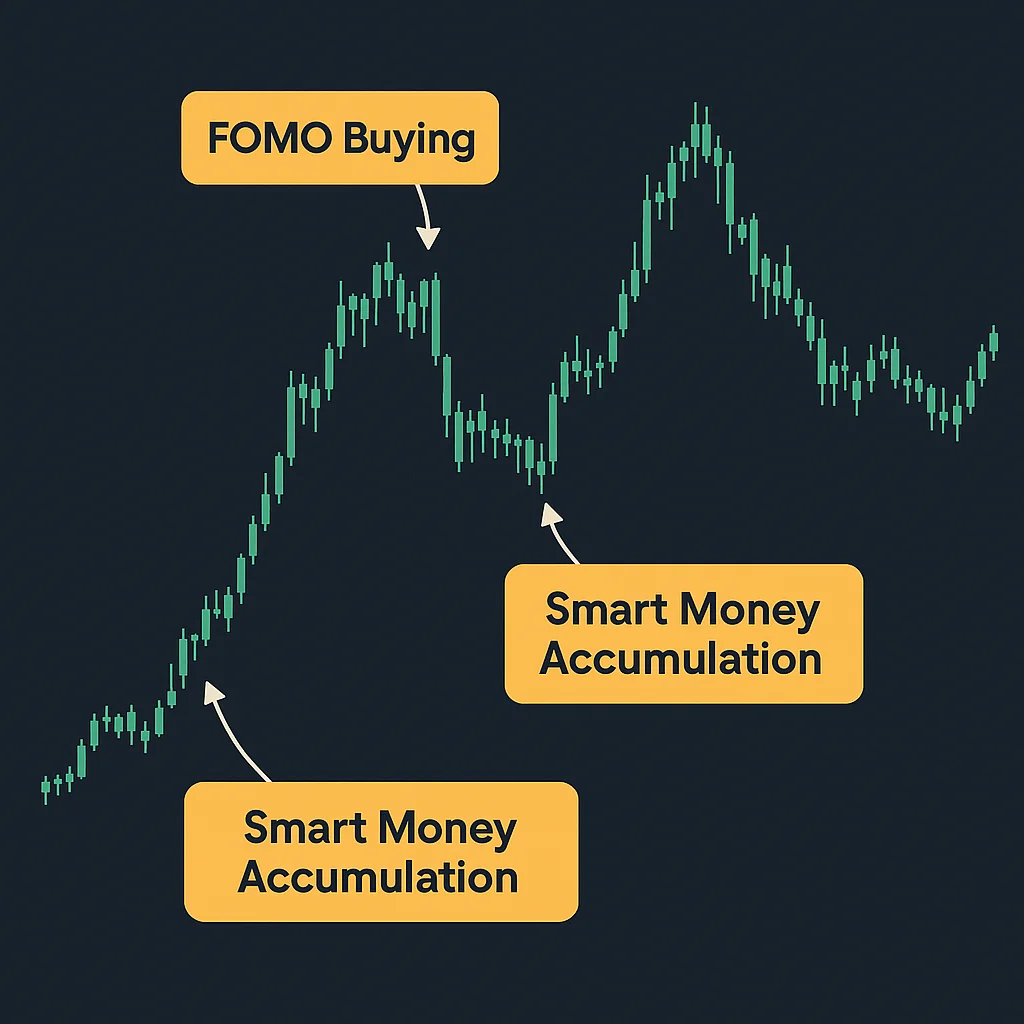
Price chart showing FOMO buying at peaks and smart money accumulation during dips

Real-World Examples

  • GameStop/Dogecoin 2021 – Retail FOMO drove massive price spikes followed by crashes
  • NFT mania – People buying expensive JPEGs at peaks due to social pressure
  • Altcoin season – Rotating FOMO between different “hot” tokens

Why Beginners Should Care

FOMO is your enemy in crypto markets. The time to buy is when nobody’s talking about crypto, not when your barber is giving you trading advice.

Develop systems to counter FOMO – dollar cost averaging, predetermined buy levels, and taking profits systematically. Emotional decisions in volatile markets typically lose money.

Related Terms: FUD, Bull Market, Pump and Dump, Diamond Hands

Back to Crypto Glossary

Similar Posts

  • Regulation

    Regulation: Government Rules for CryptoCryptocurrency regulation involves government rules and oversight for digital assets, exchanges, and blockchain businesses. It's the ongoing battle between innovation and compliance.Regulation refers to government laws, rules, and oversight mechanisms that govern cryptocurrency activities, including trading, taxation, anti-money laundering compliance, and consumer protection. Regulatory approaches vary significantly between jurisdictions.How Crypto Regulation WorksLicensing…

  • Wallet Address

    Wallet Address: Your Cryptocurrency Bank Account NumberA wallet address is a unique identifier that enables receiving cryptocurrency payments. It's like a bank account number that others can send money to, but it's generated from your private keys.A wallet address is a unique alphanumeric string that serves as a destination for cryptocurrency transactions. These addresses are derived…

  • Token Approval

    Token Approval: Granting Spending PermissionToken approval allows smart contracts to spend tokens on behalf of users through explicit permission mechanisms. It's like giving someone permission to use your credit card with specific spending limits.Token approval is a mechanism that grants smart contracts permission to transfer specific amounts of tokens from user wallets without requiring signatures…

  • Merkle Tree

    Merkle Tree: Efficient Data Verification Merkle trees enable efficient verification of large datasets without downloading everything. They’re like having a fingerprint for an entire library that proves any book belongs. A Merkle tree is a binary tree structure where each leaf represents a data element and each branch contains cryptographic hashes of its children. The…

  • Liquidity Pool

    Liquidity Pool: The Fuel That Powers DEX Trading Liquidity pools are why decentralized exchanges work. They’re shared pots of tokens that enable trading without traditional buyers and sellers. A liquidity pool is a collection of tokens locked in a smart contract that provides liquidity for decentralized trading. Instead of matching buy and sell orders, traders…

  • Gas Price

    Gas Price: Cost of Ethereum ComputingGas price determines how much you pay per unit of computational work on Ethereum. It's like setting the hourly rate for blockchain computing services.Gas price is the amount of cryptocurrency (usually measured in gwei) that users are willing to pay for each unit of gas consumed by their Ethereum transactions. Higher…