
Tokenomics

Tokenomics: The Economics of Digital Assets

Tokenomics determines how cryptocurrencies create, distribute, and maintain value over time. It’s the difference between digital money and digital monopoly money.

Tokenomics refers to the economic design and mechanics of a cryptocurrency token, including supply schedules, distribution methods, utility functions, and incentive structures. Good tokenomics align stakeholder interests while bad tokenomics create unsustainable systems that collapse.

How Tokenomics Work

Supply mechanics control how many tokens exist, how fast new ones are created, and whether the total supply is fixed, inflationary, or deflationary over time.

Distribution methods determine who gets tokens and when – through mining, staking, airdrops, team allocations, or public sales. Fair distribution prevents excessive concentration.

Utility design gives tokens practical uses beyond speculation, such as governance voting, fee payments, staking rewards, or access to platform features.
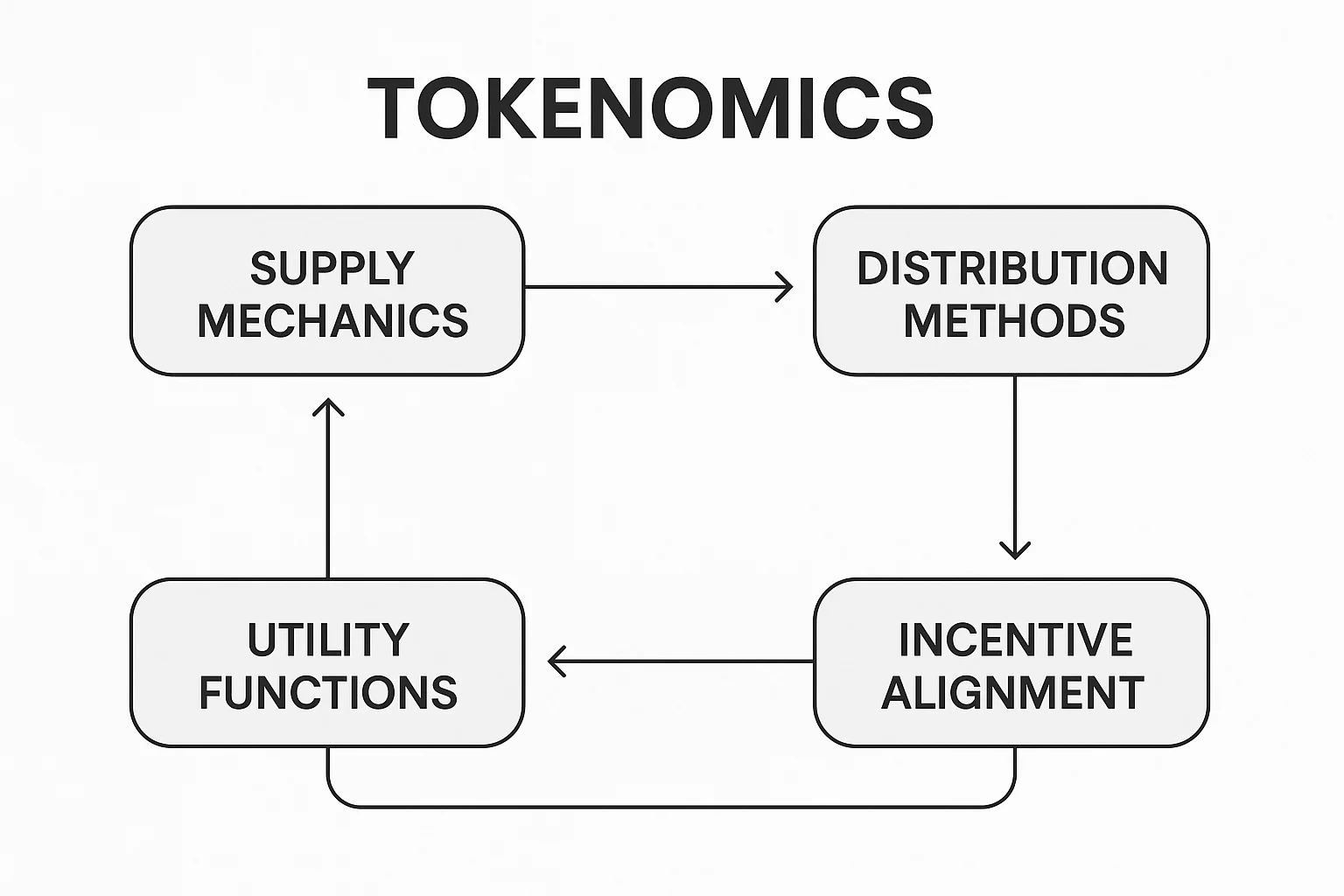
Tokenomics diagram showing interconnected components: supply mechanics, distribution methods, utility functions, and incentive alignment.

Real-World Examples

  • Bitcoin’s fixed supply of 21 million creates scarcity and deflationary pressure
  • Ethereum’s fee burning through EIP-1559 makes ETH deflationary during high usage
  • Failed ICO tokens from 2017-2018 had poor tokenomics with no real utility

Why Beginners Should Care

Investment success depends heavily on tokenomics since tokens with sustainable economics tend to hold value better than those with flawed incentive structures.

Red flags include excessive team allocations, infinite inflation, no clear utility, or mechanics that only benefit early adopters at the expense of later participants.

Long-term viability requires tokenomics that encourage participation, reward value creation, and maintain network security as projects mature and market conditions change.

Related Terms: Token Supply, Inflation, Utility Token, Token Distribution

Back to Crypto Glossary

Similar Posts

  • Public Key

    Public Key: Your Crypto Receiving Address Your public key is like your email address for crypto – you can share it freely without security concerns. A public key is cryptographically derived from your private key and generates your wallet addresses where others can send you cryptocurrency. It’s mathematically linked to your private key but reveals…

  • Monetary Policy

    Monetary Policy: Controlling Money SupplyMonetary policy refers to how money supply, interest rates, and economic incentives are managed within a currency system. In crypto, it's usually controlled by code instead of central banks.Monetary policy encompasses the rules and mechanisms that control cryptocurrency supply, inflation rates, and economic incentives within blockchain networks. Unlike traditional currencies, crypto monetary…

  • DEX Aggregator

    DEX Aggregator: Optimal Trading Route FinderDEX aggregators find the best prices across multiple decentralized exchanges for cryptocurrency trades. They're like price comparison websites that automatically execute trades at the best available rates.A DEX aggregator is a service that compares prices and liquidity across multiple decentralized exchanges to find optimal trading routes for cryptocurrency swaps. These platforms…

  • Gas Fees

    Gas Fees: The Cost of Using Ethereum Gas fees are the tolls you pay to use Ethereum. Sometimes they’re pennies, sometimes they’re hundreds of dollars. Welcome to decentralized computing. Gas fees are transaction costs paid to miners or validators for processing transactions on blockchain networks. Think of gas as the fuel needed to power your…

  • Peg Mechanism

    Peg Mechanism: Maintaining Price StabilityPeg mechanisms are systems designed to maintain stable exchange rates between cryptocurrencies and reference assets like fiat currencies. They're like autopilot systems that keep stablecoins flying at steady altitudes.A peg mechanism is a system that maintains the exchange rate of one asset relative to another through automatic adjustments, reserves, or market…

  • Liquid Restaking

    Liquid Restaking: Flexible High-Yield Staking Liquid restaking combines the capital efficiency of liquid staking with additional yield from securing multiple networks. It’s like having your cake and eating it too, but with slashing risks. Liquid restaking allows staked assets to secure additional protocols while remaining liquid through tokenized representations. Users can earn enhanced yields from…