
Sniper Bot

Sniper Bot: Automated MEV Extraction

Sniper bots automatically execute trades ahead of other users to capture arbitrage opportunities and extract MEV. They’re the high-frequency traders of DeFi, but without regulatory oversight.

A sniper bot is an automated program that monitors blockchain mempools for profitable trading opportunities and executes transactions faster than human traders. These bots specialize in front-running, arbitrage, and MEV extraction across DeFi protocols.

How Sniper Bots Work

Mempool monitoring tracks pending transactions before they’re included in blocks, identifying profitable opportunities like large trades that will move prices.

Gas price optimization ensures bot transactions get prioritized by miners through higher fees, often paying 10-100x normal gas prices for speed advantages.

Atomic execution combines multiple trades into single transactions that either complete entirely or fail completely, eliminating partial execution risks.
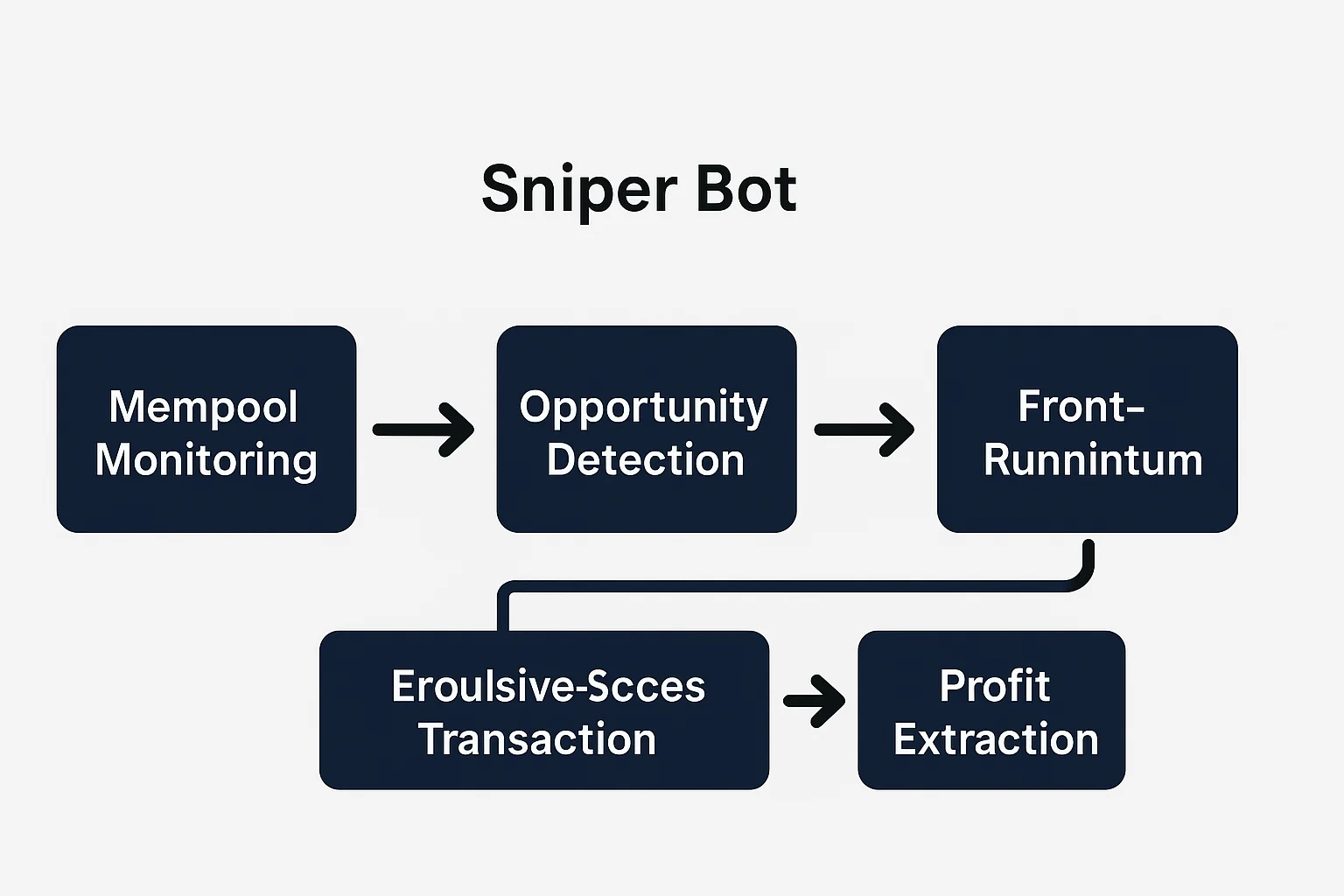
Sniper bot operation flowchart showing mempool monitoring, opportunity detection, front-running, and profit extraction steps.

Real-World Examples

  • DEX arbitrage bots exploit price differences between Uniswap, SushiSwap, and other exchanges
  • Liquidation bots compete to liquidate undercollateralized positions for profit
  • NFT sniping involves bots purchasing underpriced NFTs milliseconds after listing

Why Beginners Should Care

Hidden tax on regular users as sniper bots extract value from almost every large DeFi transaction through increased slippage and worse execution prices.

Technical arms race makes it nearly impossible for manual traders to compete with sophisticated bots that can execute trades in milliseconds.

Protocol responses include MEV-protected RPCs, private mempools, and fair sequencing services that aim to reduce bot advantages.

Related Terms: MEV, Front-Running, Arbitrage, Gas Price

Back to Crypto Glossary

Similar Posts

  • EIP-2612

    EIP-2612: Permit Function for Token ApprovalsEIP-2612 introduces permit functions that allow token approvals through signatures instead of transactions. It's like giving someone permission to spend your money without having to make a separate payment for the permission slip.EIP-2612 is an Ethereum Improvement Proposal that adds permit functionality to ERC-20 tokens, enabling approvals through off-chain signatures…

  • Transaction Privacy

    Transaction Privacy: Protecting Financial InformationTransaction privacy involves keeping cryptocurrency transaction details confidential while maintaining network security and functionality. It's like having a private bank account in a transparent financial system.Transaction privacy refers to techniques and technologies that protect the confidentiality of cryptocurrency transaction details including amounts, participants, and transaction history. This enables financial privacy while maintaining…

  • Protocol

    Protocol: Blockchain Network RulesA protocol is the set of rules and standards that govern how a blockchain network operates. It's like the constitution of a country that defines how the government works, what's allowed, and how decisions are made.A protocol refers to the comprehensive set of rules, standards, and procedures that define how a blockchain…

  • Consensus Mechanism

    Consensus Mechanism: How Networks Agree Consensus mechanisms solve the fundamental problem of getting thousands of independent computers to agree on a single version of truth without central authority. A consensus mechanism is the process by which a distributed network of nodes agrees on the validity of transactions and the current state of the blockchain. It…

  • Token Economy

    Token Economy: Digital Asset EcosystemsToken economies are systems where digital tokens serve as medium of exchange, store of value, and incentive mechanisms within specific ecosystems. They're like creating your own mini-economy with digital money.A token economy refers to an ecosystem where cryptocurrency tokens facilitate economic activity, incentivize participation, and coordinate behavior among participants. These economies can…

  • Impermanent Loss

    Impermanent Loss: The Hidden Cost of Liquidity Providing Impermanent loss is the sneaky tax on liquidity providers. Your tokens can lose value even when the pool is profitable. It’s math, not magic – but it feels like getting robbed. Impermanent loss occurs when the price ratio of tokens in a liquidity pool changes compared to…