
MEV (Maximal Extractable Value)

MEV (Maximal Extractable Value): The Hidden Tax on DeFi

MEV is the extra profit that miners and validators can extract by reordering, including, or excluding transactions within blocks. It’s like cutting in line at the blockchain cafeteria.

Maximal Extractable Value (MEV) is the additional profit that block producers can capture by strategically ordering transactions, beyond standard block rewards and fees. This creates an invisible tax on DeFi users through front-running, sandwich attacks, and arbitrage extraction.

How MEV Works

Transaction ordering power lets miners and validators see pending transactions and arrange them to maximize their profit, often at the expense of regular users.

Front-running involves placing transactions ahead of known profitable trades to capture arbitrage opportunities or cause slippage for the original trader.

Sandwich attacks place transactions before and after target trades to manipulate prices and extract value from the victim’s transaction through artificial slippage.
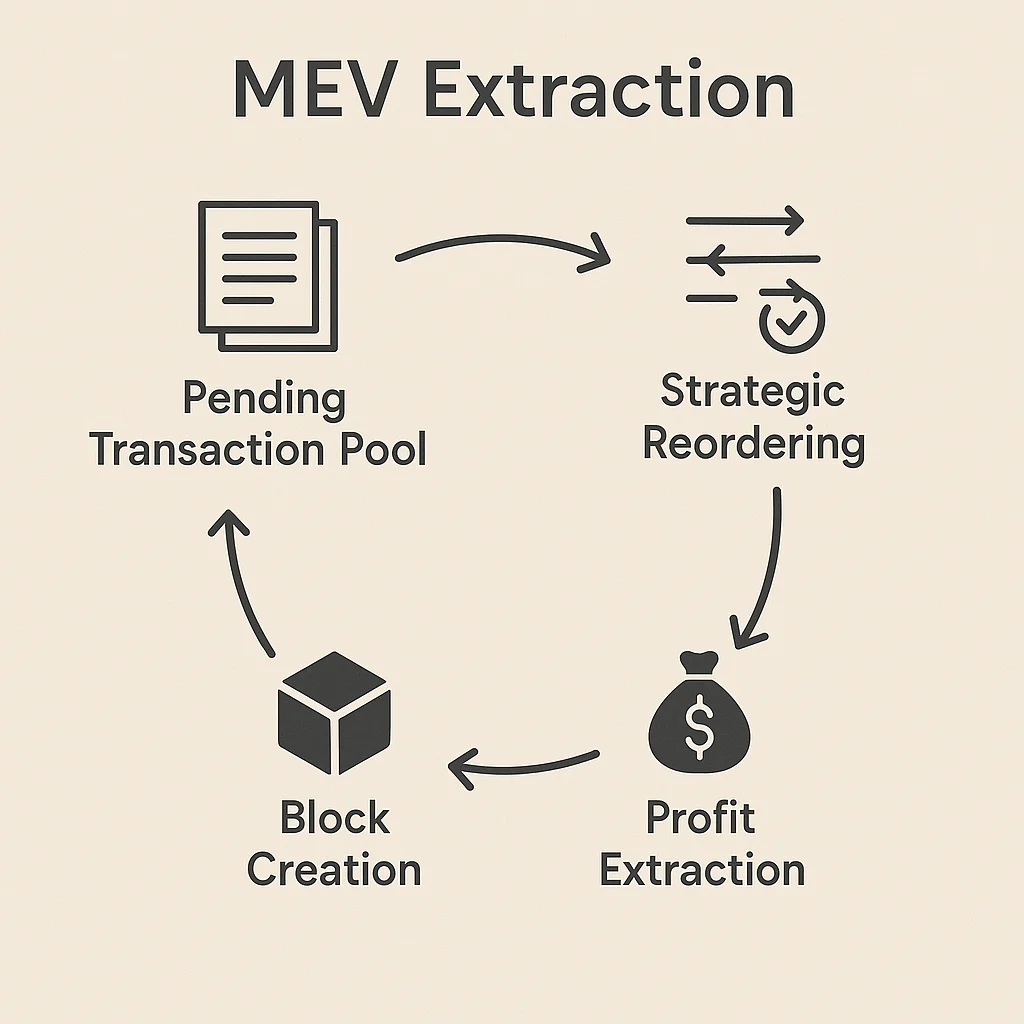
Infographic showing MEV extraction process: pending transaction pool, strategic reordering, profit extraction, and block creation

Real-World Examples

  • DEX arbitrage bots extract millions daily by front-running price differences between exchanges
  • Liquidation sniping involves front-running liquidation transactions to capture discounted collateral
  • NFT sniping uses MEV to front-run popular NFT purchases and flip for immediate profit

Why Beginners Should Care

Hidden costs from MEV can significantly increase the real cost of DeFi transactions beyond visible gas fees through increased slippage and worse execution prices.

Protection strategies include using private mempools, MEV-protected RPC endpoints, or protocols specifically designed to prevent MEV extraction.

Ecosystem impact sees billions in value extracted from regular users annually, raising questions about fairness and sustainability of current blockchain designs.

Related Terms: Front-Running, Sandwich Attack, Slippage, DeFi

Back to Crypto Glossary

Similar Posts

  • Smart Contract Risk

    Smart Contract Risk: Code-Based VulnerabilitiesSmart contract risk encompasses potential losses from bugs, exploits, or unexpected behavior in automated blockchain programs. It's like the risk that the software controlling your digital money might malfunction or be hacked.Smart contract risk refers to potential vulnerabilities, bugs, exploits, or failures in smart contract code that could result in loss…

  • Algorithmic Trading

    Algorithmic Trading: Automated Trading StrategiesAlgorithmic trading uses computer programs to execute trades based on predetermined rules and market conditions. It's like having a robot trader that never sleeps and follows your strategy perfectly.Algorithmic trading involves using computer algorithms to automatically execute cryptocurrency trades based on predefined strategies, market signals, and risk parameters. These systems can operate…

  • Supply Shock

    Supply Shock: Sudden Token Availability ChangesA supply shock occurs when cryptocurrency token supply changes dramatically and unexpectedly, often causing significant price volatility. It's like suddenly discovering a new oil field or losing access to existing reserves.A supply shock refers to a sudden, significant change in cryptocurrency token supply that disrupts market equilibrium and typically causes…

  • DeFi Primitives

    DeFi Primitives: Basic Building BlocksDeFi primitives are fundamental financial functions like lending, borrowing, and trading that serve as building blocks for more complex decentralized finance applications. They're like Lego blocks for financial services.DeFi primitives refer to basic financial functions implemented as smart contracts that can be combined to create more complex financial products and services. These…

  • Smart Contract

    Smart Contract: Code That Enforces Agreements Smart contracts are why crypto is bigger than just digital money. They’re agreements that execute themselves automatically when conditions are met. A smart contract is computer code that automatically executes agreement terms when predetermined conditions are satisfied. No lawyers, no courts, no arguing – just math and code enforcing…

  • Rug Detector

    Rug Detector: Automated Scam Identification Rug detectors are tools that analyze token contracts and trading patterns to identify potential rug pulls before they happen. They’re like having a fraud investigator built into your trading interface. A rug detector is software that automatically analyzes cryptocurrency projects for red flags that indicate potential rug pulls or exit…