
WAGMI (We’re All Gonna Make It)

WAGMI: Crypto’s Battle Cry

WAGMI (We’re All Gonna Make It) is crypto’s rallying cry during tough times. It represents community solidarity and shared optimism about long-term success.

WAGMI stands for “We’re All Gonna Make It” – a popular crypto community phrase expressing collective optimism about future success despite current market conditions. It originated from bodybuilding culture but was adopted by crypto communities during bear markets.

How WAGMI Culture Works

Community bonding happens through shared struggles and mutual encouragement during market downturns. WAGMI posts provide emotional support when portfolios are bleeding.

Long-term perspective encourages focusing on fundamental development and adoption rather than short-term price movements that can be demoralizing.

Inclusive messaging suggests that retail investors can succeed alongside institutional players if they stick together and make smart long-term decisions.
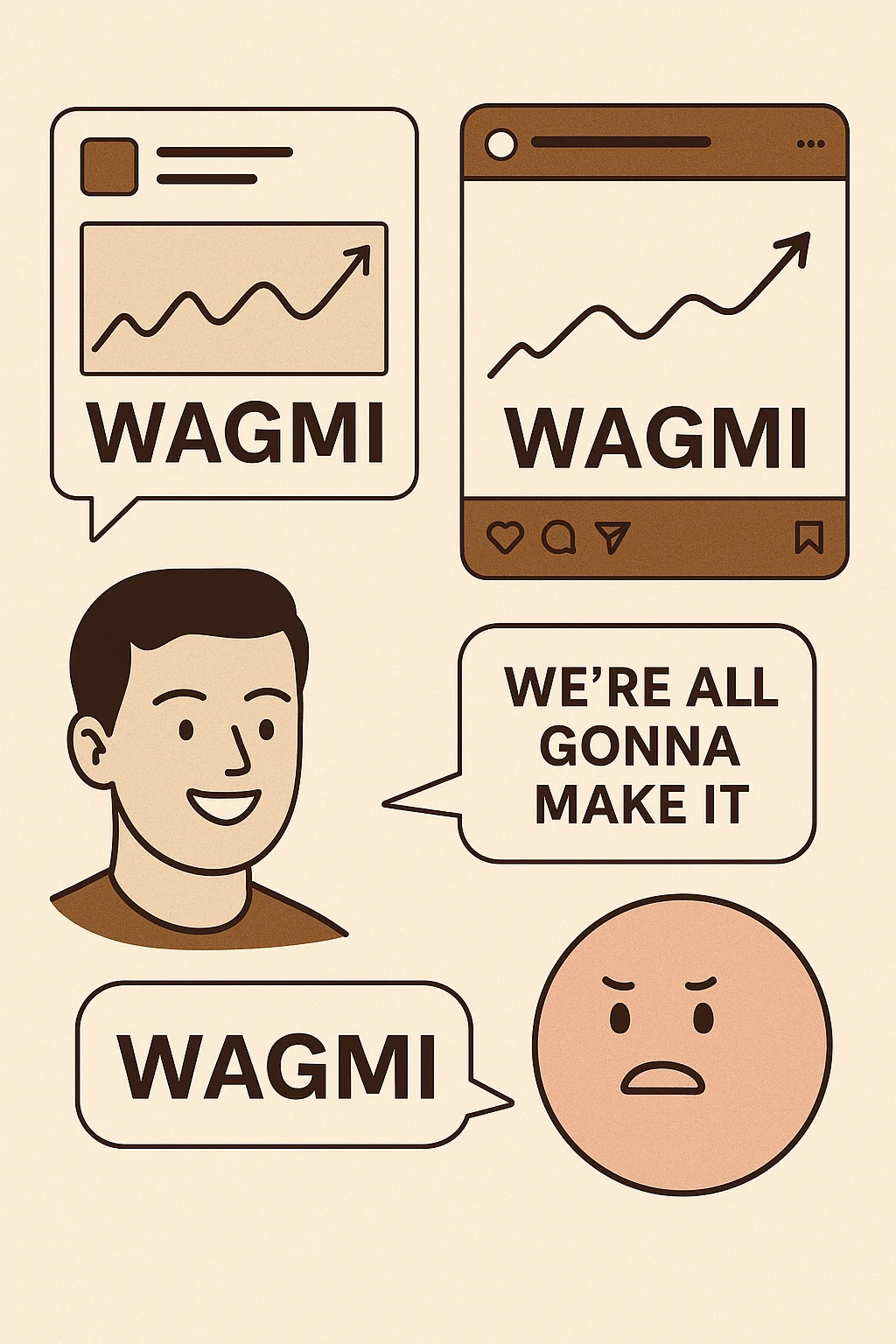
Illustration of social media posts and memes using the term WAGMI with rising charts, speech bubbles, and character expressions during market ups and downs

Real-World Examples

  • Twitter crypto communities use #WAGMI hashtags during bear markets and major crashes
  • Discord servers and Telegram groups rally members with WAGMI messages during FUD
  • NFT projects often adopt WAGMI messaging to build holder community and reduce selling pressure

Why Beginners Should Care

WAGMI mentality can provide psychological support during inevitable crypto volatility, but shouldn’t replace proper risk management and realistic expectations.

Community support helps new investors learn from experienced traders and avoid common mistakes through shared knowledge and encouragement.

Blind optimism risks exist when WAGMI becomes detached from fundamental analysis and realistic assessment of investment risks.

Related Terms: HODL, Diamond Hands, Community, Bull Market

Back to Crypto Glossary

Similar Posts

  • Buyback

    Buyback: Token Repurchase ProgramsBuyback refers to projects repurchasing their own tokens from the open market, often to reduce supply or return value to token holders. It's like a company buying back its own stock to increase the value of remaining shares.Buyback describes the process where cryptocurrency projects repurchase their own tokens from the open market…

  • Liquid Restaking

    Liquid Restaking: Flexible High-Yield Staking Liquid restaking combines the capital efficiency of liquid staking with additional yield from securing multiple networks. It’s like having your cake and eating it too, but with slashing risks. Liquid restaking allows staked assets to secure additional protocols while remaining liquid through tokenized representations. Users can earn enhanced yields from…

  • Merkle Tree

    Merkle Tree: Efficient Data Verification Merkle trees enable efficient verification of large datasets without downloading everything. They’re like having a fingerprint for an entire library that proves any book belongs. A Merkle tree is a binary tree structure where each leaf represents a data element and each branch contains cryptographic hashes of its children. The…

  • Wallet Drainer

    Wallet Drainer: Malicious Fund Extraction Wallet drainers are malicious smart contracts or applications designed to steal all assets from connected wallets through deceptive transaction approvals. They’re digital pickpockets with smart contract superpowers. A wallet drainer is malicious software that tricks users into signing transactions that grant unlimited access to their cryptocurrency holdings. These attacks often…

  • Decentralized Identity (DID)

    Decentralized Identity (DID): Self-Sovereign Digital Identity DIDs give users control over their digital identity without relying on centralized authorities like governments or tech companies. It’s like having a passport that you issue and control yourself. Decentralized Identity (DID) is a digital identity framework that gives individuals control over their personal data and identity verification without…

  • Soft Fork

    Soft Fork: Backward-Compatible Upgrades Soft forks tighten blockchain rules without breaking compatibility. They’re the diplomatic approach to network upgrades – everyone can still participate even if they don’t upgrade immediately. A soft fork is a backward-compatible change to blockchain protocol rules that makes previously valid blocks invalid while keeping previously invalid blocks invalid. Old nodes…