
HODL

HODL: The Art of Doing Nothing

HODL started as a typo but became crypto’s most important investment strategy. Sometimes the best move is not moving at all.

HODL means holding cryptocurrency long-term regardless of short-term price volatility, derived from a misspelled “hold” in a 2013 Bitcoin forum post. It represents the strategy of buying and holding rather than actively trading.

How HODL Works

Time arbitrage leverages crypto’s long-term growth trends while avoiding the stress and fees of constant trading. HODLers believe in underlying technology adoption over short-term price movements.

Emotional discipline prevents panic selling during crashes and FOMO buying during peaks. HODLing removes timing decisions that most retail traders get wrong.

Dollar cost averaging often accompanies HODL strategies – consistently buying fixed dollar amounts regardless of price to smooth out volatility over time.
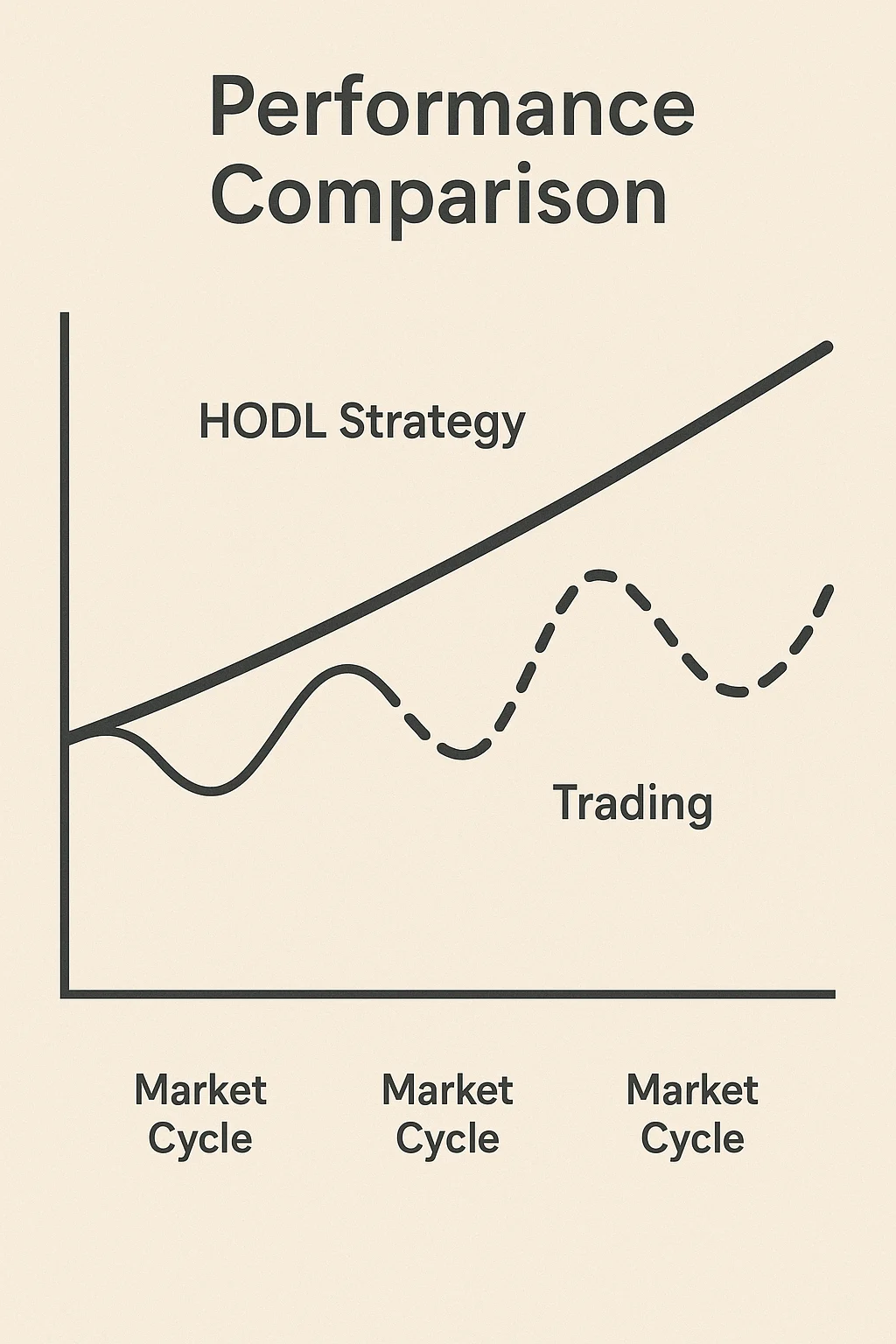
Line chart comparing HODL strategy with trading over multiple market cycles, showing steady gains for HODL and volatility for trading

Real-World Examples

  • Early Bitcoin adopters who held through multiple 80%+ crashes are now wealthy
  • Ethereum holders from 2016 experienced massive gains despite severe volatility
  • “Bitcoin pizza guy” spent 10,000 BTC on pizza in 2010 – worth $300+ million today

Why Beginners Should Care

HODLing beats trading for most people. Studies show active traders typically underperform simple buy-and-hold strategies after accounting for fees and taxes.

Psychological benefits include reduced stress from daily price watching and elimination of complex timing decisions that even professionals struggle with.

Tax advantages in many jurisdictions favor long-term holding over short-term trading, reducing overall tax burden on crypto gains.

Related Terms: Diamond Hands, DCA, Bull Market, Bear Market

Back to Crypto Glossary

Similar Posts

  • Wallet Recovery

    Wallet Recovery: Restoring Access to Lost FundsWallet recovery enables regaining access to cryptocurrency holdings when primary access methods fail. It's like having backup keys to your digital safe when you lose the originals.Wallet recovery encompasses methods for restoring access to cryptocurrency wallets when devices are lost, passwords forgotten, or primary authentication fails. Proper recovery planning prevents…

  • Token Supply

    Token Supply: Digital Asset QuantityToken supply refers to the total number of cryptocurrency tokens that exist, will exist, or are available for trading. It's a fundamental factor in determining token economics and value.Token supply encompasses the total quantity of cryptocurrency tokens in existence, including circulating supply available for trading and total supply that will ever…

  • Security

    Security: Protecting Digital Assets and InformationSecurity in cryptocurrency encompasses all measures taken to protect digital assets, private keys, and personal information from theft or compromise. It's the foundation that makes cryptocurrency ownership safe and reliable.Security refers to the comprehensive protection of cryptocurrency assets, private keys, wallet access, and personal information through technical measures and careful…

  • Proof of History

    Proof of History: Solana’s Time Innovation Proof of History creates a cryptographic timestamp that proves events occurred in a specific sequence. It’s like having an unforgeable clock built into the blockchain. Proof of History (PoH) is a consensus mechanism that creates a historical record proving that events occurred at specific moments in time. It uses…

  • Token Approval

    Token Approval: Granting Spending PermissionToken approval allows smart contracts to spend tokens on behalf of users through explicit permission mechanisms. It's like giving someone permission to use your credit card with specific spending limits.Token approval is a mechanism that grants smart contracts permission to transfer specific amounts of tokens from user wallets without requiring signatures…

  • Counterparty Risk

    Counterparty Risk: Trusting Others with Your MoneyCounterparty risk is the chance that the other party in a financial transaction won't fulfill their obligations. In crypto, it's the difference between self-custody and hoping someone else doesn't lose your money.Counterparty risk refers to the probability that the other party in a financial transaction will default on their…