
Proof of History

Proof of History: Solana’s Time Innovation

Proof of History creates a cryptographic timestamp that proves events occurred in a specific sequence. It’s like having an unforgeable clock built into the blockchain.

Proof of History (PoH) is a consensus mechanism that creates a historical record proving that events occurred at specific moments in time. It uses cryptographic functions to generate verifiable timestamps without relying on external time sources.

How Proof of History Works

Sequential hashing creates a chain of cryptographic proofs that demonstrate the passage of time. Each hash includes the previous hash, creating an unbreakable chronological sequence.

Verifiable delay functions ensure the time sequence cannot be generated faster than real time, preventing validators from creating fake historical records.

Parallel processing becomes possible when all nodes agree on the timing of events, enabling higher throughput than traditional consensus mechanisms.
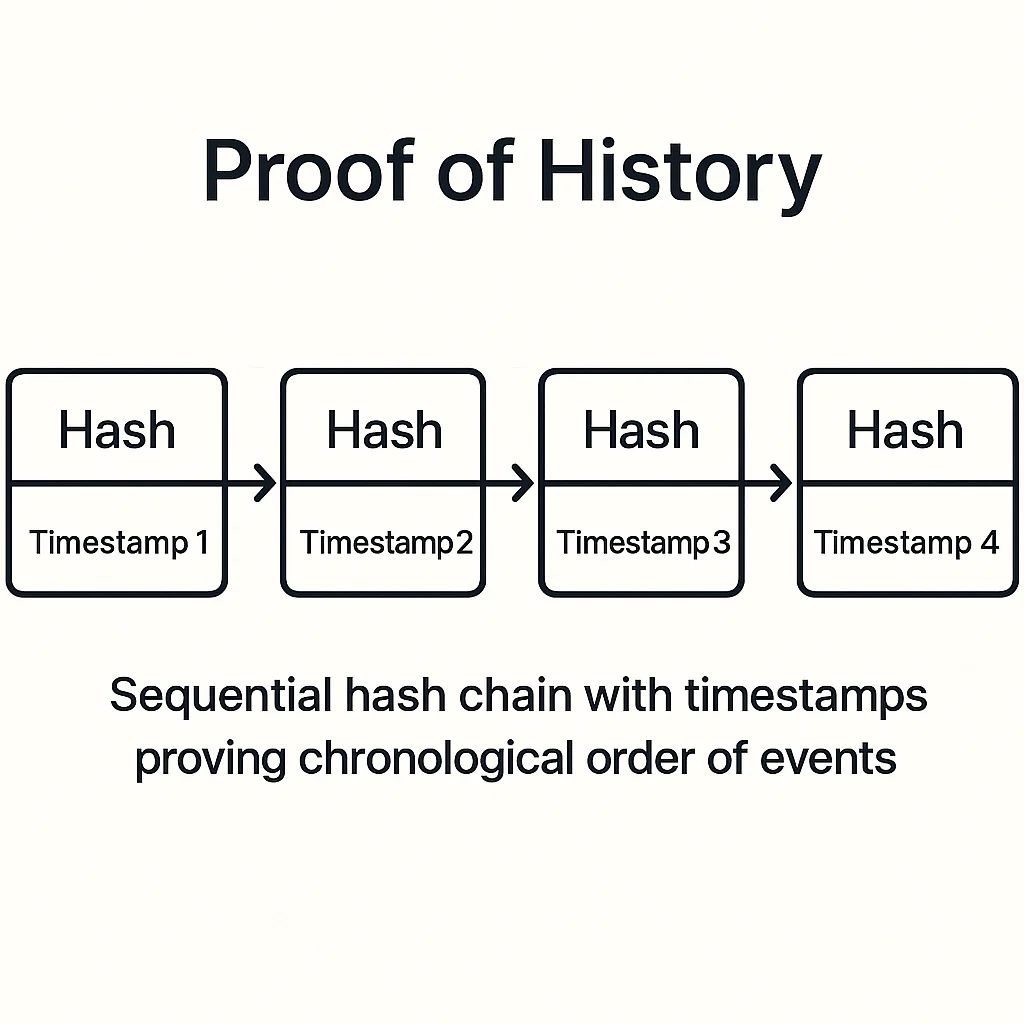
Proof of History timeline showing sequential hash chain with timestamps verifying the chronological order of events.

Real-World Examples

  • Solana blockchain uses PoH as its primary innovation for achieving high transaction throughput
  • Validator synchronization relies on PoH timestamps to coordinate network operations
  • Transaction ordering uses PoH to eliminate disputes about event sequence

Why Beginners Should Care

Speed advantages from PoH enable Solana to process thousands of transactions per second with low fees, making it competitive with traditional payment systems.

Centralization concerns arise since PoH requires powerful hardware and reliable network connections, potentially limiting validator participation.

Novel approach makes PoH unproven at scale compared to battle-tested consensus mechanisms like Proof of Work or Proof of Stake.

Related Terms: Consensus Mechanism, Solana, Validator, Throughput

Back to Crypto Glossary

Similar Posts

  • Smart Contract Audit

    Smart Contract Audit: Code Security ReviewSmart contract audits involve professional security reviews of blockchain code to identify vulnerabilities before deployment. It's like having building inspectors for digital architecture.A smart contract audit is a comprehensive security review of blockchain application code conducted by experts to identify vulnerabilities, bugs, and potential attack vectors before public deployment. These reviews…

  • Omnichain

    Omnichain: Universal Blockchain ConnectivityOmnichain refers to applications and protocols that operate seamlessly across multiple blockchain networks as if they were a single unified system. It's like having apps that work on every phone brand without modification.Omnichain describes systems that can operate across multiple blockchain networks simultaneously, providing unified functionality and user experiences regardless of which…

  • Secure Element

    Secure Element: Hardware Security ChipA secure element is a tamper-resistant hardware chip designed to store sensitive information like private keys. It's like having a tiny vault built into your device that's extremely difficult to break into.A secure element is a specialized hardware component designed to provide isolated, tamper-resistant storage and processing for sensitive data such…

  • Slippage

    Slippage: The Cost of Market Impact Slippage is the difference between expected and actual trade prices. It’s the tax you pay for moving markets when your trade is large relative to available liquidity. Slippage occurs when the execution price of a trade differs from the expected price due to market movement or insufficient liquidity. Large…

  • Tokenomics

    Tokenomics: The Economics of Digital Assets Tokenomics determines how cryptocurrencies create, distribute, and maintain value over time. It’s the difference between digital money and digital monopoly money. Tokenomics refers to the economic design and mechanics of a cryptocurrency token, including supply schedules, distribution methods, utility functions, and incentive structures. Good tokenomics align stakeholder interests while…

  • Fee Sharing

    Fee Sharing: Distributing Protocol RevenueFee sharing distributes a portion of protocol revenues to token holders, stakers, or other participants. It's like getting dividends from a company you own shares in.Fee sharing refers to mechanisms that distribute portions of protocol fees, transaction costs, or other revenues to token holders or network participants. This creates direct financial incentives…