
Halving

Halving: Cutting Block Rewards in Half

Halving events reduce block rewards by 50%, creating artificial scarcity that historically triggers major bull markets. It’s like cutting gold mining output in half overnight.

Halving is a pre-programmed event that reduces block rewards by half, typically occurring every four years or after a specific number of blocks. This mechanism controls inflation and maintains scarcity as networks mature and adoption grows.

How Halving Works

Scheduled reductions follow predetermined algorithms rather than human decisions, ensuring predictable monetary policy that can’t be manipulated by central authorities.

Supply shock occurs as new token creation suddenly drops by 50% while demand often remains constant or increases, creating upward pressure on prices.

Miner economics get disrupted as revenue cuts in half overnight. Less efficient miners may shut down, temporarily reducing network hash rate until difficulty adjusts.
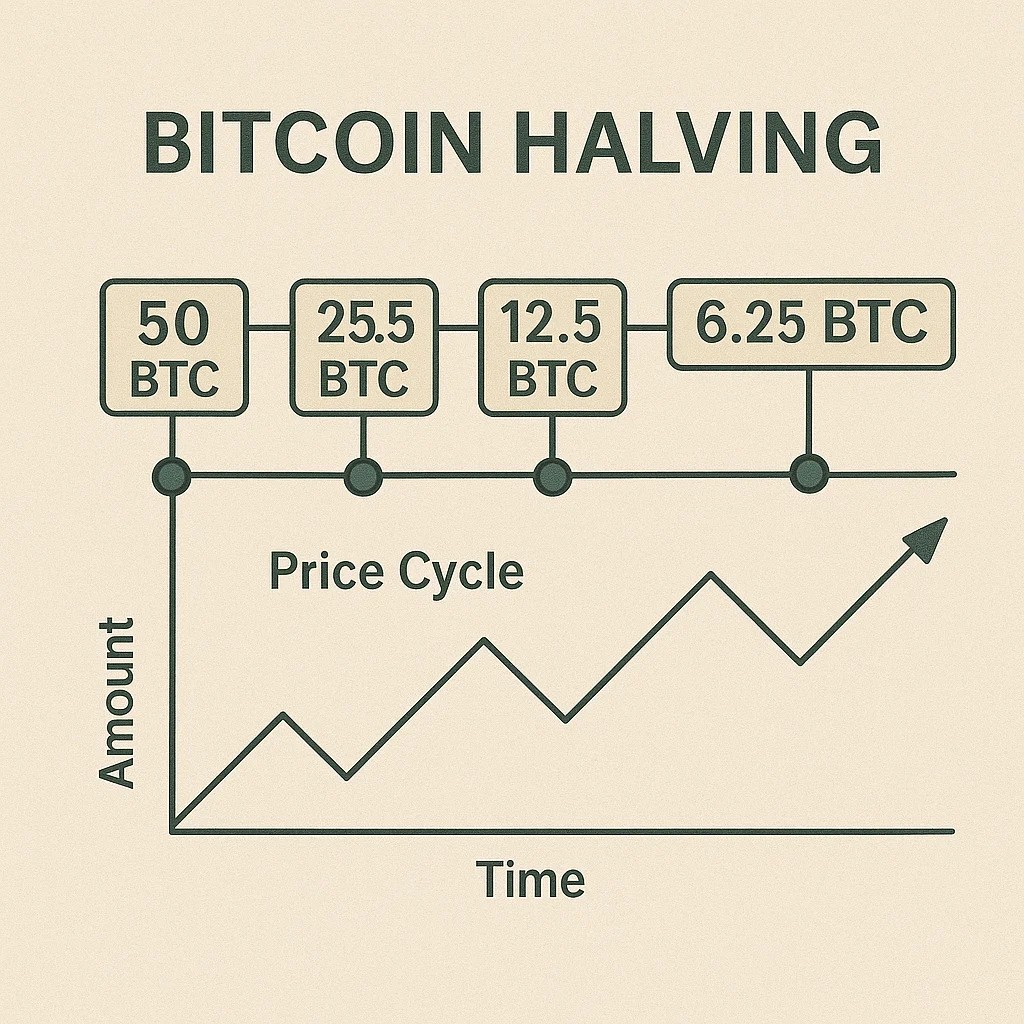
Infographic showing Bitcoin halving events with block rewards dropping from 50 to 25 to 12.5 to 6.25 BTC, along with a rising price cycle chart

Real-World Examples

  • Bitcoin halvings in 2012, 2016, and 2020 each preceded major bull markets with 10-100x price increases
  • Litecoin halving events follow similar patterns with smaller market impact due to lower adoption
  • Bitcoin Cash inherited Bitcoin’s halving schedule after the 2017 fork

Why Beginners Should Care

Price speculation often surrounds halving events as reduced supply meets existing demand, though past performance doesn’t guarantee future results.

Market timing strategies attempt to position for halving-driven price increases, but timing markets remains extremely difficult even with predictable supply changes.

Long-term scarcity increases through halving until block rewards become negligible and transaction fees become the primary miner incentive.

Related Terms: Block Reward, Mining, Supply Shock, Bull Market

Back to Crypto Glossary

Similar Posts

  • Supply

    Supply: Total Token Quantity AvailableSupply refers to the total amount of cryptocurrency tokens available, including those in circulation, locked up, or held by various parties. It's a fundamental economic factor affecting token value.Supply encompasses all cryptocurrency tokens that exist or will exist, including circulating supply available for trading and locked supply held by teams, investors,…

  • Challenge Period

    Challenge Period: Dispute Resolution WindowA challenge period is a time window during which participants can dispute or challenge proposed changes before they become final. It's like a cooling-off period for important decisions.A challenge period is a predetermined time frame that allows network participants to dispute transactions, withdrawals, or governance proposals before they become irreversible. This mechanism…

  • Soft Fork

    Soft Fork: Backward-Compatible Upgrades Soft forks tighten blockchain rules without breaking compatibility. They’re the diplomatic approach to network upgrades – everyone can still participate even if they don’t upgrade immediately. A soft fork is a backward-compatible change to blockchain protocol rules that makes previously valid blocks invalid while keeping previously invalid blocks invalid. Old nodes…

  • Transaction Verification

    Transaction Verification: Confirming Payment ValidityTransaction verification is the process of confirming that cryptocurrency transactions are valid before adding them to the blockchain. It's like having bank tellers check that signatures match and accounts have sufficient funds before processing checks.Transaction verification refers to the systematic process where network participants validate cryptocurrency transactions by checking digital signatures,…

  • Light Client

    Light Client: Lightweight Blockchain AccessA light client provides blockchain access without downloading the entire blockchain history. It's like having a summary instead of reading the entire encyclopedia.A light client is a blockchain node that maintains network connectivity and basic functionality without storing the complete blockchain history or state. This enables resource-constrained devices to participate in blockchain…

  • Liquidity

    Liquidity: How Easily You Can Buy or Sell Liquidity determines whether you can actually trade your crypto at fair prices. High liquidity means smooth trading. Low liquidity means getting rekt by slippage. Liquidity refers to how easily an asset can be bought or sold without significantly affecting its price. In crypto markets, liquidity comes from…