
Sidechain

Sidechain: Independent Chains with Main Chain Connections

Sidechains operate independently while maintaining bridges to main blockchains. They’re like having a separate express lane that connects back to the main highway when needed.

A sidechain is an independent blockchain that runs parallel to a main blockchain and is connected through a two-way bridge allowing asset transfers. Sidechains can have different consensus mechanisms, block times, and features while maintaining interoperability with the parent chain.

How Sidechains Work

Two-way pegs lock assets on the main chain and mint equivalent tokens on the sidechain, enabling transfers between chains. When moving back, sidechain tokens are burned and main chain assets are unlocked.

Independent consensus allows sidechains to optimize for specific use cases like faster transactions, lower fees, or specialized smart contract features without affecting the main chain.

Bridge security varies from centralized custodians to complex multi-signature schemes to fully decentralized smart contract systems, each with different trust assumptions.
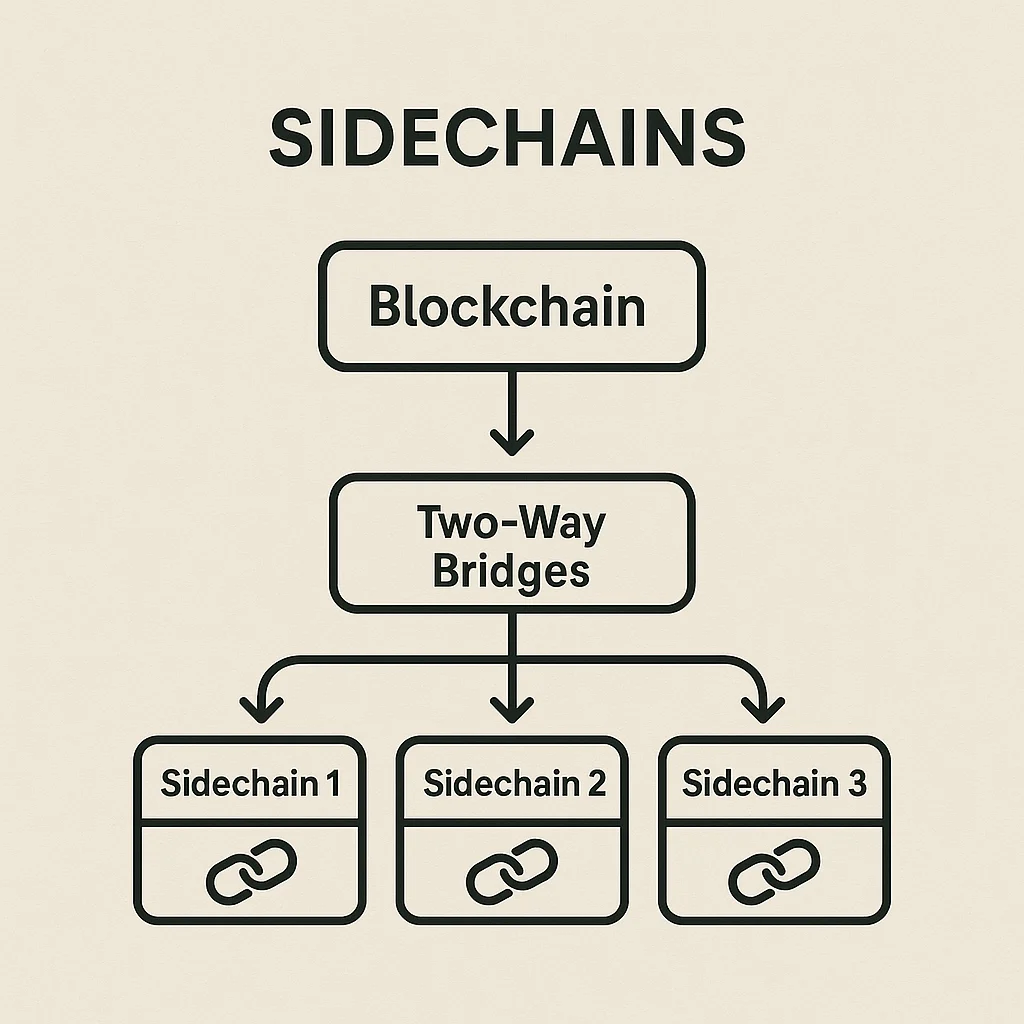
Infographic showing sidechain architecture with a main blockchain connected to multiple sidechains via two-way bridges

Real-World Examples

  • Polygon – Popular Ethereum sidechain offering faster, cheaper transactions
  • xDai Chain – Stablecoin-based sidechain for everyday payments
  • Liquid Network – Bitcoin sidechain for faster settlement between exchanges

Why Beginners Should Care

Lower costs on sidechains make them attractive for testing DeFi protocols or making frequent transactions without expensive main chain fees.

Bridge risks include smart contract vulnerabilities, centralized custody risks, and potential loss of funds if bridge mechanisms fail or get hacked.

Ecosystem fragmentation can occur when liquidity and users move to sidechains, potentially weakening the main chain’s network effects.

Related Terms: Bridge, Layer 2, Two-Way Peg, Interoperability

Back to Crypto Glossary

Similar Posts

  • Shared Security

    Shared Security: Collective Network ProtectionShared security allows multiple blockchain applications or chains to benefit from common security infrastructure rather than maintaining separate validator sets. It's like having a shared security service for multiple buildings.Shared security refers to security models where multiple blockchain networks or applications are protected by a common set of validators or consensus…

  • ENS

    ENS: Ethereum Name ServiceENS provides human-readable names for Ethereum addresses, making cryptocurrency transactions more user-friendly. It's like having domain names for websites instead of remembering IP addresses.Ethereum Name Service (ENS) is a decentralized naming system that maps human-readable names to Ethereum addresses, smart contracts, and other identifiers. ENS makes blockchain interactions more accessible by replacing complex…

  • Verifiable Credentials

    Verifiable Credentials: Tamper-Proof Digital DocumentsVerifiable credentials are digital documents that can be cryptographically verified without contacting the issuing authority. They're like diplomas that anyone can authenticate instantly.Verifiable credentials are digital documents that use cryptographic techniques to enable instant verification of authenticity without requiring contact with the issuing organization. These credentials enable trusted digital identity and qualification…

  • Credentials

    Credentials: Proof of Identity and QualificationsCredentials are verifiable proofs of identity, qualifications, or achievements that can be digitally verified without contacting issuing authorities. They're like diplomas that anyone can instantly authenticate.Credentials refer to digital or physical documents that prove identity, qualifications, achievements, or authorizations, increasingly being tokenized and verified through blockchain technology. These enable trustless verification…

  • On-Chain Gaming

    On-Chain Gaming: Fully Decentralized Games On-chain gaming runs game logic entirely on blockchain networks rather than traditional servers. It’s like having board games where the rules are enforced by mathematics instead of human referees. On-chain gaming executes all game logic, state management, and interactions through smart contracts on blockchain networks. Unlike traditional games with centralized…

  • Liquid Staking

    Liquid Staking: Staking Without LockupsLiquid staking allows earning staking rewards while maintaining the ability to trade or use staked assets through tokenized representations. It's like having your cake and eating it too.Liquid staking enables users to stake cryptocurrency for rewards while receiving liquid tokens representing their staked position that can be traded or used in…