
Launchpad

Launchpad: The Crypto Startup Accelerator

Launchpads are platforms that help new crypto projects raise funds and launch tokens. They’re like Kickstarter for cryptocurrencies, but with more speculation and less product delivery.

A launchpad is a platform that facilitates fundraising and token launches for new cryptocurrency projects. They provide infrastructure, marketing, and community access to help projects raise capital and distribute tokens to early supporters.

How Launchpads Work

Project vetting screens potential launches for legitimacy, though quality varies significantly between different launchpad platforms and market conditions.

Token sales occur through various mechanisms like fixed prices, bonding curves, or Dutch auctions, often with whitelisting requirements or lottery systems for popular projects.

Community building helps projects gain exposure to existing investor communities who are actively seeking new investment opportunities in early-stage crypto projects.
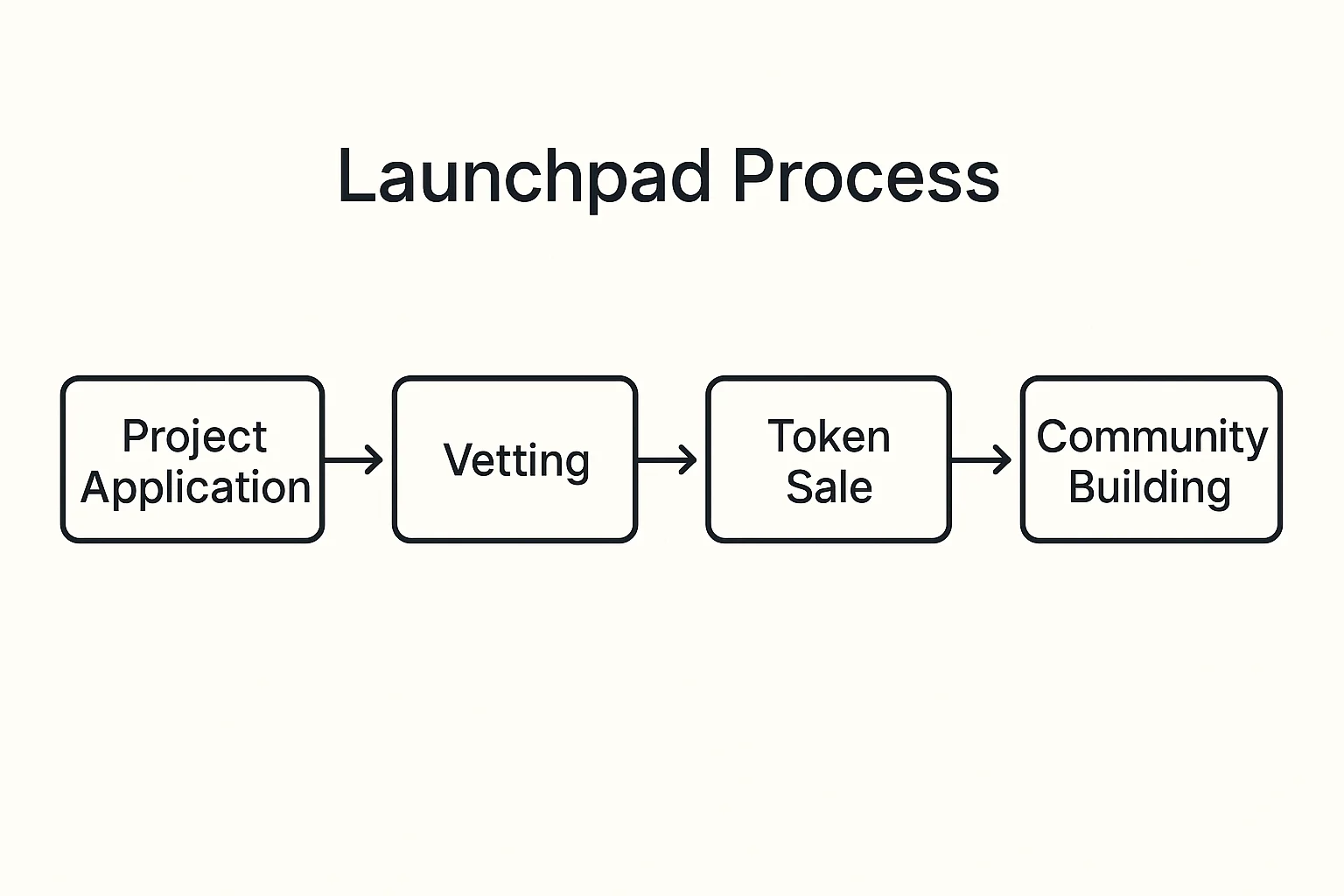
Launchpad process flowchart showing steps from project application to vetting, token sale, and community building.

Real-World Examples

  • Binance Launchpad has launched major projects like Polygon (MATIC) and Sandbox (SAND)
  • Polkastarter focuses on cross-chain token launches and DeFi projects
  • DAO Maker combines launchpad services with community-driven project incubation

Why Beginners Should Care

Early access to new projects can provide significant returns, but most launchpad projects fail or lose value after initial hype subsides.

High risk exists since many projects are experimental or lack working products, making launchpad investing closer to speculation than traditional investment.

FOMO marketing creates artificial urgency around launches, often leading to poor investment decisions based on fear of missing out rather than fundamental analysis.

Related Terms: Token Sale, ICO, Whitelist, Project Vetting

Back to Crypto Glossary

Similar Posts

  • Decentralized Identity (DID)

    Decentralized Identity (DID): Self-Sovereign Digital Identity DIDs give users control over their digital identity without relying on centralized authorities like governments or tech companies. It’s like having a passport that you issue and control yourself. Decentralized Identity (DID) is a digital identity framework that gives individuals control over their personal data and identity verification without…

  • Market Stability

    Market Stability: Reducing Price VolatilityMarket stability refers to conditions where asset prices experience relatively small fluctuations over time. It's like having calm seas instead of stormy waters for your investments.Market stability describes market conditions characterized by relatively low volatility, predictable price movements, and reduced extreme fluctuations. Stable markets enable better planning and reduce risks for participants.How…

  • Atomic Transaction

    Atomic Transaction: All-or-Nothing OperationsAn atomic transaction either completes entirely or fails completely, with no partial execution possible. It's like a package deal where you get everything or nothing at all.An atomic transaction is an operation that either succeeds completely or fails entirely, ensuring that all components of a complex transaction execute together or none execute…

  • Smart Contract

    Smart Contract: Code That Enforces Agreements Smart contracts are why crypto is bigger than just digital money. They’re agreements that execute themselves automatically when conditions are met. A smart contract is computer code that automatically executes agreement terms when predetermined conditions are satisfied. No lawyers, no courts, no arguing – just math and code enforcing…

  • Dynamic Gas Pricing

    Dynamic Gas Pricing: Adaptive Fee Markets Dynamic gas pricing automatically adjusts transaction fees based on network demand. It’s like surge pricing for blockchain transactions – pay more when everyone wants to transact. Dynamic gas pricing is a mechanism that automatically adjusts transaction fees based on current network congestion and demand. This creates more efficient fee…

  • Gwei

    Gwei: Ethereum’s Gas Price Unit Gwei is the denomination used for Ethereum gas prices. Understanding gwei helps you avoid overpaying for transactions when the network gets congested. Gwei (gigawei) is a unit of Ethereum’s native currency equal to one billionth of an ETH (10^-9 ETH). It’s the standard unit for expressing gas prices, making it…