
Whitelisting

Whitelisting: VIP Access to Token Sales

Whitelisting gives select addresses permission to participate in exclusive token sales or access restricted features. It’s crypto’s version of the velvet rope at exclusive clubs.

Whitelisting is the process of pre-approving wallet addresses for participation in token sales, exclusive features, or special privileges within crypto projects. Only whitelisted addresses can participate in restricted activities or access limited opportunities.

How Whitelisting Works

Application processes often require social media engagement, community participation, or completing specific tasks to demonstrate genuine interest rather than pure speculation.

KYC verification may be required for regulatory compliance, especially for larger token sales that need to verify investor accreditation or geographic eligibility.

Limited slots create scarcity and FOMO as projects often have more interested participants than available whitelist positions.
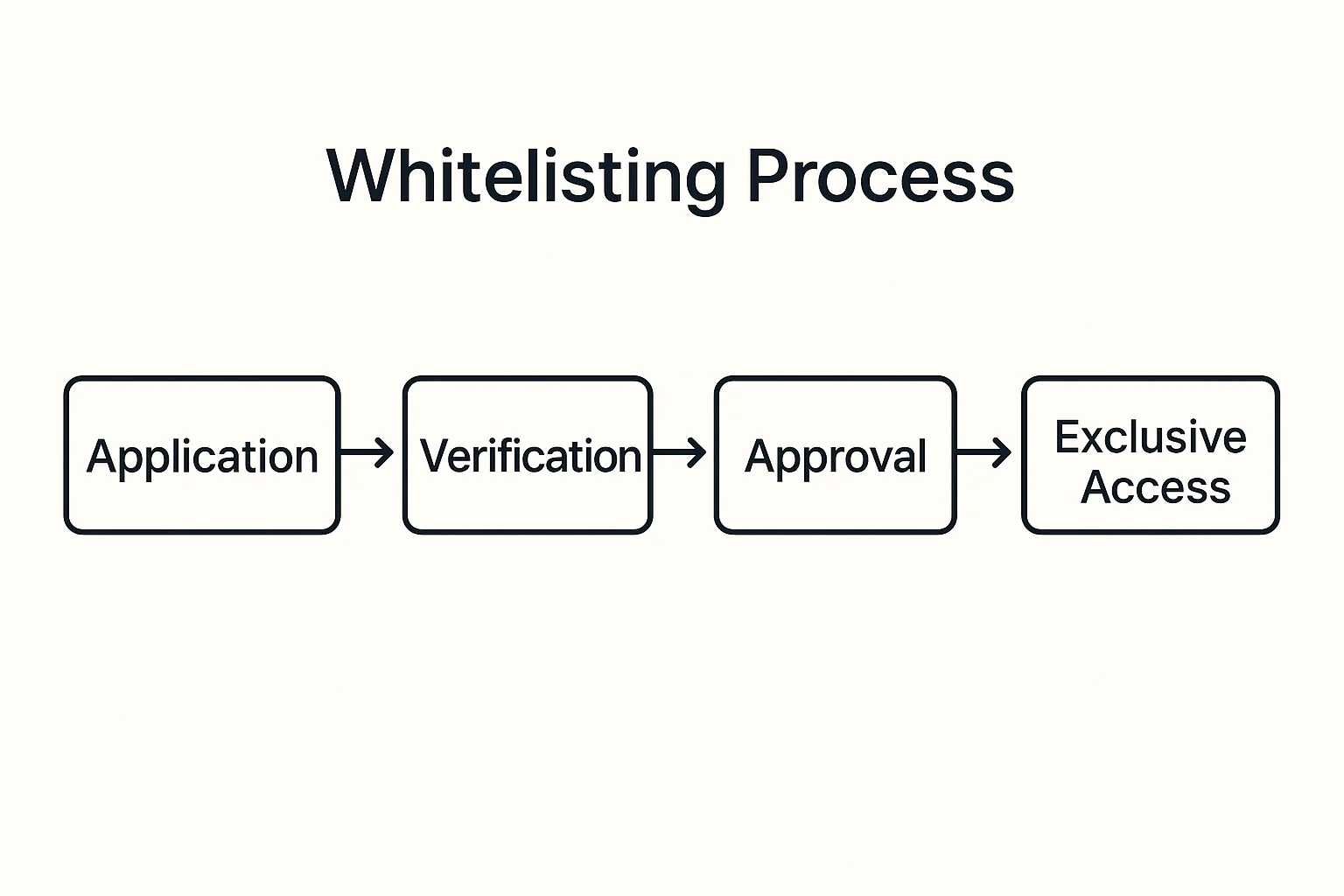
Whitelisting process flowchart showing application, verification, approval, and exclusive access stages.

Real-World Examples

  • NFT project whitelists give early supporters guaranteed minting opportunities before public sales
  • DeFi protocol launches often whitelist early community members for governance token distributions
  • Gaming token sales use whitelists to ensure dedicated players get priority access over speculators

Why Beginners Should Care

Exclusive opportunities through whitelisting can provide access to better prices or guaranteed allocations in popular token sales that quickly sell out.

Time investment required for whitelisting often involves significant community engagement without guaranteed acceptance or profitable outcomes.

Scam potential exists as fake projects use whitelist processes to collect personal information or wallet addresses for phishing attacks.

Related Terms: Token Sale, KYC, Launchpad, Community

Back to Crypto Glossary

Similar Posts

  • Bridge Aggregator

    Bridge Aggregator: Cross-Chain Route OptimizationBridge aggregators find the best routes for moving assets between blockchain networks by comparing multiple bridge options. They're like travel booking sites that find the cheapest flights across different airlines.A bridge aggregator is a service that compares multiple cross-chain bridge options to find optimal routes for transferring assets between different blockchain…

  • Quadratic Funding

    Quadratic Funding: Democratic Resource AllocationQuadratic funding uses mathematical formulas to allocate resources based on community preferences while preventing wealthy individuals from dominating funding decisions. It's democracy with math.Quadratic funding is a mechanism for allocating resources that gives more weight to the number of contributors than the amount contributed, using quadratic formulas to prevent wealthy individuals…

  • Digital Currency

    Digital Currency: Electronic Money SystemsDigital currency refers to money that exists only in electronic form, including both centralized and decentralized varieties. It's like having money that lives entirely in computers and phones instead of physical bills and coins in your wallet.Digital currency encompasses all forms of money that exist exclusively in electronic format, including cryptocurrencies,…

  • Proof of Stake (PoS)

    Proof of Stake (PoS): Energy-Efficient Consensus Proof of Stake secures blockchain networks through economic staking rather than energy-intensive mining. It’s like replacing a gold rush with a security deposit system. Proof of Stake (PoS) is a consensus mechanism where validators are chosen to create new blocks based on their stake in the network rather than…

  • Validator

    Validator: Proof-of-Stake Network Guardians Validators are the security backbone of proof-of-stake networks. They propose blocks, verify transactions, and earn rewards for honest behavior. A validator is a network participant in proof-of-stake blockchains who validates transactions, proposes new blocks, and maintains network consensus in exchange for staking rewards. Validators replace miners in PoS systems. How Validators…

  • Virtual Real Estate

    Virtual Real Estate: Digital Land OwnershipVirtual real estate refers to owning digital land parcels in metaverse worlds and virtual environments. It's like buying property in video game worlds that have real economic value.Virtual real estate consists of digital land parcels, buildings, or spaces within virtual worlds that can be owned, developed, and traded as NFTs. These…