
Multi-Signature (Multisig)

Multi-Signature (Multisig): Shared Control for Enhanced Security

Multisig wallets require multiple signatures to authorize transactions. It’s like requiring multiple keys to open a safe – no single person can move funds alone.

Multi-signature (multisig) is a wallet configuration that requires signatures from multiple private keys to authorize transactions. Common setups include 2-of-3 (any 2 signatures from 3 possible) or 3-of-5 configurations.

How Multisig Works

Smart contracts enforce the signature requirements. When someone initiates a transaction, the contract waits for the required number of valid signatures before executing.

Key distribution among trusted parties or devices prevents single points of failure. Even if one key is compromised, attackers can’t steal funds without additional signatures.

Business applications use multisig for treasury management, requiring approval from multiple executives before spending company funds.
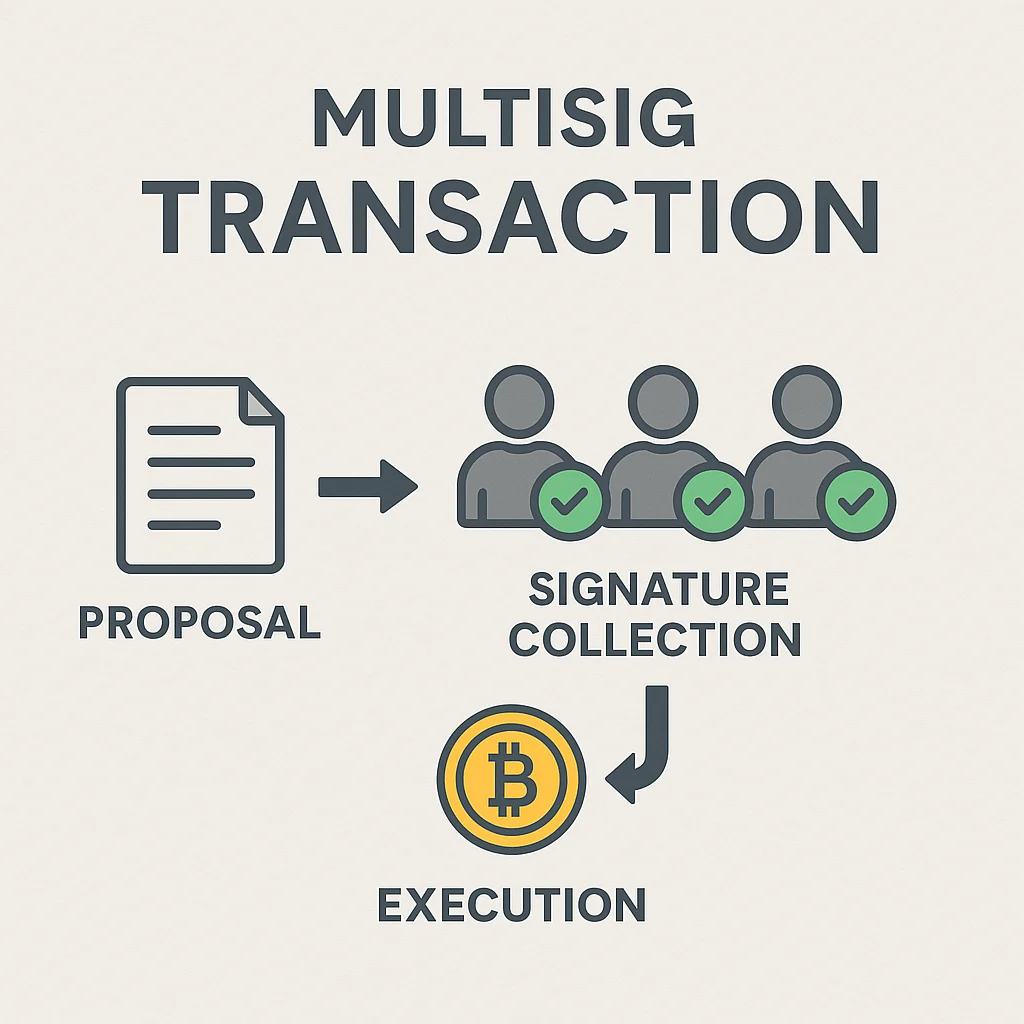
Infographic showing the multisig transaction flow: proposal, multiple signatures collected, and automatic execution

Real-World Examples

  • Gnosis Safe – Popular multisig platform managing billions in DeFi treasuries
  • Corporate treasuries often require 3-of-5 signatures from board members
  • Personal security setups with keys split between hardware wallets and trusted contacts

Why Beginners Should Care

Multisig eliminates single points of failure that plague most crypto security. If you lose one key or device, you can still access funds with remaining signatures.

Setup complexity requires technical knowledge and coordination between signers. Losing too many keys simultaneously can permanently lock funds.

For large holdings, multisig provides institutional-grade security that exceeds what most individuals can achieve with single-signature wallets.

Related Terms: Hardware Wallet, Smart Contract, Private Key, Cold Storage

Back to Crypto Glossary

Similar Posts

  • Scaling

    Scaling: Handling More TransactionsScaling refers to increasing a blockchain network's capacity to handle more transactions per second without sacrificing security or decentralization. It's the holy grail of blockchain development.Scaling in blockchain technology involves improving transaction throughput, reducing costs, and maintaining performance as networks grow in size and usage. This typically requires technical solutions that balance speed,…

  • Staking Rewards

    Staking Rewards: Earning from Network Security Staking rewards compensate users for locking up cryptocurrency to help secure proof-of-stake networks. It’s like earning interest for helping guard the bank vault. Staking rewards are cryptocurrency payments earned by users who lock up tokens to participate in proof-of-stake network consensus and security. These rewards incentivize honest participation while…

  • Transaction Approval

    Transaction Approval: Authorizing Blockchain ActionsTransaction approval is the process of authorizing blockchain operations through wallet signatures or smart contract permissions. It's like signing checks, but with permanent consequences.Transaction approval involves granting permission for blockchain operations through cryptographic signatures, smart contract interactions, or delegation mechanisms. These approvals authorize spending, contract execution, or account access.How Transaction Approval WorksSignature…

  • Metaverse

    Metaverse: Digital Worlds Meet Real Money The metaverse promises persistent digital worlds where your avatar’s clothes cost more than your real ones. It’s part virtual reality, part speculation, part genuine innovation. The metaverse refers to interconnected virtual worlds where users can work, play, socialize, and own digital assets through avatars and blockchain-based economies. Think Ready…

  • Due Diligence

    Due Diligence: Research Before InvestmentDue diligence involves thoroughly researching and evaluating cryptocurrency projects before investing. It's like test driving a car and checking its history before buying.Due diligence refers to the comprehensive investigation and analysis of cryptocurrency projects, including technology, team, tokenomics, and market factors before making investment decisions. Proper due diligence helps identify opportunities and…

  • Data Availability Layer

    Data Availability Layer: Ensuring Information Access Data availability layers ensure that blockchain data remains accessible for verification without requiring full nodes to store everything. It’s like having a library system where you can verify any book exists without storing them all. A data availability layer guarantees that blockchain transaction data is published and remains accessible…