
Metaverse

Metaverse: Digital Worlds Meet Real Money

The metaverse promises persistent digital worlds where your avatar’s clothes cost more than your real ones. It’s part virtual reality, part speculation, part genuine innovation.

The metaverse refers to interconnected virtual worlds where users can work, play, socialize, and own digital assets through avatars and blockchain-based economies. Think Ready Player One, but with NFT sneakers and play-to-earn jobs.

How the Metaverse Works

Virtual real estate gets bought and sold as NFTs, with prime locations near popular areas commanding premium prices. Some virtual land parcels have sold for millions of dollars.

Digital economies use cryptocurrency for transactions, enabling real income from virtual activities like creating content, providing services, or trading digital goods.

Interoperability goals aim to let users move avatars, items, and identities between different virtual worlds, though technical and business challenges remain significant.
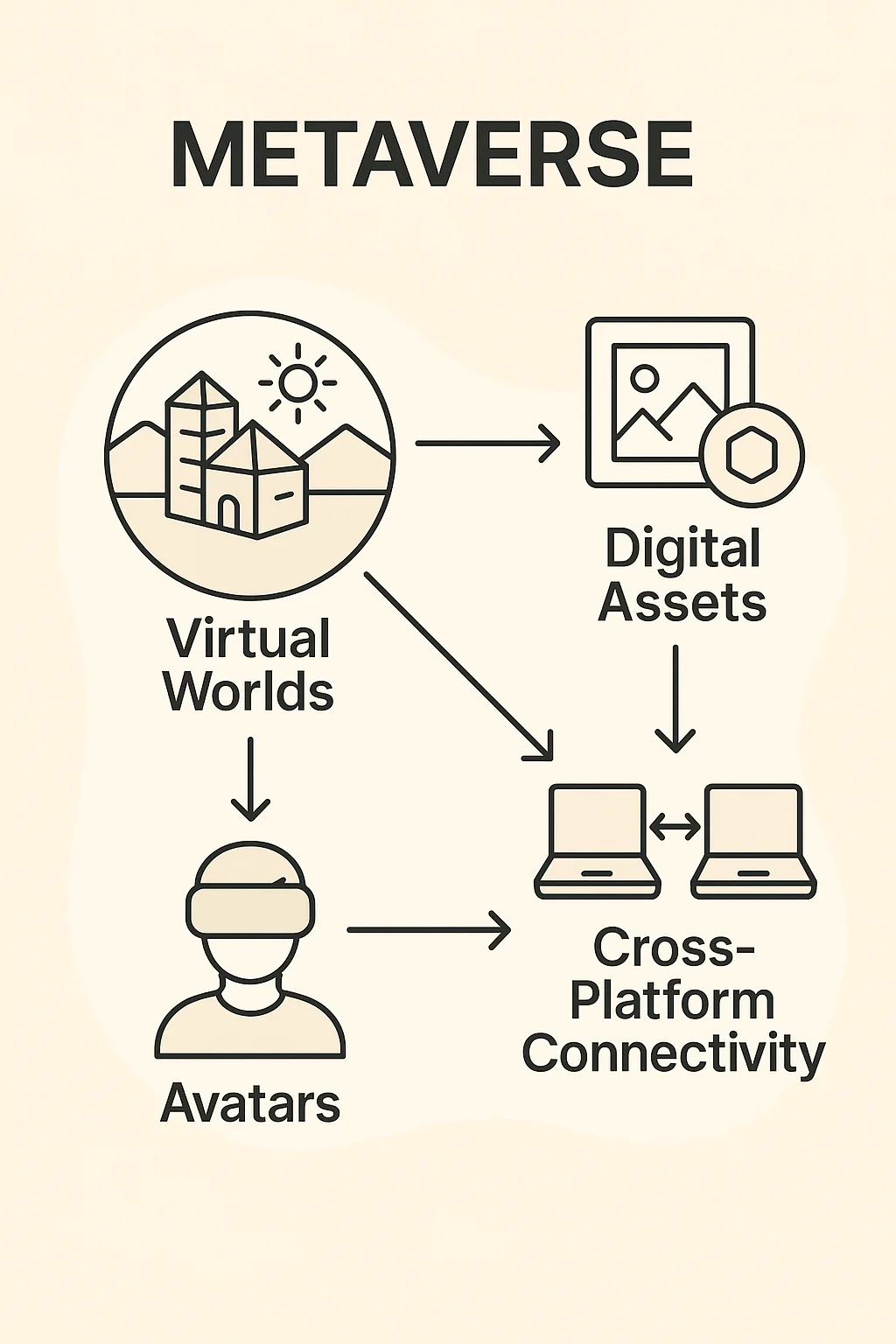
Infographic showing the metaverse ecosystem with elements like virtual worlds, digital assets, avatars, and cross-platform connectivity

Real-World Examples

  • Decentraland – Ethereum-based virtual world with user-owned land and experiences
  • The Sandbox – Gaming-focused metaverse with creation tools and SAND token economy
  • Horizon Worlds – Meta’s VR social platform (though not crypto-native)

Why Beginners Should Care

Metaverse investments are highly speculative. Virtual land and digital assets have no intrinsic value beyond what others will pay for them in these specific virtual environments.

Early adoption opportunities exist for creators who build audiences and businesses in virtual worlds before mainstream adoption arrives.

Technical limitations including VR hardware costs, internet bandwidth requirements, and user experience challenges still prevent mass adoption.

Related Terms: NFT, Virtual Real Estate, Play-to-Earn, Avatar

Back to Crypto Glossary

Similar Posts

  • Wei

    Wei: Ethereum's Smallest UnitWei is the smallest denomination of Ethereum, similar to how cents are the smallest unit of dollars. It's like measuring distances in millimeters when you need precision, even though we usually think in meters or kilometers.Wei represents the smallest possible unit of Ethereum (ETH), with one ETH equal to 1,000,000,000,000,000,000 (10^18) wei. This…

  • Token Launch

    Token Launch: Cryptocurrency Project DebutA token launch is the initial release of a new cryptocurrency token to the public market. It's like a product launch where a company introduces a new product, but for digital currencies instead of physical goods.Token launch refers to the process of introducing a new cryptocurrency token to the market, including…

  • DeFi Security

    DeFi Security: Protecting Decentralized FinanceDeFi security involves protecting decentralized finance protocols and users from smart contract vulnerabilities, economic attacks, and operational risks. It's cybersecurity for programmable money.DeFi security encompasses the practices, technologies, and protocols used to protect decentralized finance applications from hacks, exploits, and other security threats. This includes smart contract auditing, economic security, and user…

  • Order Flow

    Order Flow: Transaction Request RoutingOrder flow refers to the stream of buy and sell orders flowing through trading systems and how they're routed to different execution venues. It's like watching the flow of cars through different highway lanes to see which routes get the best traffic conditions.Order flow encompasses the path that trading orders take…

  • Compound Interest

    Compound Interest: Exponential Growth ReturnsCompound interest is earned on both the initial investment and previously accumulated interest, creating exponential growth over time. It's like planting a tree where each year's growth makes the tree bigger, which then grows even more the following year.Compound interest refers to earning returns not only on the original principal amount…

  • CoinJoin

    CoinJoin: Bitcoin Transaction MixingCoinJoin combines multiple Bitcoin transactions into single transactions to obscure the connection between inputs and outputs. It's like mixing your laundry with other people's to make it harder to tell which clothes belong to whom.CoinJoin is a Bitcoin privacy technique that combines multiple transactions from different users into a single transaction, making…