
Play-to-Earn (P2E)

Play-to-Earn (P2E): Gaming Meets Income

Play-to-earn games let players earn cryptocurrency and NFTs through gameplay. It’s turned gaming from entertainment expense into potential income source for millions worldwide.

Play-to-earn (P2E) is a gaming model where players earn cryptocurrency tokens, NFTs, or other digital assets with real-world value through gameplay activities. Players own in-game assets that can be traded or sold outside the game.

How Play-to-Earn Works

Blockchain integration records game assets as NFTs and tracks token rewards on public ledgers. This gives players true ownership of items that persist even if the game company disappears.

Earning mechanisms include completing quests, winning battles, breeding creatures, or providing value to other players through crafting or services within the game economy.

Scholarship programs allow players without startup capital to borrow expensive NFT characters from investors, splitting earnings between player labor and investor capital.
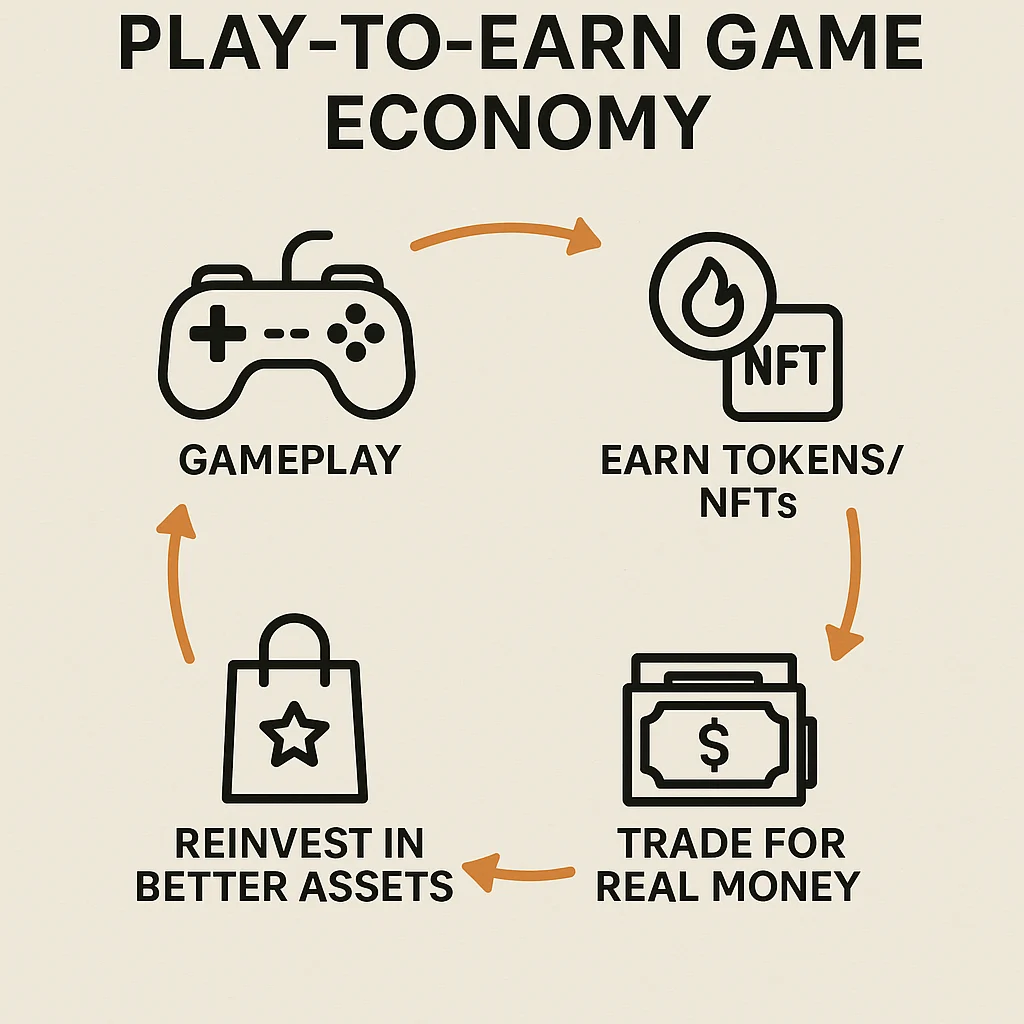
Infographic showing play-to-earn game economy cycle from gameplay to earning tokens/NFTs, trading for money, and reinvesting in assets

Real-World Examples

  • Axie Infinity – Players earned thousands monthly during peak, especially in Philippines and Venezuela
  • Splinterlands – Card-based battles with tradeable NFT cards and daily token rewards
  • STEPN – Move-to-earn app rewarding users for walking and running

Why Beginners Should Care

P2E can provide real income in countries with lower living costs, but earnings have crashed dramatically from 2021-2022 peaks as token prices fell and player bases saturated.

High upfront costs often required to start playing – quality NFT characters can cost hundreds or thousands of dollars before earning anything.

Sustainability questions remain about whether P2E economies can maintain high earning rates as player bases grow and token inflation increases.

Related Terms: NFT, Gaming Token, Metaverse, Scholarship

Back to Crypto Glossary

Similar Posts

  • Bitcoin (BTC)

    Bitcoin (BTC): Digital Money That Banks Can’t Control Bitcoin isn’t just another investment – it’s the financial revolution that started it all. When traditional banks failed us in 2008, Bitcoin emerged as the answer. Bitcoin is digital money that operates without banks, governments, or middlemen controlling it. Think of it as cash for the internet…

  • Asset Locking

    Asset Locking: Securing Value Across ChainsAsset locking involves securing cryptocurrency on one blockchain to enable representation or usage on another network. It's like putting money in escrow while you get a receipt to spend elsewhere.Asset locking refers to securing cryptocurrency tokens in smart contracts or custody solutions to enable their representation or usage on different…

  • SocialFi

    SocialFi: Social Media Meets Financial Incentives SocialFi combines social networking with decentralized finance, rewarding users for creating content and engaging with communities. It’s like getting paid to post, but with actual economic models behind it. SocialFi refers to social finance applications that integrate social media features with DeFi economics, enabling users to monetize social interactions…

  • Public Key

    Public Key: Your Crypto Receiving Address Your public key is like your email address for crypto – you can share it freely without security concerns. A public key is cryptographically derived from your private key and generates your wallet addresses where others can send you cryptocurrency. It’s mathematically linked to your private key but reveals…

  • Arbitrage

    Arbitrage: Risk-Free Profit from Price DifferencesArbitrage involves simultaneously buying and selling the same asset on different markets to profit from price differences. It's like buying wholesale and selling retail, but happening instantly.Arbitrage is the practice of taking advantage of price differences for the same asset across different markets or exchanges to generate risk-free profits. This activity…

  • Public Ledger

    Public Ledger: Transparent Transaction Records Public ledgers record all transactions transparently where anyone can verify the complete history of asset movements. It’s like having a bank statement that everyone can read but no one can forge. A public ledger is a distributed database that records all transactions transparently, allowing anyone to verify and audit the…