
Altcoin

Altcoin: Every Cryptocurrency That Isn’t Bitcoin

“Altcoin” literally means “alternative to Bitcoin.” Some are innovative improvements, others are marketing experiments, and many are outright scams.

An altcoin is any cryptocurrency other than Bitcoin. The term covers everything from Ethereum’s smart contract platform to obscure meme coins with dog themes.

How Altcoins Work

Each altcoin attempts to solve different problems or serve different markets. Some focus on faster transactions, others on privacy, smart contracts, or specific industries.

Most altcoins started by forking Bitcoin’s code and modifying it. Others built entirely new blockchain architectures from scratch.

The altcoin market is highly speculative. While Bitcoin has proven staying power over 15 years, most altcoins from previous cycles have disappeared.
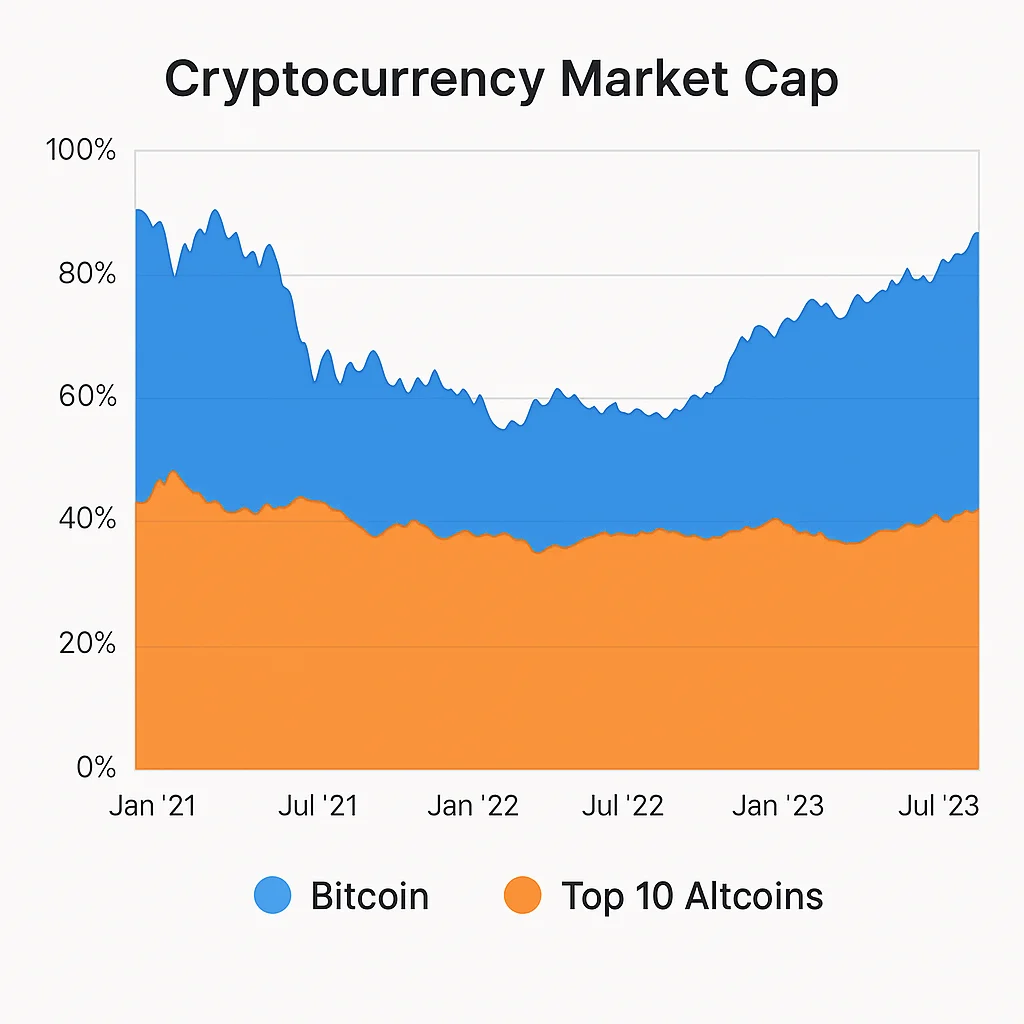
Stacked area chart showing Bitcoin dominance versus top 10 altcoins from Jan 2021 to Oct 2023

Real-World Examples

  • Ethereum (ETH) – Smart contract platform powering DeFi and NFTs
  • Litecoin (LTC) – “Silver to Bitcoin’s gold” with faster transactions
  • Chainlink (LINK) – Connects blockchains to real-world data

Why Beginners Should Care

Altcoins offer opportunities for higher returns but carry significantly higher risks. Many promise revolutionary features but fail to deliver long-term value.

Smart investors typically start with Bitcoin to understand crypto fundamentals, then carefully research altcoins with real utility and strong development teams.

Related Terms: Bitcoin, Ethereum, Market Cap, Tokenomics

Back to Crypto Glossary

Similar Posts

  • Ledger

    Ledger: Hardware Wallet Security Leader Ledger is a leading hardware wallet company that provides secure offline storage for cryptocurrency private keys. They’re like the Fort Knox of crypto storage devices. Ledger is a hardware wallet manufacturer that creates secure devices for storing cryptocurrency private keys offline, protecting them from online threats and hacking attempts. These…

  • Whale

    Whale: The Big Players Who Move Markets In crypto, whales are individuals or entities holding massive amounts of cryptocurrency. When whales move, markets tremble. A whale is someone who holds enough cryptocurrency to significantly influence market prices through their trading decisions. For Bitcoin, this typically means holding 1,000+ BTC (worth $30+ million at current prices)….

  • Chain Split

    Chain Split: Blockchain Network DivisionA chain split occurs when a blockchain network divides into multiple incompatible chains, often due to disagreements about protocol changes. It's like a road splitting into different paths that can't be merged back together.A chain split refers to the division of a blockchain network into two or more incompatible chains, typically…

  • Cross Chain Communication

    Cross Chain Communication: Blockchain Network MessagingCross-chain communication enables different blockchain networks to exchange information and coordinate actions. It's like having universal translators that help different blockchain languages understand each other.Cross-chain communication refers to protocols and technologies that enable different blockchain networks to exchange data, verify states, and coordinate actions across network boundaries. This enables interoperability and…

  • Algorithmic Trading

    Algorithmic Trading: Automated Trading StrategiesAlgorithmic trading uses computer programs to execute trades based on predetermined rules and market conditions. It's like having a robot trader that never sleeps and follows your strategy perfectly.Algorithmic trading involves using computer algorithms to automatically execute cryptocurrency trades based on predefined strategies, market signals, and risk parameters. These systems can operate…

  • Reputation System

    Reputation System: Building Digital TrustReputation systems track and score user behavior to enable trust and coordination in decentralized environments. They're like credit scores but for overall trustworthiness and competence.A reputation system records and evaluates user actions, contributions, and behavior to create trustworthiness scores that enable cooperation in decentralized systems. These systems help identify reliable participants without…