
Flashbots

Flashbots: MEV Infrastructure

Flashbots is a research and development organization that builds infrastructure to mitigate the negative externalities of MEV. They’re trying to make the blockchain economy more fair and transparent.

Flashbots develops tools and infrastructure to democratize MEV extraction and reduce its harmful effects on regular users. Their products include private mempools, MEV-protected transaction ordering, and research into fair value extraction mechanisms.

How Flashbots Works

Private mempools allow users to submit transactions without revealing them publicly until inclusion, preventing front-running and sandwich attacks.

MEV-Boost enables Ethereum validators to maximize their revenue from block production while maintaining network decentralization and censorship resistance.

Research initiatives study MEV’s impact on network security, user experience, and economic fairness to guide development of better solutions.
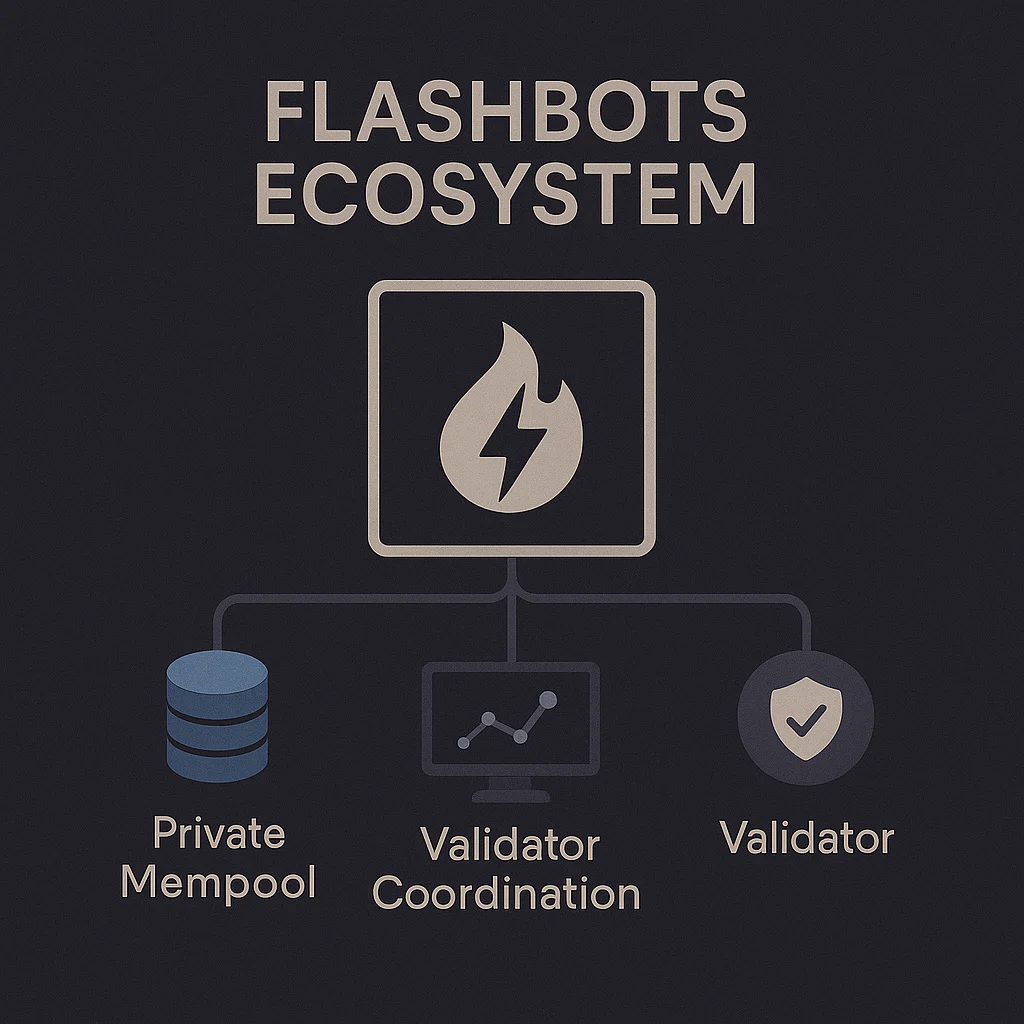
Flashbots ecosystem diagram showing private mempool, validator coordination, MEV protection, and research components.

Real-World Examples

  • Ethereum block building uses Flashbots infrastructure for over 90% of blocks since the Merge
  • MEV protection services route transactions through Flashbots to reduce user exploitation
  • Academic research on MEV economics and mitigation strategies guides protocol development

Why Beginners Should Care

User protection from Flashbots infrastructure reduces the hidden tax of MEV extraction that affects almost every DeFi transaction.

Democratization efforts aim to make MEV benefits available to regular users rather than only sophisticated bots and institutional actors.

Centralization concerns arise as Flashbots infrastructure becomes critical to Ethereum’s operation, raising questions about single points of failure.

Related Terms: MEV, Private Mempool, Block Building, Front-Running

Back to Crypto Glossary

Similar Posts

  • Cross-Chain Bridge

    Cross-Chain Bridge: Connecting Blockchain Islands Cross-chain bridges move assets between different blockchains, connecting isolated cryptocurrency ecosystems. They’re the highways between blockchain cities, but sometimes the bridges collapse. A cross-chain bridge is a protocol that enables the transfer of tokens, data, or smart contract calls between different blockchain networks. Bridges solve blockchain interoperability by creating connections…

  • Privacy Coin

    Privacy Coin: Digital Cash That Actually Hides Privacy coins use advanced cryptography to hide transaction details like amounts, senders, and receivers. They’re what Bitcoin was supposed to be before everyone realized blockchain transactions are completely transparent. Privacy coins are cryptocurrencies designed to provide anonymous or untraceable transactions through advanced cryptographic techniques. Unlike Bitcoin where all…

  • Token Sale

    Token Sale: Cryptocurrency Fundraising EventA token sale is an event where new cryptocurrency projects sell tokens to raise funds for development and operations. It's like a crowdfunding campaign but with digital tokens instead of traditional rewards.A token sale is a fundraising mechanism where cryptocurrency projects offer tokens to investors in exchange for capital to fund…

  • Ring Signatures

    Ring Signatures: Anonymous Signatures in Groups Ring signatures let any member of a group sign a message without revealing which specific member created the signature. It’s like having a family photo where you know someone took it, but can’t tell who. A ring signature is a cryptographic signature scheme where any member of a group…

  • Liquid Restaking

    Liquid Restaking: Flexible High-Yield Staking Liquid restaking combines the capital efficiency of liquid staking with additional yield from securing multiple networks. It’s like having your cake and eating it too, but with slashing risks. Liquid restaking allows staked assets to secure additional protocols while remaining liquid through tokenized representations. Users can earn enhanced yields from…

  • Rollup-as-a-Service (RaaS)

    Rollup-as-a-Service (RaaS): Custom Blockchain Infrastructure RaaS platforms provide infrastructure for deploying custom rollups without building all the technical components from scratch. It’s like having a franchise model for blockchain networks. Rollup-as-a-Service (RaaS) provides infrastructure and tooling for organizations to deploy their own application-specific rollups without deep blockchain development expertise. These platforms handle the technical complexity…