
Node Operator

Node Operator: Network Infrastructure Providers

Node operators run the computers that power blockchain networks. They’re the internet service providers of crypto – invisible but essential infrastructure.

A node operator is an individual or organization that runs blockchain network infrastructure by maintaining nodes that validate transactions, store data, and relay information. They provide the computational backbone that keeps decentralized networks running.

How Node Operations Work

Hardware requirements vary by network but typically include reliable internet, adequate storage, and sufficient processing power to handle network demands.

Uptime responsibility requires 24/7 operation with backup systems and monitoring to ensure consistent network participation and avoid penalties.

Economic incentives reward node operators through block rewards, transaction fees, or token emissions, though costs must be balanced against rewards.
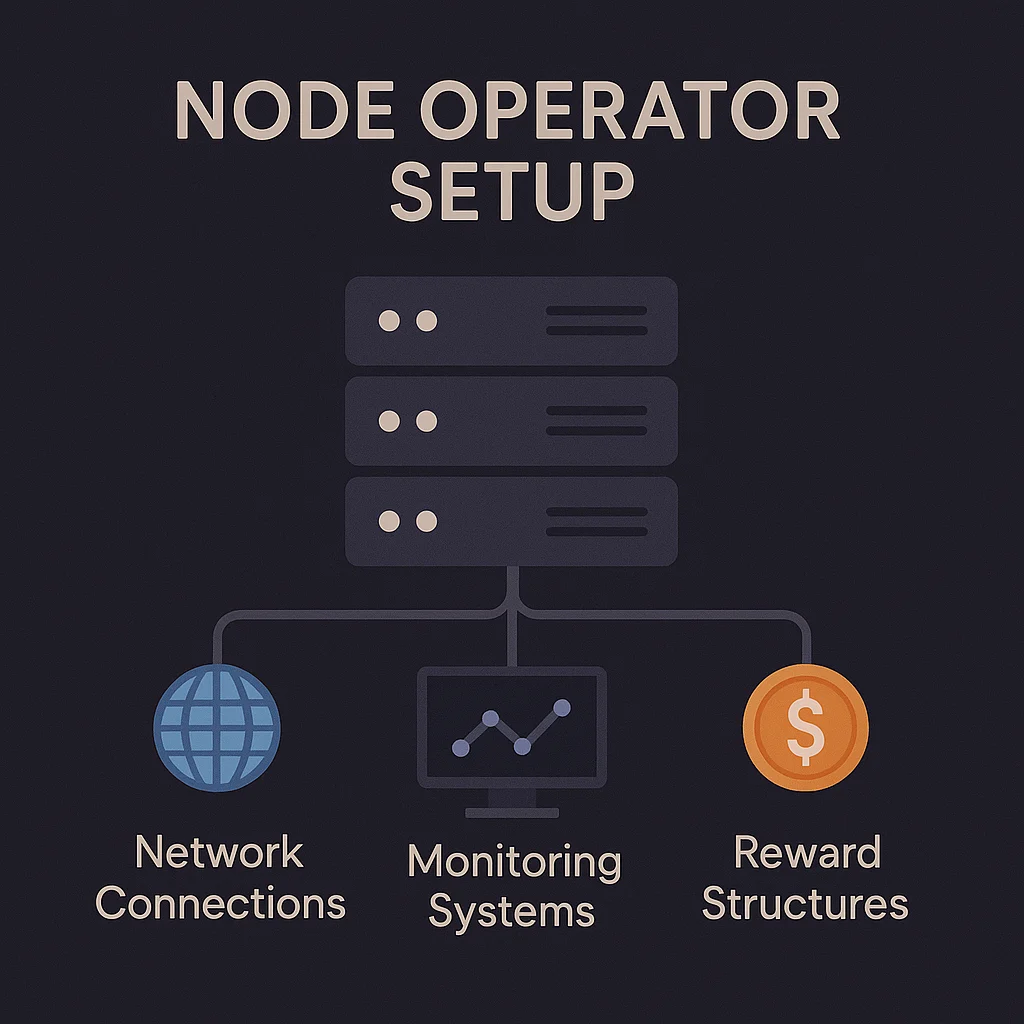
Node operator setup diagram showing server stack connected to network infrastructure, monitoring systems, and reward structures.

Real-World Examples

  • Ethereum validators run nodes that require 32 ETH stakes and earn ~6% annual rewards
  • Bitcoin full nodes provide network security and validation without direct rewards
  • Chainlink oracle nodes earn LINK tokens for providing external data to smart contracts

Why Beginners Should Care

Network decentralization depends on having many independent node operators rather than concentration among a few large entities or cloud providers.

Investment opportunity exists for those with technical skills and capital to earn rewards by providing network infrastructure services.

Technical barriers make node operation challenging for most users, leading to delegation services and node-as-a-service providers.

Related Terms: Validator, Full Node, Staking

Back to Crypto Glossary

Similar Posts

  • Recovery

    Recovery: Restoring Access to Crypto AssetsRecovery refers to methods for regaining access to cryptocurrency wallets and accounts when primary access methods are lost or compromised. It's like having spare keys for your digital vault.Recovery encompasses various mechanisms for restoring access to cryptocurrency wallets, accounts, or assets when primary authentication methods like passwords or devices are…

  • Permit (EIP-2612)

    Permit (EIP-2612): Gasless Approvals Permit functionality allows token approvals through signatures instead of transactions, enabling gasless user experiences for DeFi interactions. It’s like signing a check instead of going to the bank. Permit (EIP-2612) is a token standard that enables gasless approvals through cryptographic signatures rather than on-chain transactions. Users can authorize token spending without…

  • Hot Wallet

    Hot Wallet: Convenience Over Security Hot wallets are your everyday crypto spending accounts. They’re connected to the internet for easy access, but that convenience comes with security trade-offs. A hot wallet is a cryptocurrency wallet that maintains an active internet connection, allowing for quick and easy transactions. Think of it as your crypto checking account…

  • Community

    Community: Decentralized Project StakeholdersCommunity refers to the users, developers, investors, and supporters who participate in and contribute to cryptocurrency projects. They're like the citizens of a digital nation working toward common goals.Community encompasses all stakeholders who participate in cryptocurrency projects including users, developers, investors, validators, and supporters who collectively contribute to project success. Strong communities drive…

  • Secure Element

    Secure Element: Hardware Security ChipA secure element is a tamper-resistant hardware chip designed to store sensitive information like private keys. It's like having a tiny vault built into your device that's extremely difficult to break into.A secure element is a specialized hardware component designed to provide isolated, tamper-resistant storage and processing for sensitive data such…

  • Merkle Tree

    Merkle Tree: Efficient Data Verification Merkle trees enable efficient verification of large datasets without downloading everything. They’re like having a fingerprint for an entire library that proves any book belongs. A Merkle tree is a binary tree structure where each leaf represents a data element and each branch contains cryptographic hashes of its children. The…