
Staking

Staking: Earning Rewards by Holding Crypto

Staking turns your crypto into a money-making machine. Hold tokens, earn more tokens – it’s that simple. But the devil’s in the details.

Staking is the process of locking up cryptocurrency tokens to support a blockchain network’s operations and earning rewards in return. Think of it as earning interest on your crypto savings account, except the “bank” is a decentralized network.

How Staking Works

Proof-of-Stake blockchains use staking instead of energy-intensive mining. Token holders lock up their coins as collateral to validate transactions and secure the network.

The network randomly selects validators to create new blocks based on their stake size. Bigger stakes mean more chances to be chosen and earn rewards.

Staking rewards come from transaction fees and newly minted tokens. Annual yields typically range from 5-20% depending on the network and how many people are staking.
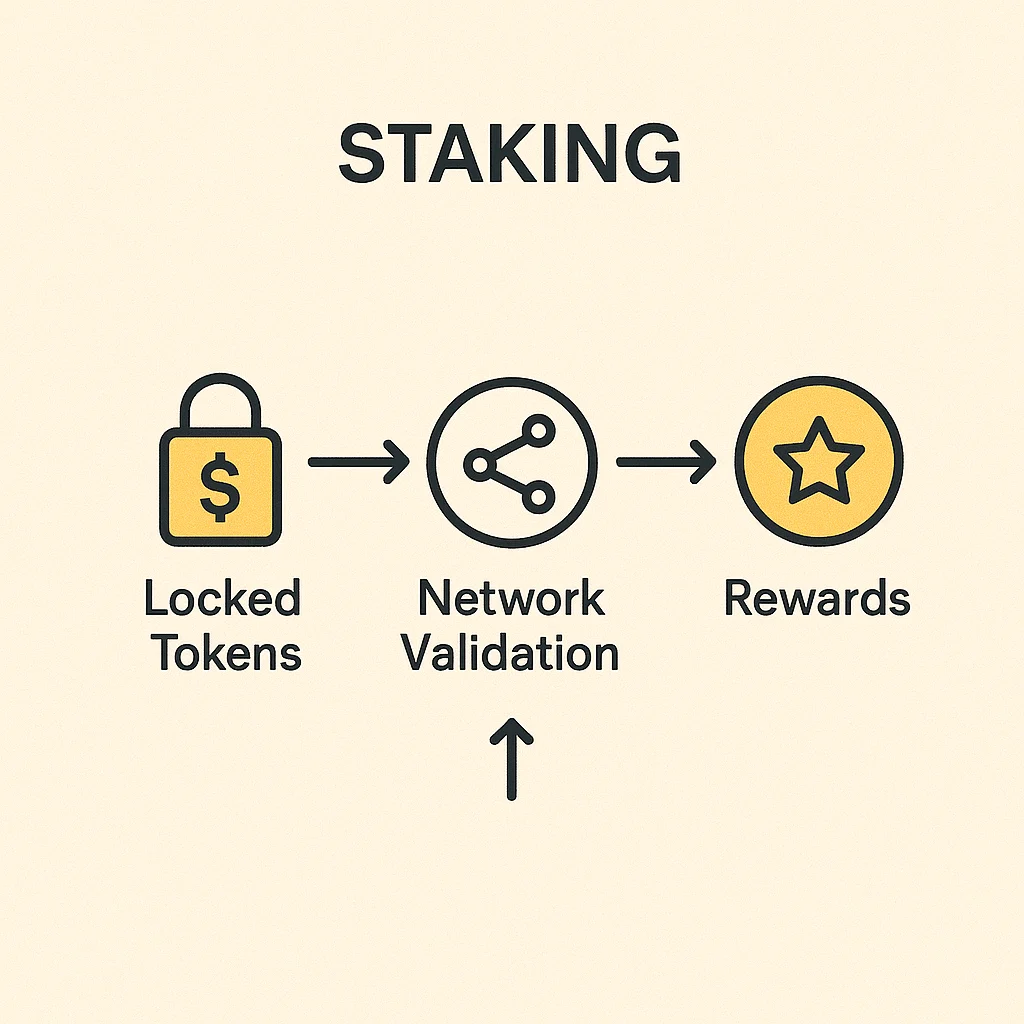
Infographic showing the staking process with locked tokens, network validation, and reward distribution

Real-World Examples

  • Ethereum 2.0 – Stake 32 ETH to run a validator node, earn ~5% annually
  • Cardano (ADA) – Delegate stake to pools, earn ~4-6% with no lockup period
  • Solana (SOL) – Stake with validators for ~6-8% rewards

Why Beginners Should Care

Staking lets your crypto work for you instead of sitting idle. It’s generally safer than yield farming because you’re supporting established networks rather than experimental protocols.

Some platforms offer liquid staking, giving you tokens representing your staked position that you can trade or use in DeFi while still earning staking rewards.

Related Terms: Proof of Stake, Validator, Yield Farming, Liquid Staking

Back to Crypto Glossary

Similar Posts

  • Credentials

    Credentials: Proof of Identity and QualificationsCredentials are verifiable proofs of identity, qualifications, or achievements that can be digitally verified without contacting issuing authorities. They're like diplomas that anyone can instantly authenticate.Credentials refer to digital or physical documents that prove identity, qualifications, achievements, or authorizations, increasingly being tokenized and verified through blockchain technology. These enable trustless verification…

  • Supply Schedule

    Supply Schedule: Token Issuance TimelineA supply schedule defines when and how many new tokens will be created over time. It's like a release calendar that shows exactly when new cryptocurrency will enter circulation.A supply schedule is a predetermined plan that specifies the timing and quantity of new token issuance over time. This schedule provides transparency about…

  • Smart Contract Audit

    Smart Contract Audit: Code Security ReviewSmart contract audits involve professional security reviews of blockchain code to identify vulnerabilities before deployment. It's like having building inspectors for digital architecture.A smart contract audit is a comprehensive security review of blockchain application code conducted by experts to identify vulnerabilities, bugs, and potential attack vectors before public deployment. These reviews…

  • UTXO

    UTXO: Unspent Transaction OutputsUTXOs are like digital coins in your wallet that you haven't spent yet. Bitcoin tracks every unspent "coin" to prevent double-spending and maintain accurate balances.UTXO stands for Unspent Transaction Output – pieces of bitcoin that remain after a transaction and can be used as inputs for future transactions. Think of them as individual…

  • Token Delisting

    Token Delisting: Removal from Trading PlatformsToken delisting occurs when exchanges remove cryptocurrencies from their trading platforms. It's like a store deciding to stop selling a particular product and removing it from their shelves.Token delisting refers to the removal of cryptocurrency tokens from exchange trading platforms, making them unavailable for purchase or sale on those specific…

  • Security Token

    Security Token: Regulated Digital AssetsSecurity tokens are cryptocurrency tokens that represent ownership in real-world assets and are subject to securities regulations. They're like digital stock certificates that comply with financial laws.Security tokens are cryptocurrency tokens that represent ownership stakes in real-world assets and are subject to securities regulations and compliance requirements. These bridge traditional finance with…