
Yield Farming

Yield Farming: Crypto’s High-Risk, High-Reward Game

Yield farming is DeFi’s answer to traditional investing – except the yields are higher, the risks are bigger, and the game changes daily.

Yield farming is the practice of lending, staking, or providing liquidity with your cryptocurrency to earn maximum returns across multiple DeFi protocols. It’s like playing musical chairs with your money, constantly moving to wherever yields are highest.

How Yield Farming Works

Farmers deploy capital across different DeFi protocols to maximize returns. This might involve providing liquidity to DEXs, lending on money markets, or staking governance tokens.

Strategy matters. Smart farmers compound their rewards, reinvesting earnings to grow their positions. They also chase new opportunities as yields shift between protocols.

Advanced farmers use leverage, borrowing against collateral to increase their farming positions. This amplifies both gains and losses dramatically.
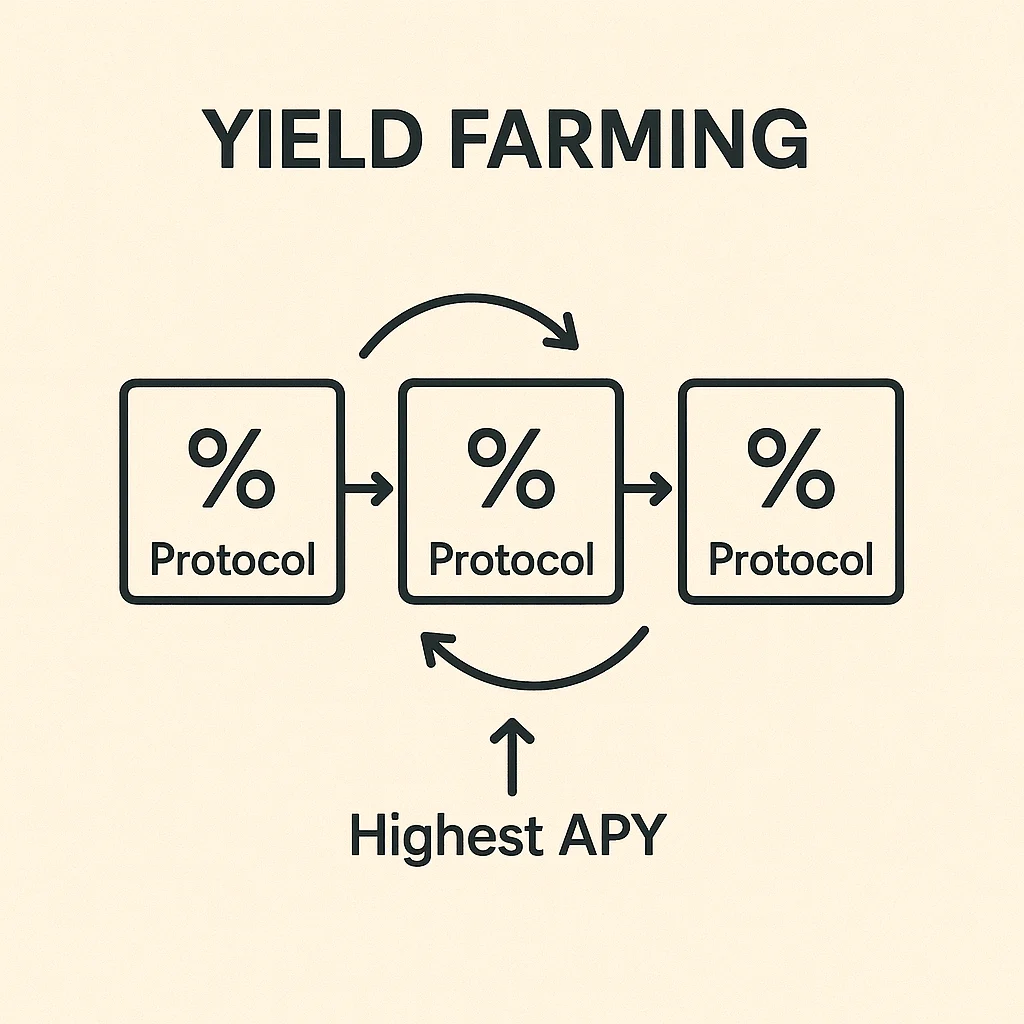
Flowchart showing a yield farming strategy with capital moving between protocols seeking the highest APY

Real-World Examples

  • Compound – Lend USDC at 5% APY, earn COMP tokens worth another 3%
  • Curve – Provide stablecoin liquidity for 8% base APY plus CRV rewards
  • Convex – Boost Curve yields through optimized staking strategies

Why Beginners Should Care

Yield farming can generate impressive returns – 20-100%+ APY isn’t uncommon during bull markets. But these protocols are experimental and uninsured.

Smart contracts can have bugs. Tokens can lose value overnight. Regulations can change. Only farm with money you can afford to lose completely.

Related Terms: Liquidity Pool, Staking, DeFi, Impermanent Loss

Back to Crypto Glossary

Similar Posts

  • Block Confirmation

    Block Confirmation: Transaction Security VerificationBlock confirmation refers to the number of blocks added to the blockchain after a transaction, indicating its security level. It's like waiting for concrete to fully harden before considering construction complete.Block confirmation is the number of blocks that have been added to the blockchain after the block containing a specific transaction. More…

  • Synthetic Asset

    Synthetic Asset: Creating Anything on Blockchain Synthetic assets are blockchain tokens that track the value of real-world assets like stocks, commodities, or currencies. They’re like financial derivatives but programmable and globally accessible. A synthetic asset is a tokenized derivative that tracks the price of an underlying asset without requiring direct ownership of that asset. Smart…

  • Rug Detector

    Rug Detector: Automated Scam Identification Rug detectors are tools that analyze token contracts and trading patterns to identify potential rug pulls before they happen. They’re like having a fraud investigator built into your trading interface. A rug detector is software that automatically analyzes cryptocurrency projects for red flags that indicate potential rug pulls or exit…

  • Time-Weighted Average Price (TWAP)

    Time-Weighted Average Price (TWAP): Manipulation-Resistant Pricing TWAP calculates asset prices over extended time periods to resist manipulation and provide more stable price references for protocols. It’s like taking your temperature every hour instead of just once. Time-Weighted Average Price (TWAP) is a pricing mechanism that calculates the average price of an asset over a specific…

  • Over-Collateralization

    Over-Collateralization: Excess Security DepositsOver-collateralization requires borrowers to deposit assets worth more than their loan amount as security against default. It's like putting down a $15,000 deposit to borrow $10,000, ensuring the lender is protected even if asset values decline.Over-collateralization refers to requiring collateral deposits that exceed the value of loans or borrowed assets, providing additional…

  • Token Lockup

    Token Lockup: Preventing Early Selling Token lockups prevent allocated tokens from being sold or transferred for specific time periods. It’s like putting your poker winnings in a time-locked safe to prevent impulse spending. Token lockup is a mechanism that prevents token holders from selling, transferring, or accessing their tokens until predetermined conditions are met. Lockups…