
Synthetic Asset

Synthetic Asset: Creating Anything on Blockchain

Synthetic assets are blockchain tokens that track the value of real-world assets like stocks, commodities, or currencies. They’re like financial derivatives but programmable and globally accessible.

A synthetic asset is a tokenized derivative that tracks the price of an underlying asset without requiring direct ownership of that asset. Smart contracts use price feeds to maintain the synthetic’s value relative to its underlying reference.

How Synthetic Assets Work

Price oracles provide real-time data about underlying assets, enabling smart contracts to maintain accurate pegs between synthetics and their targets.

Collateralization backs synthetic assets with cryptocurrency deposits, often over-collateralized to account for price volatility and ensure redemption capability.

Liquidation mechanisms protect the system when collateral values fall too low, automatically selling collateral to maintain backing ratios.
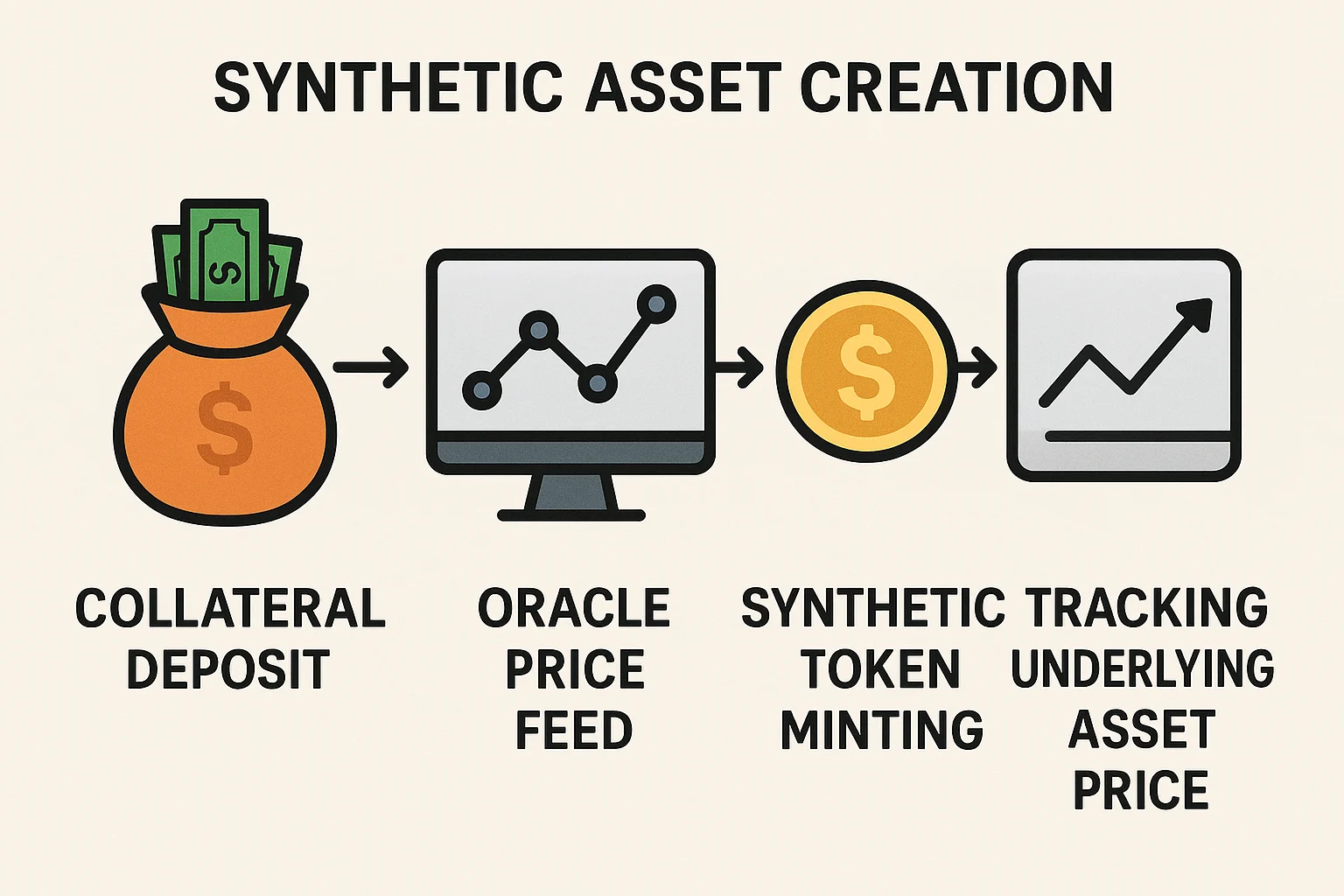
"Diagram showing the synthetic asset creation process: collateral deposit, oracle price feed, synthetic token minting, and asset price tracking."

Real-World Examples

  • Synthetix creates synthetic stocks, commodities, and currencies backed by SNX token collateral
  • Mirror Protocol offers synthetic U.S. stocks accessible globally without traditional brokerage accounts
  • UMA enables creation of custom synthetic assets for any trackable data feed

Why Beginners Should Care

Global access to traditional assets through synthetics bypasses geographic restrictions and traditional financial gatekeepers that limit investment options.

24/7 trading of synthetic stocks and commodities provides constant market access unlike traditional markets with limited hours and holidays.

Regulatory uncertainty surrounds synthetic assets as they may be classified as securities in some jurisdictions, affecting their availability and legal status.

Related Terms: Oracle, Collateral, Price Feed, Derivatives

Back to Crypto Glossary

Similar Posts

  • Capital Preservation

    Capital Preservation: Protecting Investment PrincipalCapital preservation focuses on protecting the original investment amount rather than maximizing returns. It's like choosing a safe over a lottery ticket for your money.Capital preservation is an investment strategy that prioritizes protecting the original principal amount over generating high returns. This conservative approach minimizes downside risk while accepting lower potential upside.How…

  • Session Keys

    Session Keys: Temporary Wallet Permissions Session keys provide temporary, limited permissions for applications to perform specific actions without exposing main wallet private keys. It’s like giving valet keys instead of your full car keys. Session keys are temporary cryptographic keys that grant limited permissions to applications for specific time periods or transaction types. They enable…

  • Community

    Community: Decentralized Project StakeholdersCommunity refers to the users, developers, investors, and supporters who participate in and contribute to cryptocurrency projects. They're like the citizens of a digital nation working toward common goals.Community encompasses all stakeholders who participate in cryptocurrency projects including users, developers, investors, validators, and supporters who collectively contribute to project success. Strong communities drive…

  • Chain Split

    Chain Split: Blockchain Network DivisionA chain split occurs when a blockchain network divides into multiple incompatible chains, often due to disagreements about protocol changes. It's like a road splitting into different paths that can't be merged back together.A chain split refers to the division of a blockchain network into two or more incompatible chains, typically…

  • Price Feed

    Price Feed: Real-Time Market DataPrice feeds provide real-time cryptocurrency market data to applications and smart contracts that need current asset values. They're like financial news tickers that continuously update with the latest stock prices, but for digital assets and automated systems.Price feed refers to continuous streams of current market prices and trading data that supply…

  • Batch Verification

    Batch Verification: Efficient Bulk ProcessingBatch verification processes multiple transactions or proofs together to improve efficiency and reduce computational costs. It's like grading a stack of tests all at once instead of one by one.Batch verification refers to techniques that verify multiple cryptographic proofs, transactions, or operations simultaneously rather than processing each individually. This approach significantly improves…