
Governance Token

Governance Token: Voting Rights in Digital Form

Governance tokens turn users into stakeholders with voting power over protocol decisions. It’s democracy meets DeFi, with mixed results.

A governance token grants holders voting rights on protocol decisions like parameter changes, upgrade proposals, treasury spending, and strategic direction. Token weight typically determines voting power – more tokens mean stronger influence.

How Governance Tokens Work

Proposal systems allow token holders to suggest changes to protocols. Proposals typically require minimum token thresholds to prevent spam and ensure serious consideration.

Voting mechanisms vary from simple majority rules to complex systems requiring different quorum levels for different decision types. Some protocols implement time delays before executing approved changes.

Delegation options let smaller holders combine their voting power by delegating to trusted community members who actively participate in governance decisions.
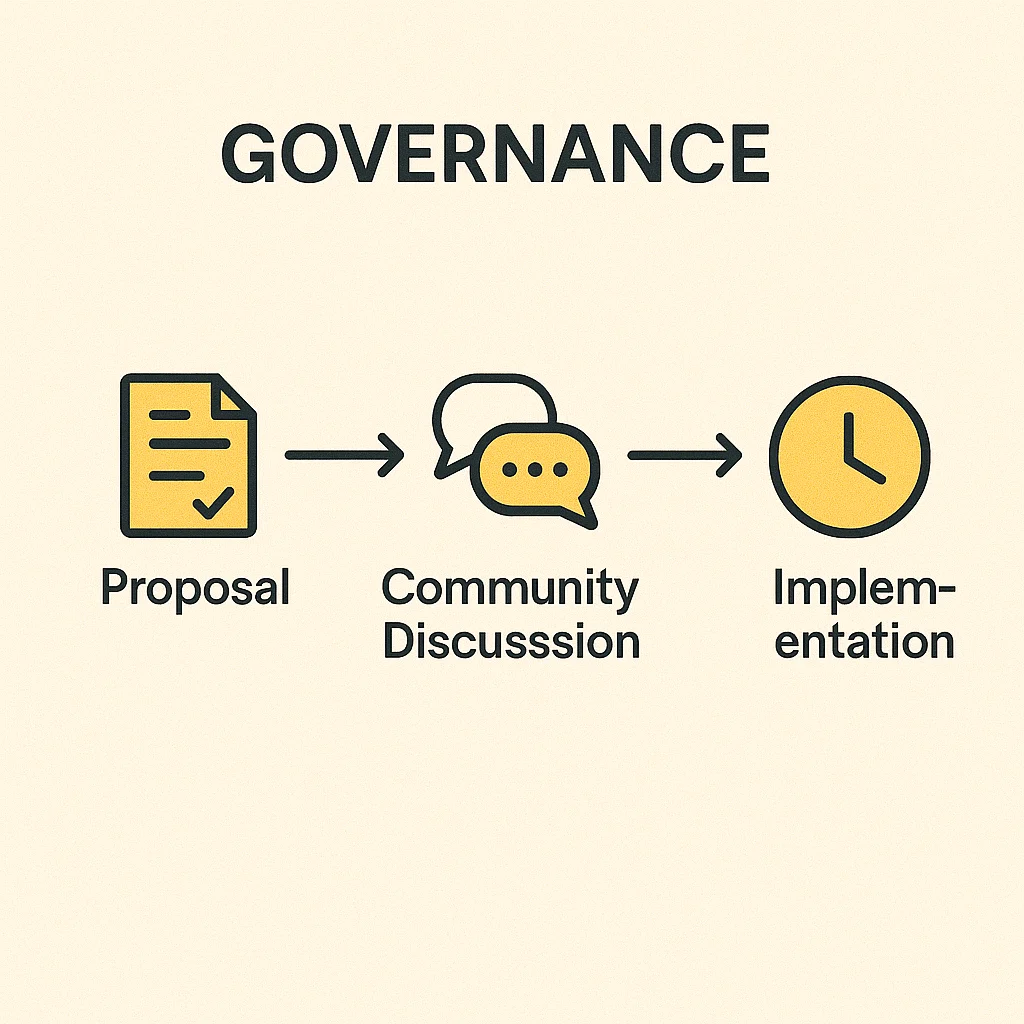
Infographic showing the governance process from proposal to community discussion, token voting, and implementation

Real-World Examples

  • UNI tokens govern Uniswap protocol fees, treasury allocation, and partnership decisions
  • COMP tokens control Compound lending protocol interest rates and collateral factors
  • MKR tokens manage the MakerDAO system backing the DAI stablecoin

Why Beginners Should Care

Governance participation can be profitable when protocols vote to distribute treasury funds or change fee structures that benefit token holders.

Whale dominance is common – large holders often control governance outcomes regardless of smaller holder preferences. True decentralization remains elusive for most protocols.

Regulatory uncertainty surrounds governance tokens. Some might be classified as securities, affecting their legal status and exchange listings.

Related Terms: DAO, Voting, Tokenomics, Decentralization

Back to Crypto Glossary

Similar Posts

  • Token Launch

    Token Launch: Cryptocurrency Project DebutA token launch is the initial release of a new cryptocurrency token to the public market. It's like a product launch where a company introduces a new product, but for digital currencies instead of physical goods.Token launch refers to the process of introducing a new cryptocurrency token to the market, including…

  • Whitelisting

    Whitelisting: VIP Access to Token Sales Whitelisting gives select addresses permission to participate in exclusive token sales or access restricted features. It’s crypto’s version of the velvet rope at exclusive clubs. Whitelisting is the process of pre-approving wallet addresses for participation in token sales, exclusive features, or special privileges within crypto projects. Only whitelisted addresses…

  • Liquidity Bootstrapping

    Liquidity Bootstrapping: Fair Token Launch Mechanism Liquidity bootstrapping uses gradually declining prices to enable fair token distribution while building trading liquidity. It’s like having a reverse auction that creates a fair market price. Liquidity bootstrapping is a token launch mechanism that starts with high prices that gradually decrease over time, allowing market forces to discover…

  • WAGMI (We’re All Gonna Make It)

    WAGMI: Crypto’s Battle Cry WAGMI (We’re All Gonna Make It) is crypto’s rallying cry during tough times. It represents community solidarity and shared optimism about long-term success. WAGMI stands for “We’re All Gonna Make It” – a popular crypto community phrase expressing collective optimism about future success despite current market conditions. It originated from bodybuilding…

  • Real Yield

    Real Yield: Sustainable Revenue-Based Returns Real yield comes from actual protocol revenue rather than token emissions or inflationary rewards. It’s the difference between earning from productive business activity versus printing more money. Real yield refers to returns generated from genuine protocol revenue, fees, or value creation rather than token inflation or emissions. These yields can…

  • Transaction Analysis

    Transaction Analysis: Blockchain Data InvestigationTransaction analysis involves examining blockchain data to understand patterns, track funds, and investigate suspicious activities. It's like being a detective who follows money trails in the digital world.Transaction analysis refers to the systematic examination of blockchain transaction data to identify patterns, trace fund flows, and investigate potential illegal or suspicious activities. This…