
Multichain Router

Multichain Router: Cross-Chain Navigation

Multichain routers find optimal paths for moving assets between different blockchain networks. They’re like GPS for cross-chain transactions, finding the cheapest and fastest routes.

A multichain router is a protocol that automatically finds the best path for transferring assets between different blockchain networks. It compares routes across multiple bridges and chains to optimize for cost, speed, or security based on user preferences.

How Multichain Routers Work

Route optimization analyzes available bridges, liquidity levels, fees, and transfer times across different paths to recommend the best option for specific transfers.

Liquidity aggregation combines multiple bridges and cross-chain protocols to provide better rates and availability than any single bridge could offer.

Automated execution handles the complex multi-step process of cross-chain transfers, including approvals, bridge interactions, and destination chain operations.
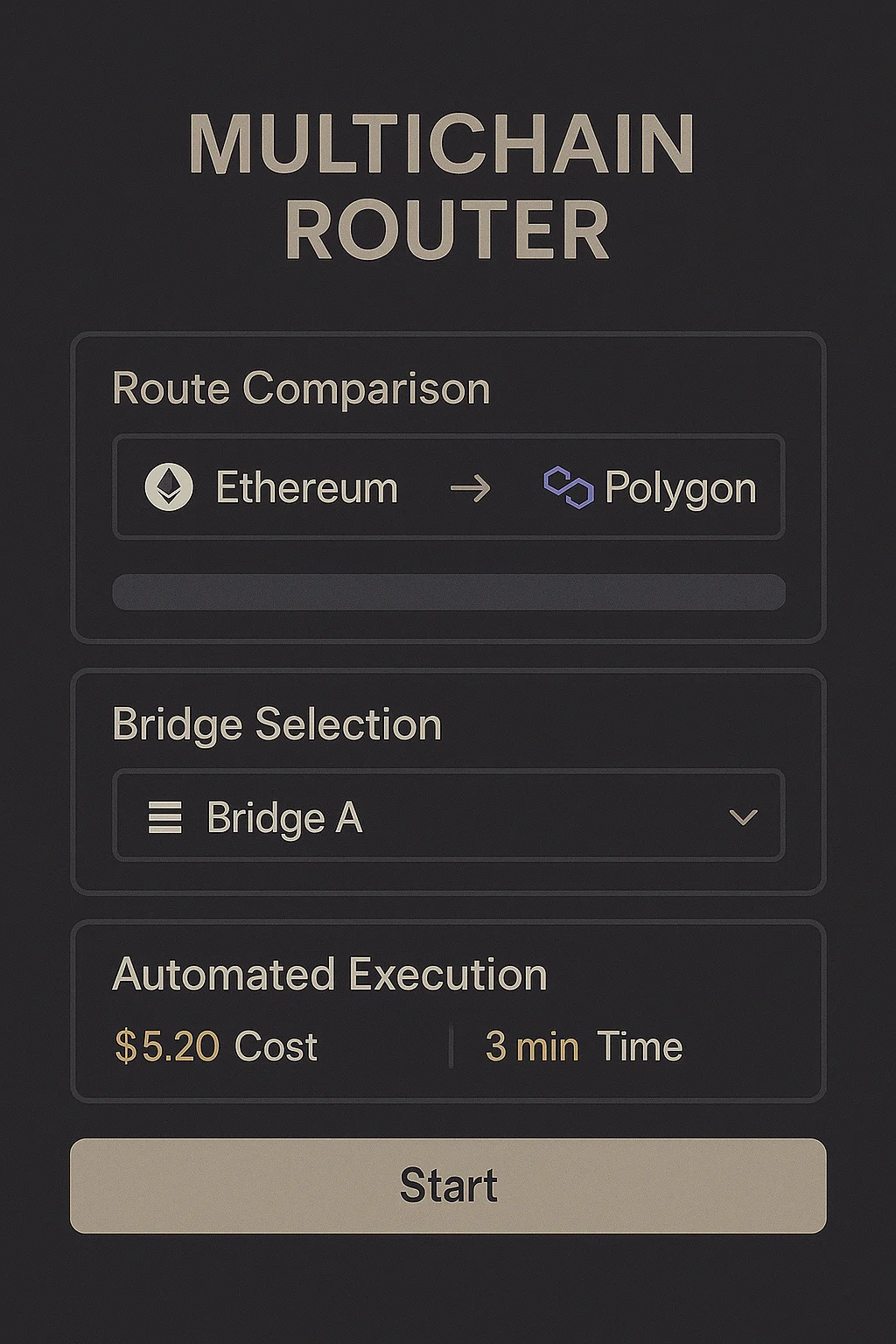
Multichain router interface displaying route comparison, bridge selection dropdown, cost and time metrics, and automated execution start button.

Real-World Examples

  • Li.Fi aggregates dozens of bridges and chains to find optimal cross-chain routes
  • Socket provides routing infrastructure for wallets and dApps to integrate cross-chain functionality
  • Bungee offers user-friendly interfaces for comparing and executing cross-chain transfers

Why Beginners Should Care

Simplified complexity of cross-chain transfers through automated routing eliminates the need to understand dozens of different bridge protocols.

Cost savings from route optimization can significantly reduce fees compared to using random bridges without comparison shopping.

Risk diversification across multiple bridges and protocols reduces dependence on any single cross-chain infrastructure provider.

Related Terms: Cross-Chain Bridge, Bridge Aggregator, Interoperability, Multi-Chain

Back to Crypto Glossary

Similar Posts

  • Protocol Revenue

    Protocol Revenue: Earning from Network ActivityProtocol revenue refers to income generated by blockchain protocols through transaction fees, service charges, or other value capture mechanisms. It's like toll roads that collect fees from everyone who uses the infrastructure.Protocol revenue encompasses all income streams generated by blockchain protocols including transaction fees, service charges, governance fees, and other…

  • Liquidity Mining

    Liquidity Mining: Earning Rewards for Providing Liquidity Liquidity mining rewards users who provide capital to DeFi protocols with governance tokens. It’s like getting paid to be the house money at a casino. Liquidity mining is a DeFi incentive mechanism where protocols distribute governance tokens to users who provide liquidity to their platforms. Users earn both…

  • Transaction Ordering

    Transaction Ordering: Sequence Control SystemsTransaction ordering determines the sequence in which transactions get processed within blockchain blocks. It's like controlling the line at a busy restaurant.Transaction ordering refers to the process by which blockchain networks determine the sequence of transactions within blocks. This ordering can significantly affect transaction outcomes, especially in DeFi applications sensitive to price…

  • Stealth Address

    Stealth Address: Private Payment DestinationsStealth addresses create unique, one-time addresses for each transaction to enhance privacy by breaking the link between payments and recipient identities. They're like using a different PO box for every package delivery so no one can track all your mail to the same location.Stealth addresses are unique, one-time payment destinations generated…

  • Total Supply

    Total Supply: Maximum Token QuantityTotal supply refers to the maximum number of cryptocurrency tokens that will ever exist, including those not yet in circulation. It's like knowing how many copies of a collectible item will ever be made.Total supply encompasses all cryptocurrency tokens that exist or will ever be created, including circulating supply, locked tokens,…

  • Scalability

    Scalability: Handling Growing Network DemandScalability refers to a blockchain network's ability to handle increasing transaction volumes without degrading performance or significantly increasing costs. It's like building highways that don't get congested as more cars use them.Scalability describes how well blockchain networks can accommodate growing user bases and transaction volumes while maintaining reasonable fees and confirmation…