
Account Abstraction

Account Abstraction: Smart Contract Wallets

Account abstraction turns wallets into programmable smart contracts with custom logic for transaction validation. It’s like upgrading from a basic calculator to a full computer.

Account abstraction allows user accounts to be controlled by smart contract code rather than simple private key signatures. This enables programmable wallets with custom authentication, automatic payments, social recovery, and other advanced features impossible with traditional accounts.

How Account Abstraction Works

Custom validation logic replaces standard signature checks with programmable rules like multi-signature requirements, time-based restrictions, or biometric authentication.

Sponsored transactions enable third parties to pay gas fees for users, removing the need to hold native tokens for transaction costs.

Bundled operations combine multiple actions into single transactions, like approving and swapping tokens in one step rather than separate transactions.
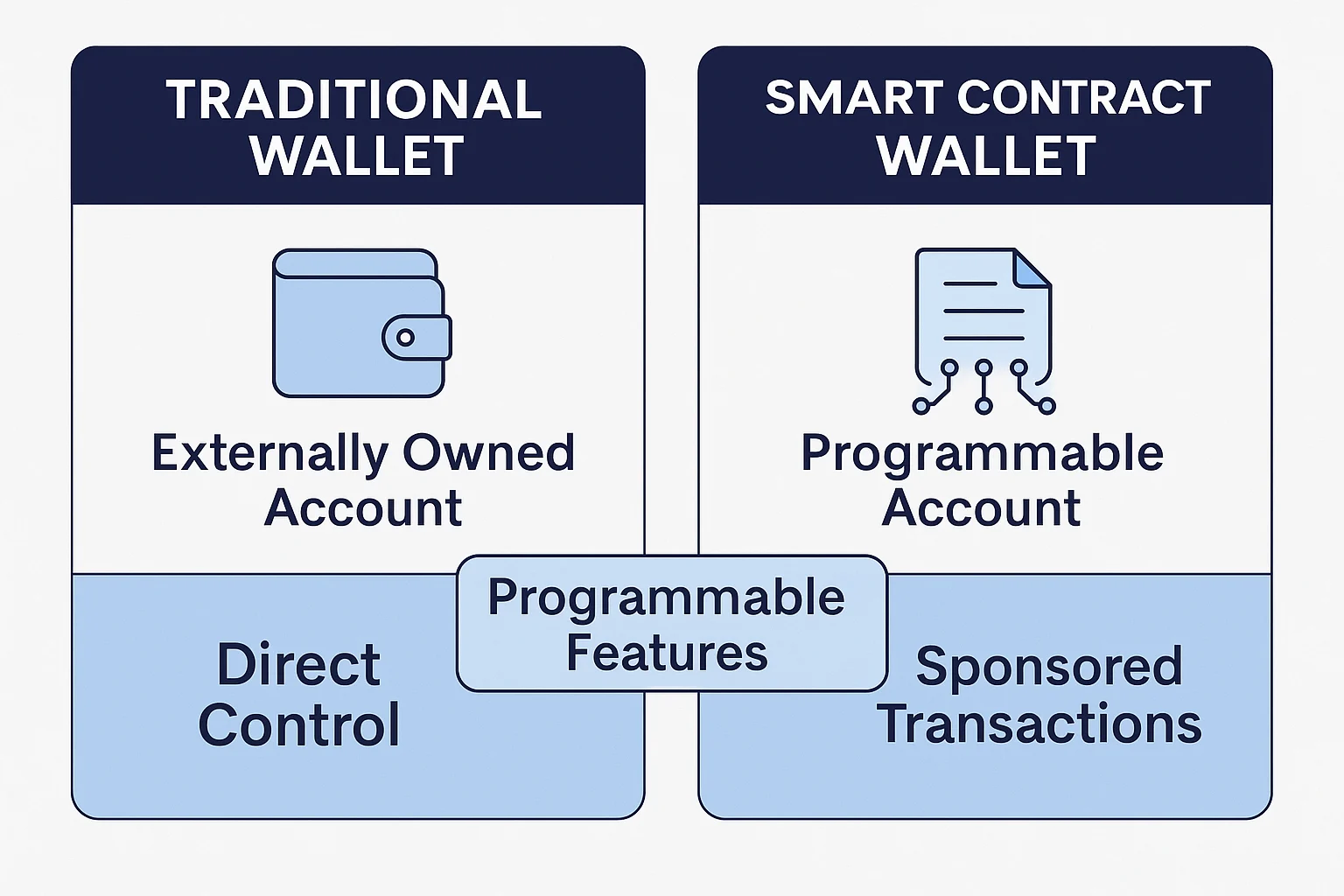
Account abstraction comparison showing traditional externally owned wallet vs smart contract wallet with programmable features and sponsored transactions.

Real-World Examples

  • Safe (formerly Gnosis Safe) provides multisig smart contract wallets with recovery features
  • Argent offers mobile wallets with social recovery and gasless transactions
  • EIP-4337 standardizes account abstraction implementation across Ethereum

Why Beginners Should Care

Better user experience eliminates many crypto UX pain points like gas fee management, seed phrase backup, and irreversible transaction mistakes.

Enhanced security through programmable rules like spending limits, trusted contacts for recovery, and automatic fraud detection that goes beyond simple private key protection.

Mass adoption potential as account abstraction makes crypto wallets behave more like traditional banking apps that mainstream users already understand.

Related Terms: Smart Contract, Multi-Signature, Social Recovery, Gas Fees

Back to Crypto Glossary

Similar Posts

  • Intent-Based

    Intent-Based: Goal-Oriented Transaction DesignIntent-based systems allow users to specify desired outcomes rather than exact transaction steps, with the system automatically determining optimal execution paths. It's like telling a travel agent your destination and preferences, then letting them handle all the complex booking details and connections.Intent-based refers to blockchain systems where users express their desired outcomes…

  • Private Key

    Private Key: Your Crypto’s Secret Password Your private key is the most important thing you’ll ever own in crypto. Lose it, and your money’s gone forever. No customer service number to call. A private key is a secret code that proves you own your cryptocurrency and allows you to spend it. It’s like the combination…

  • Tokenomics

    Tokenomics: The Economics of Digital Assets Tokenomics determines how cryptocurrencies create, distribute, and maintain value over time. It’s the difference between digital money and digital monopoly money. Tokenomics refers to the economic design and mechanics of a cryptocurrency token, including supply schedules, distribution methods, utility functions, and incentive structures. Good tokenomics align stakeholder interests while…

  • Transaction Signing

    Transaction Signing: Authorizing Blockchain OperationsTransaction signing uses private keys to create cryptographic signatures that authorize blockchain transactions. It's like signing a check with an unforgeable signature that proves you approved the payment.Transaction signing is the process of creating cryptographic signatures using private keys to authorize and authenticate blockchain transactions. This process proves ownership and prevents unauthorized…

  • Hash Rate

    Hash Rate: Network Security Measurement Hash rate measures how much computational power secures a blockchain network. Higher hash rates mean stronger security against attacks and manipulation. Hash rate is the total computational power used by miners to process transactions and secure a proof-of-work blockchain network. It’s measured in hashes per second – calculations attempting to…

  • Timelock

    Timelock: Time-Based Access ControlTimelock mechanisms prevent access to funds or functions until predetermined time conditions are met. It's like having a safe that only opens at specific times.A timelock is a smart contract feature that restricts access to funds, functions, or actions until a specified time period has elapsed. These mechanisms provide security through delayed execution…