
Multisig Recovery

Multisig Recovery: Getting Back Lost Access

Multisig recovery helps regain access to multi-signature wallets when some keys are lost or compromised. It’s like having spare keys for your house, but with cryptographic mathematics.

Multisig recovery refers to mechanisms that restore access to multi-signature wallets when the required number of signatures is no longer available due to lost keys, compromised devices, or unavailable signers. Recovery methods must balance security with accessibility.

How Multisig Recovery Works

Threshold adjustment may allow reducing signature requirements during recovery procedures, typically requiring unanimous consent from remaining key holders.

Timelock recovery enables predetermined recovery procedures that activate after extended periods of inactivity, allowing backup methods to restore access.

Social recovery involves trusted contacts who can collectively restore access through predetermined procedures when primary key holders are unavailable.
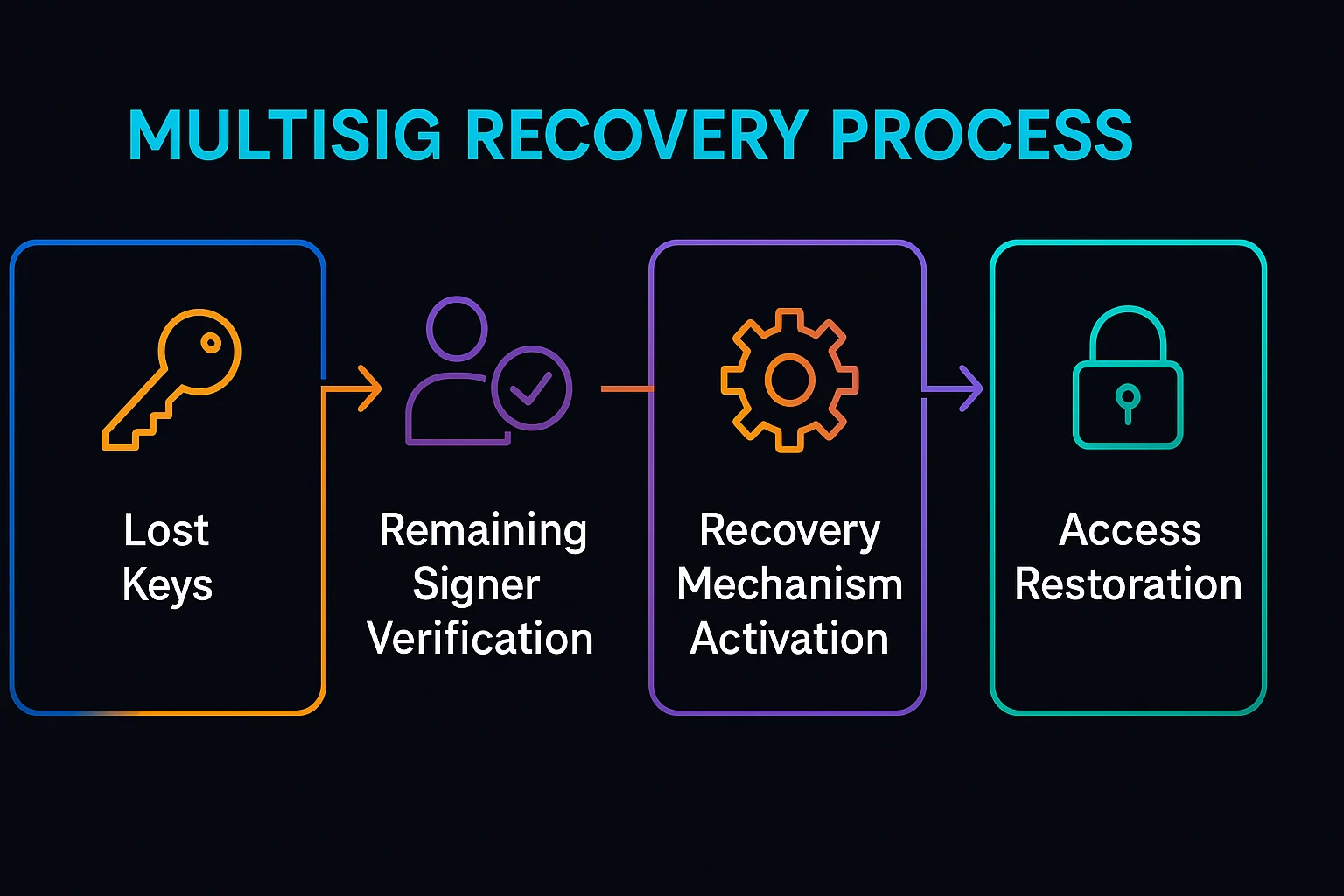
Multisig recovery process showing lost keys, remaining signer verification, recovery mechanism activation, and access restoration

Real-World Examples

  • Gnosis Safe recovery modules enable timelock-based recovery procedures for multi-signature wallets
  • Argent wallets use social recovery with trusted guardians to restore access
  • Corporate treasury recovery procedures for when key employees leave or become unavailable

Why Beginners Should Care

Access preservation prevents permanent loss of funds when multisig signers become unavailable due to device loss, death, or other circumstances.

Security trade-offs as recovery mechanisms can potentially be exploited if not designed carefully, creating new attack vectors.

Planning importance requires establishing recovery procedures before they’re needed, when all parties are available to configure them properly.

Related Terms: Multi-Signature, Social Recovery, Timelock, Wallet Security

Back to Crypto Glossary

Similar Posts

  • Premium

    Premium: Price Above Fair ValuePremium refers to the amount by which an asset's price exceeds its underlying value or reference price. It's like paying extra for convenience or brand name compared to the basic product cost.Premium is the additional amount paid above an asset's fair value, net asset value, or reference price. In cryptocurrency markets, premiums…

  • Sanctions

    Sanctions: Government Financial RestrictionsCryptocurrency sanctions involve government restrictions on specific addresses, entities, or services to prevent them from accessing financial systems. They're economic weapons adapted for the digital age.Sanctions refer to government-imposed restrictions that prohibit individuals, entities, or services from accessing financial systems or conducting specific activities. In crypto, this includes blocking addresses and restricting access…

  • Slippage

    Slippage: The Cost of Market Impact Slippage is the difference between expected and actual trade prices. It’s the tax you pay for moving markets when your trade is large relative to available liquidity. Slippage occurs when the execution price of a trade differs from the expected price due to market movement or insufficient liquidity. Large…

  • Team Incentives

    Team Incentives: Aligning Development with SuccessTeam incentives structure compensation and motivation for cryptocurrency project developers and founders. They align team interests with long-term project success rather than short-term gains.Team incentives refer to compensation structures that motivate project teams to work toward long-term success rather than quick profits. These typically include token allocations with vesting schedules and…

  • Rebase Token

    Rebase Token: Algorithmic Supply Adjustment Rebase tokens automatically adjust their total supply to maintain target prices or economic conditions. It’s like having money that multiplies or divides to keep its buying power constant. A rebase token automatically increases or decreases the total token supply held by all users proportionally to achieve specific economic targets like…

  • Modular Blockchain

    Modular Blockchain: Specialized Building Blocks Modular blockchains separate core functions like consensus, execution, and data availability into specialized layers. It’s like having a restaurant where different teams handle cooking, serving, and cleaning instead of one person doing everything. Modular blockchain architecture separates blockchain functions into distinct layers that can be optimized independently. This allows specialization…