
ZK Proof Aggregation

ZK Proof Aggregation: Scaling Zero-Knowledge Systems

ZK proof aggregation combines multiple zero-knowledge proofs into single, more efficient proofs. It’s like having one master key that proves you have access to multiple locked boxes.

ZK proof aggregation is a technique that combines multiple zero-knowledge proofs into a single proof that verifies all the original statements simultaneously. This dramatically reduces verification costs and blockchain storage requirements.

How ZK Proof Aggregation Works

Batch verification processes multiple proofs together rather than verifying each one individually, reducing computational overhead significantly.

Recursive composition enables proofs about proofs, where one ZK proof can verify that other ZK proofs are valid without revealing their contents.

Cost amortization spreads verification costs across many transactions, making ZK systems economically viable for smaller value transactions.
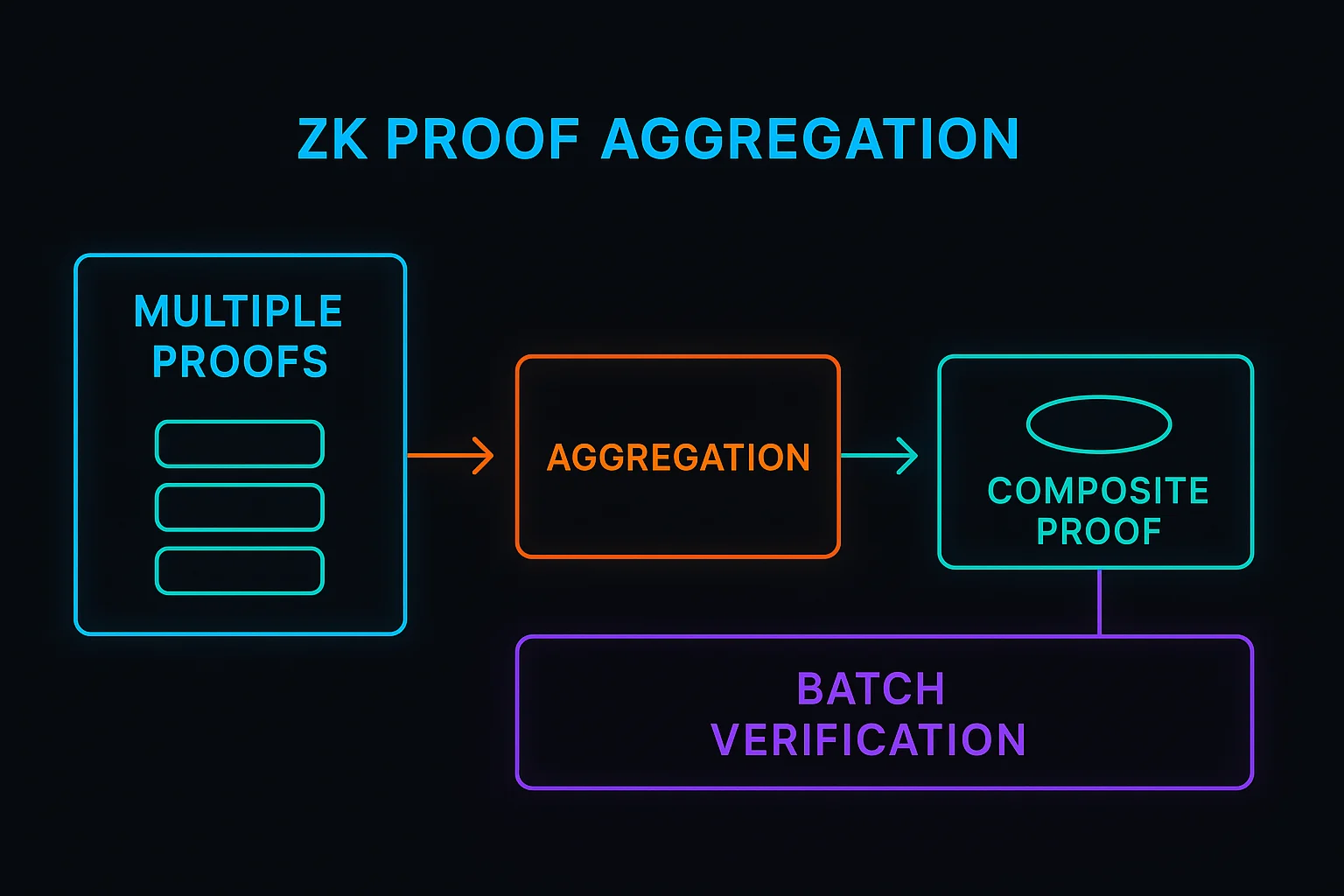
ZK proof aggregation flowchart showing multiple proofs, aggregation process, composite proof, and batch verification

Real-World Examples

  • StarkNet uses STARK proof aggregation for scalable transaction processing
  • Polygon Hermez combines multiple transaction proofs into batches for Ethereum submission
  • Mina Protocol uses recursive zk-SNARKs to maintain constant blockchain size

Why Beginners Should Care

Scalability improvements enable ZK systems to handle transaction volumes comparable to traditional centralized systems.

Cost reduction makes ZK privacy and verification accessible for everyday transactions rather than only high-value use cases.

Technical complexity requires sophisticated cryptographic infrastructure that few teams can implement correctly.

Related Terms: Zero-Knowledge Proof, Recursive Proofs, Batch Verification, Scalability

Back to Crypto Glossary

Similar Posts

  • AI Coins

    AI Coins: Cryptocurrency Meets Artificial Intelligence AI coins are cryptocurrencies focused on artificial intelligence applications, data marketplaces, or computational resources for machine learning. They’re betting that AI and crypto will merge into something bigger than both. AI coins are cryptocurrencies that facilitate artificial intelligence development, deployment, or monetization through decentralized networks. These tokens enable AI…

  • Layer 2

    Layer 2: Scaling Solutions for Expensive Blockchains Layer 2 networks solve Ethereum’s biggest problem – ridiculous gas fees. They process transactions cheaply and quickly while inheriting Ethereum’s security. Layer 2 is a separate blockchain or protocol built on top of a main blockchain (Layer 1) to improve scalability and reduce transaction costs. These solutions handle…

  • Market Cap

    Market Cap: How to Value Crypto Projects Market cap tells you how much the entire crypto market values a project. It’s the most important number for comparing different cryptocurrencies. Market capitalization is the total value of all coins in circulation, calculated by multiplying the current price by the circulating supply. It shows the relative size…

  • Transaction Signing

    Transaction Signing: Authorizing Blockchain OperationsTransaction signing uses private keys to create cryptographic signatures that authorize blockchain transactions. It's like signing a check with an unforgeable signature that proves you approved the payment.Transaction signing is the process of creating cryptographic signatures using private keys to authorize and authenticate blockchain transactions. This process proves ownership and prevents unauthorized…

  • Price Discovery

    Price Discovery: Finding Fair Market ValuePrice discovery is the process by which markets determine the fair value of assets through buyer and seller interactions. It's like a continuous auction where everyone votes with their money.Price discovery refers to the mechanism by which markets establish asset prices through the interaction of supply and demand from buyers…

  • DeFi Composability

    DeFi Composability: Building Block Finance DeFi composability allows protocols to integrate seamlessly, creating complex financial products by combining simpler components. It’s like financial Lego blocks that snap together perfectly. DeFi composability refers to the ability of decentralized finance protocols to interact and build upon each other, creating more complex financial products through modular integration. This…