
Multisig Recovery

Multisig Recovery: Getting Back Lost Access

Multisig recovery helps regain access to multi-signature wallets when some keys are lost or compromised. It’s like having spare keys for your house, but with cryptographic mathematics.

Multisig recovery refers to mechanisms that restore access to multi-signature wallets when the required number of signatures is no longer available due to lost keys, compromised devices, or unavailable signers. Recovery methods must balance security with accessibility.

How Multisig Recovery Works

Threshold adjustment may allow reducing signature requirements during recovery procedures, typically requiring unanimous consent from remaining key holders.

Timelock recovery enables predetermined recovery procedures that activate after extended periods of inactivity, allowing backup methods to restore access.

Social recovery involves trusted contacts who can collectively restore access through predetermined procedures when primary key holders are unavailable.
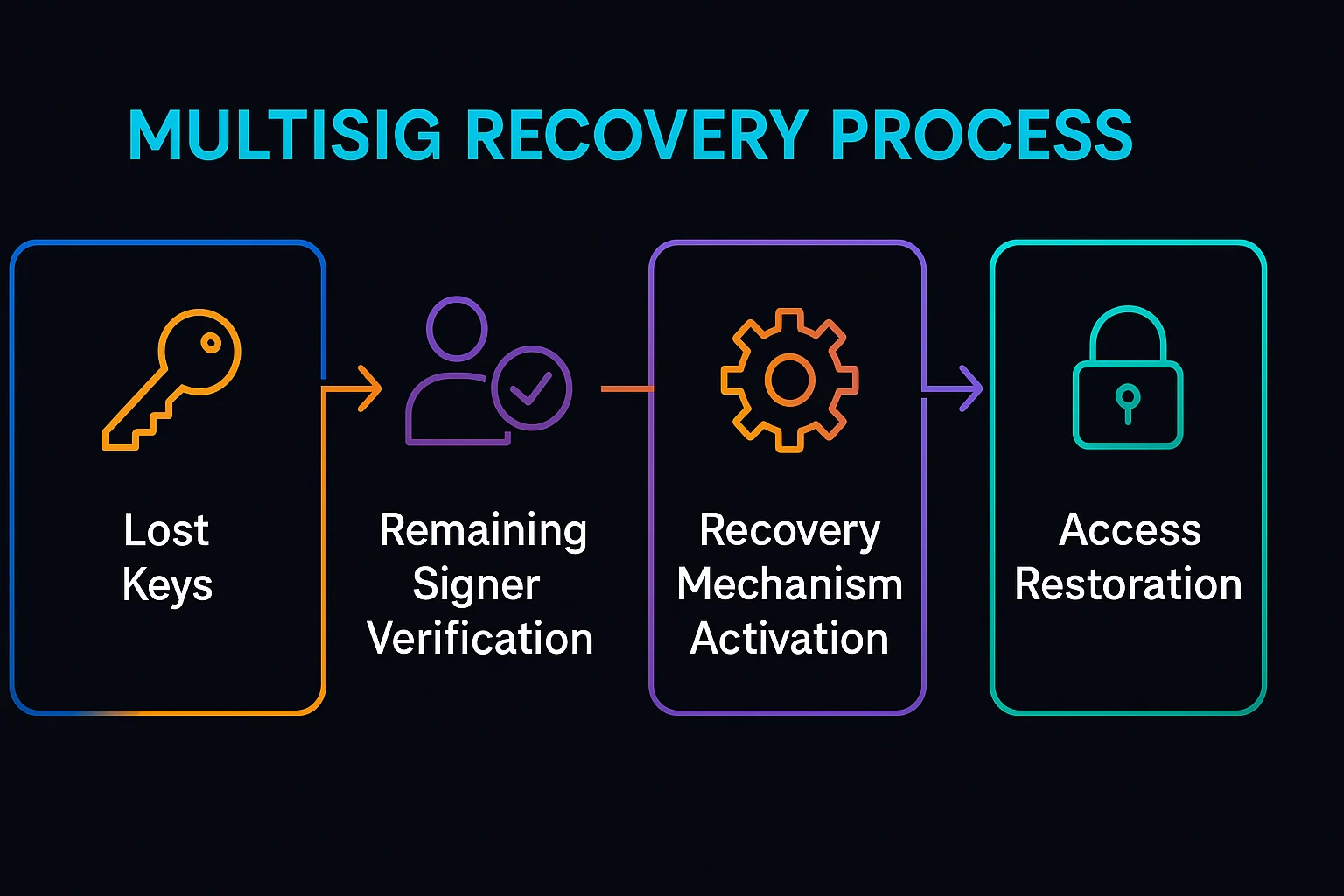
Multisig recovery process showing lost keys, remaining signer verification, recovery mechanism activation, and access restoration

Real-World Examples

  • Gnosis Safe recovery modules enable timelock-based recovery procedures for multi-signature wallets
  • Argent wallets use social recovery with trusted guardians to restore access
  • Corporate treasury recovery procedures for when key employees leave or become unavailable

Why Beginners Should Care

Access preservation prevents permanent loss of funds when multisig signers become unavailable due to device loss, death, or other circumstances.

Security trade-offs as recovery mechanisms can potentially be exploited if not designed carefully, creating new attack vectors.

Planning importance requires establishing recovery procedures before they’re needed, when all parties are available to configure them properly.

Related Terms: Multi-Signature, Social Recovery, Timelock, Wallet Security

Back to Crypto Glossary

Similar Posts

  • Verifiable Randomness

    Verifiable Randomness: Provably Fair Random NumbersVerifiable randomness provides cryptographically secure random numbers that can be independently verified for fairness. It's like having dice that everyone can mathematically confirm are not loaded.Verifiable randomness refers to random number generation systems that produce unpredictable outputs while providing cryptographic proofs that the randomness is fair and unbiased. This enables trustless…

  • Governance Participation

    Governance Participation: Active Protocol InvolvementGovernance participation involves actively engaging in decision-making processes for cryptocurrency projects and protocols. It's like being an active citizen who votes and participates in community decisions.Governance participation refers to active involvement in protocol decision-making through voting, proposal creation, delegation, and other governance mechanisms. This enables community members to influence project direction and…

  • Intent-Centric Protocols

    Intent-Centric Protocols: What You Want, Not How Intent-centric protocols let users specify desired outcomes while the system figures out how to achieve them. Instead of manually executing swap steps, you just say “I want USDC” and the protocol handles everything. Intent-centric protocols allow users to express desired end states rather than specific transaction sequences. Users…

  • Wallet Signature Spoofing

    Wallet Signature Spoofing: Fake Authorization Attacks Wallet signature spoofing tricks users into signing malicious transactions that appear legitimate but actually authorize harmful actions. It’s like signing a contract where the fine print changes after you sign. Wallet signature spoofing involves presenting misleading information about transaction contents to trick users into signing authorizations for unintended actions….

  • Inter Chain Protocol

    Inter Chain Protocol: Cross-Blockchain CommunicationInter-chain protocols enable different blockchain networks to communicate and exchange data or assets securely. They're like universal translators that help different blockchain languages understand each other.Inter-chain protocols are standardized communication systems that enable different blockchain networks to exchange information, transfer assets, and coordinate actions across network boundaries. These protocols create interoperability between…

  • Single-Sided Staking

    Single-Sided Staking: Simplified Yield Farming Single-sided staking lets you earn yield on individual tokens without providing liquidity pairs or facing impermanent loss. It’s like earning interest on a savings account without loan risk. Single-sided staking allows users to stake individual tokens to earn rewards without needing to provide paired assets or manage liquidity pool positions….