
Rebase Token

Rebase Token: Algorithmic Supply Adjustment

Rebase tokens automatically adjust their total supply to maintain target prices or economic conditions. It’s like having money that multiplies or divides to keep its buying power constant.

A rebase token automatically increases or decreases the total token supply held by all users proportionally to achieve specific economic targets like price stability or inflation tracking. Supply changes affect all wallets simultaneously.

How Rebase Tokens Work

Supply adjustment happens automatically based on predetermined algorithms that respond to price deviations, time periods, or other triggers.

Proportional changes affect all token holders equally, maintaining their percentage ownership while changing absolute token amounts.

Target maintenance uses supply expansion or contraction to influence token price toward desired levels or economic conditions.
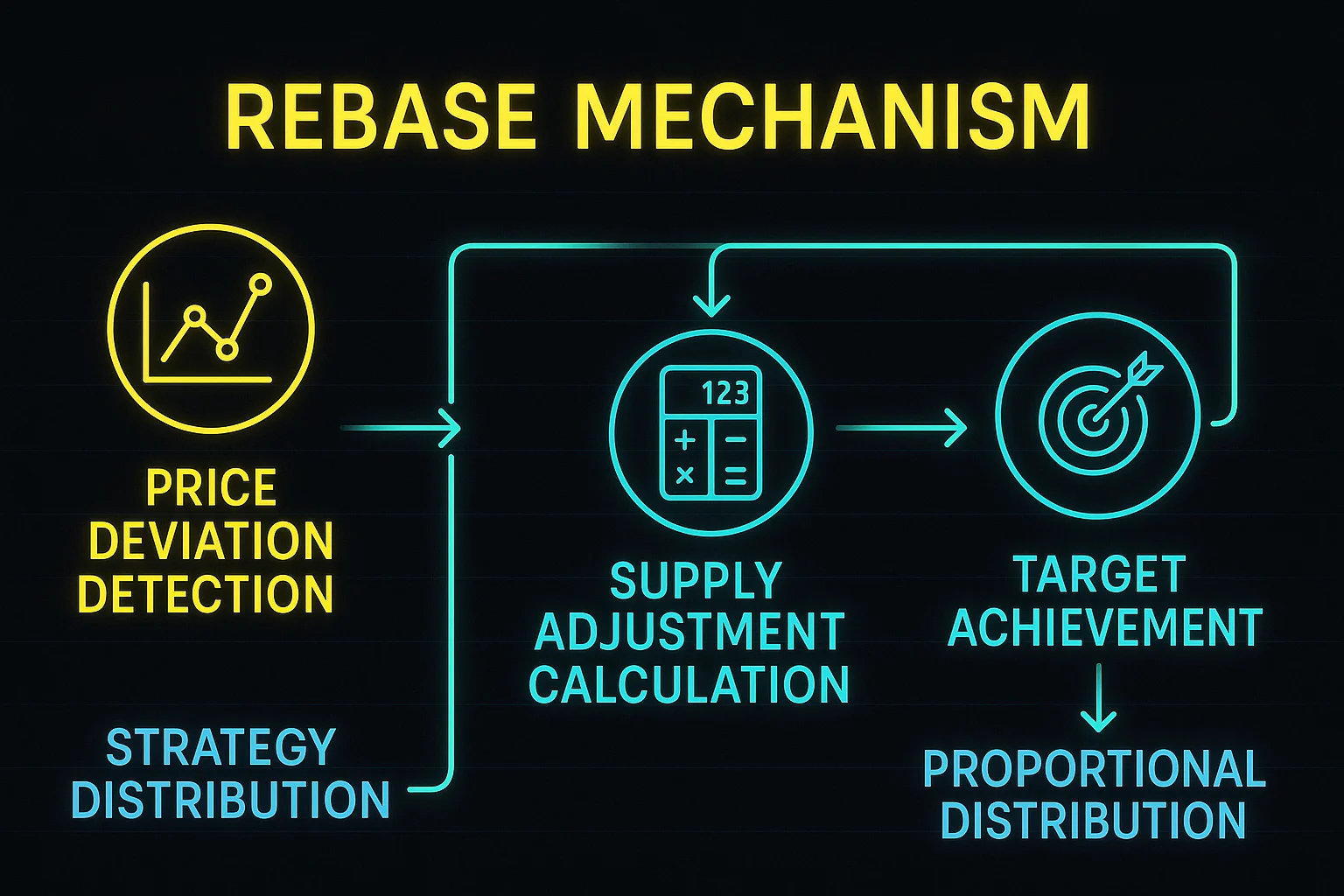
Rebase mechanism showing price deviation detection, supply adjustment calculation, proportional distribution, and target achievement

Real-World Examples

  • Ampleforth (AMPL) adjusts supply daily to maintain purchasing power parity
  • Base Protocol rebases to track the total market cap of cryptocurrencies
  • Olympus DAO used rebasing mechanisms to incentivize staking and protocol growth

Why Beginners Should Care

Wallet surprises as token balances change automatically without any action from holders, which can be confusing for new users.

Price dynamics work differently than normal tokens since supply changes affect price relationships and market behavior.

Tax implications may be complex since supply changes could be treated as taxable events in some jurisdictions.

Related Terms: Algorithmic Stablecoin, Token Supply, Price Stability, Monetary Policy

Back to Crypto Glossary

Similar Posts

  • Mining

    Mining: How New Bitcoins Are Created Bitcoin mining is the process that creates new bitcoins and secures the network. It’s like a global lottery where miners compete to solve mathematical puzzles for rewards. Mining is the computational process of validating transactions and adding new blocks to a blockchain while earning newly created cryptocurrency as rewards….

  • Blockchain

    Blockchain: The Unchangeable Digital Ledger Forget the hype – blockchain is simply a better way to keep records. It’s like a ledger book that everyone can see, but no one can cheat. Blockchain is a chain of digital records (blocks) that are linked together and secured using cryptography. Once information goes into a block, changing…

  • dApp Browser

    dApp Browser: Gateway to Decentralized Apps dApp browsers enable easy access to decentralized applications through integrated wallet functionality and Web3 connectivity. They’re like having a web browser that speaks cryptocurrency natively. A dApp browser is a specialized web browser or application that integrates cryptocurrency wallet functionality to seamlessly interact with decentralized applications. These browsers handle…

  • MetaMask

    MetaMask: Your Gateway to Web3 MetaMask is the browser extension wallet that connects you to the decentralized web. It’s like having a crypto wallet built into your browser that talks to every DeFi protocol. MetaMask is a browser extension and mobile wallet that enables interaction with Ethereum-based applications directly through web browsers. It manages private…

  • Capital Efficiency

    Capital Efficiency: Maximizing Resource UtilizationCapital efficiency measures how effectively investments generate returns relative to the amount of capital deployed. It's like getting the most miles per gallon from your investment fuel.Capital efficiency refers to maximizing returns or utility from invested capital through optimal allocation, leverage, or innovative strategies that reduce required capital while maintaining or…

  • Shared Security

    Shared Security: Collective Network ProtectionShared security allows multiple blockchain applications or chains to benefit from common security infrastructure rather than maintaining separate validator sets. It's like having a shared security service for multiple buildings.Shared security refers to security models where multiple blockchain networks or applications are protected by a common set of validators or consensus…