
|

zkEVM

zkEVM: Zero-Knowledge Ethereum Virtual Machine

zkEVM provides Ethereum compatibility with zero-knowledge proof validation, enabling existing dApps to run on faster, cheaper networks while maintaining security. It’s like having Ethereum that’s been turbocharged with privacy and speed.

zkEVM is a zero-knowledge virtual machine that executes Ethereum transactions and smart contracts while generating cryptographic proofs of correct execution. This enables Ethereum compatibility with ZK rollup benefits of scalability and privacy.

How zkEVM Works

Ethereum compatibility ensures existing smart contracts, tools, and applications work without modification on zkEVM networks.

Zero-knowledge proofs validate transaction execution without revealing computation details, enabling both scalability and privacy.

Proof generation creates cryptographic evidence that transactions were executed correctly according to Ethereum rules, without exposing transaction content.
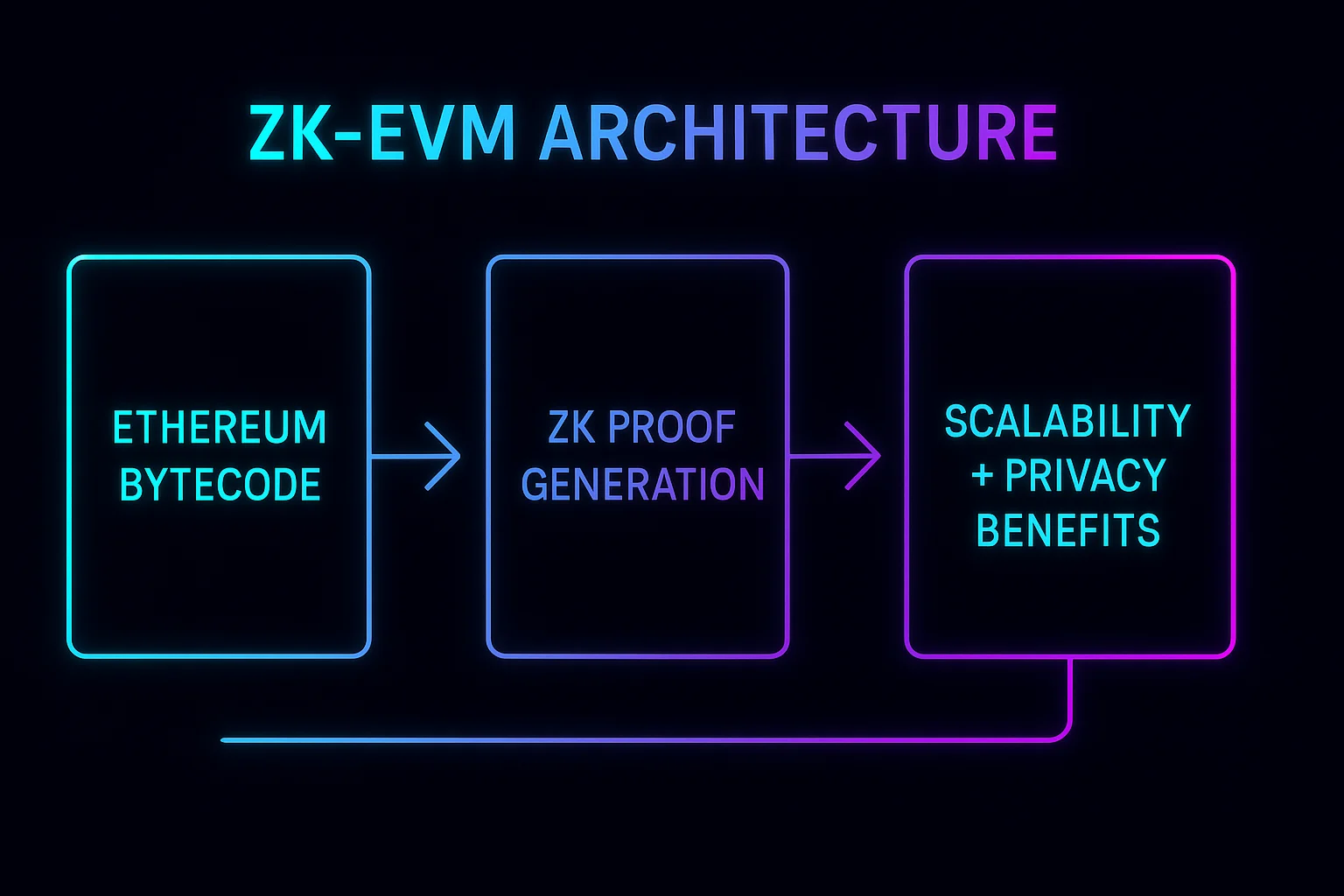
zkEVM architecture showing Ethereum bytecode, ZK proof generation, verification, and scalability plus privacy benefits

Real-World Examples

  • Polygon zkEVM maintains full Ethereum compatibility while using STARK proofs for validation
  • Scroll implements bytecode-level compatibility with optimized ZK proof systems
  • Linea provides enterprise-focused zkEVM with ConsenSys backing

Why Beginners Should Care

Seamless migration for Ethereum applications to benefit from improved speed and lower costs without code changes.

Enhanced privacy through zero-knowledge proofs that hide transaction details while maintaining verifiability.

Technical complexity in ZK proof generation creates different trade-offs compared to other scaling solutions in terms of finality and computational requirements.

Related Terms: Zero-Knowledge Proof, EVM, ZK-Rollup, Ethereum Compatibility

Back to Crypto Glossary

Similar Posts

  • Slashing Conditions

    Slashing Conditions: Validator Penalty Rules Slashing conditions define specific behaviors that result in validators losing staked funds as punishment for malicious or negligent actions. They’re the rules of engagement for network security. Slashing conditions are predetermined criteria that trigger automatic penalties for validators who violate network consensus rules or behave maliciously. These penalties involve destroying…

  • Cold Wallet

    Cold Wallet Backup: Securing Your Security Cold wallet backup ensures you can recover your cryptocurrency even if your hardware wallet is lost, stolen, or destroyed. It’s like having spare keys to your safe deposit box. Cold wallet backup refers to secure storage methods for seed phrases and recovery information that enable restoring access to hardware…

  • Execution Environment

    Execution Environment: Runtime for Smart ContractsAn execution environment provides the runtime infrastructure where smart contracts and decentralized applications operate. It's like the operating system that runs your computer programs.An execution environment is the runtime infrastructure that executes smart contracts and processes transactions on blockchain networks. This environment defines how code runs, what resources are available, and…

  • Transaction Signing

    Transaction Signing: Authorizing Blockchain OperationsTransaction signing uses private keys to create cryptographic signatures that authorize blockchain transactions. It's like signing a check with an unforgeable signature that proves you approved the payment.Transaction signing is the process of creating cryptographic signatures using private keys to authorize and authenticate blockchain transactions. This process proves ownership and prevents unauthorized…

  • Arbitrage

    Arbitrage: Risk-Free Profit from Price DifferencesArbitrage involves simultaneously buying and selling the same asset on different markets to profit from price differences. It's like buying wholesale and selling retail, but happening instantly.Arbitrage is the practice of taking advantage of price differences for the same asset across different markets or exchanges to generate risk-free profits. This activity…

  • Execution Layer

    Execution Layer: Transaction Processing EngineThe execution layer handles transaction processing and smart contract execution within blockchain architectures. It's like the engine that actually does the work in a modular blockchain system.The execution layer is responsible for processing transactions, executing smart contracts, and managing state changes within blockchain networks. In modular architectures, this layer can be optimized…