
Smart Contract Royalties

Smart Contract Royalties: Automated Creator Payments

Smart contract royalties automatically pay creators a percentage every time their NFTs are resold. It’s like having a永続 commission that follows your work forever.

Smart contract royalties are automated payment mechanisms built into NFT contracts that send a percentage of each resale back to the original creator. These payments happen automatically through code, ensuring creators benefit from secondary market appreciation.

How Smart Contract Royalties Work

Embedded logic in NFT smart contracts specifies royalty percentages and recipient addresses that execute automatically during transfers or sales.

Marketplace integration enables platforms like OpenSea to read royalty information and automatically deduct payments during transactions.

Perpetual payments continue for as long as the NFT exists and gets traded, providing ongoing income streams for creators beyond initial sales.
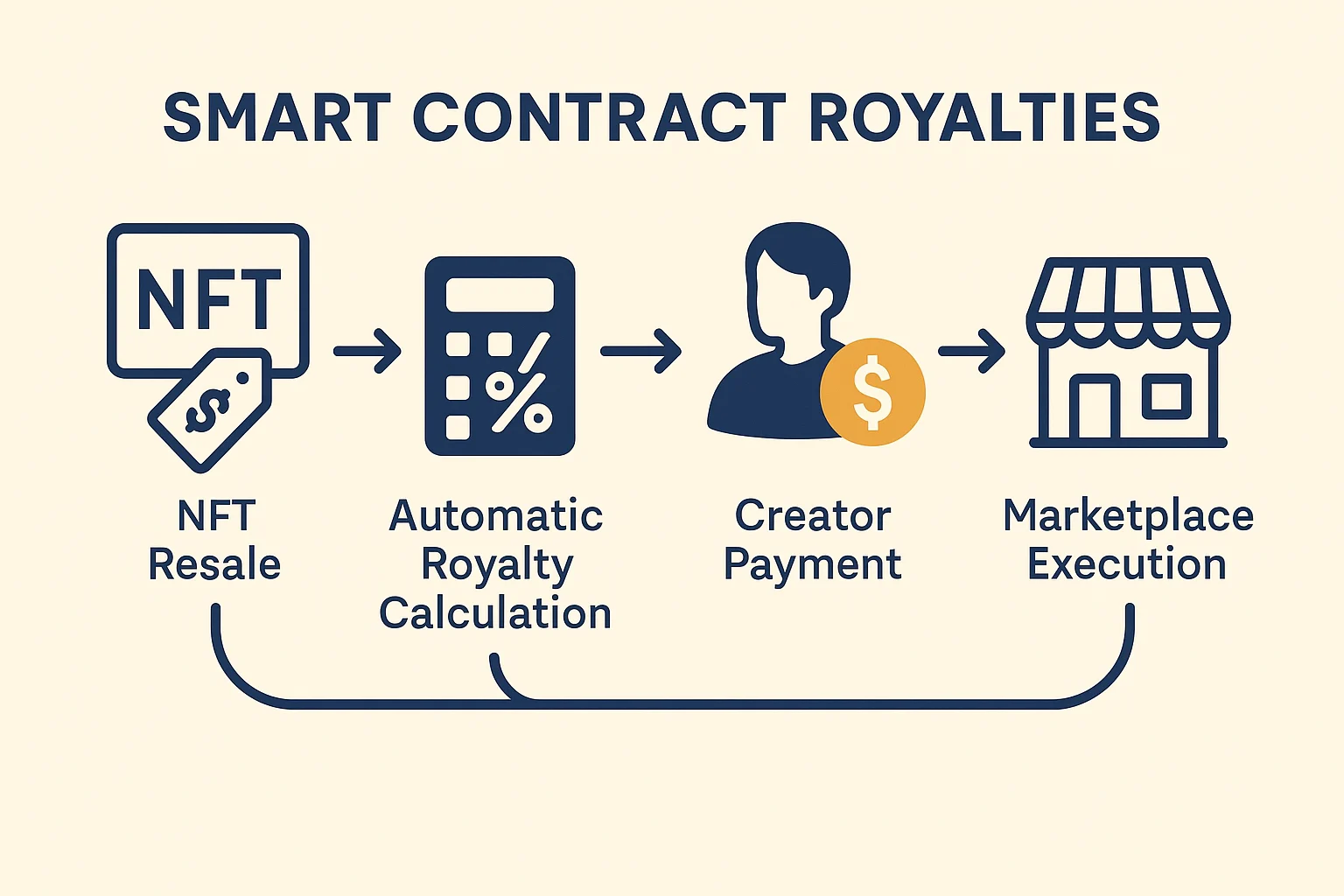
Infographic showing smart contract royalties process: NFT resale, automatic royalty calculation, creator payment, and marketplace execution

Real-World Examples

  • Art NFTs typically include 5-10% royalties that pay artists on every resale
  • Music NFTs enable musicians to earn from secondary market trading of their work
  • Gaming assets provide ongoing revenue to developers when players trade items

Why Beginners Should Care

Creator sustainability enables artists and developers to build long-term businesses rather than relying only on initial sales revenue.

Buyer transparency as royalty information is visible before purchase, allowing collectors to understand the full cost structure.

Enforcement challenges since some marketplaces have started making royalties optional, potentially undermining creator income expectations.

Related Terms: NFT, Smart Contract, Secondary Market

Back to Crypto Glossary

Similar Posts

  • Gas Fees

    Gas Fees: The Cost of Using Ethereum Gas fees are the tolls you pay to use Ethereum. Sometimes they’re pennies, sometimes they’re hundreds of dollars. Welcome to decentralized computing. Gas fees are transaction costs paid to miners or validators for processing transactions on blockchain networks. Think of gas as the fuel needed to power your…

  • Private Key Security

    Private Key Security: Protecting Your Digital IdentityPrivate key security involves protecting the cryptographic keys that control cryptocurrency access from theft, loss, or compromise. It's like safeguarding the master key to your digital vault.Private key security encompasses all practices and technologies used to protect cryptographic private keys from unauthorized access, theft, or loss. These keys are the…

  • Structured Products

    Structured Products: Complex Financial InstrumentsStructured products combine multiple financial instruments to create customized risk-return profiles for specific investment objectives. They're like elaborate recipe combinations that mix different financial ingredients to create unique investment flavors tailored to particular tastes.Structured products are complex financial instruments that combine derivatives, traditional assets, or cryptocurrencies to create customized investment products…

  • Fair Distribution

    Fair Distribution: Equitable Token AllocationFair distribution refers to token allocation methods that avoid excessive concentration among founders, early investors, or privileged groups. It's like ensuring everyone gets an equal chance to participate in a community project rather than giving all the benefits to insiders.Fair distribution describes token allocation strategies that provide broad, equitable access to…

  • Real Yield

    Real Yield: Sustainable Revenue-Based Returns Real yield comes from actual protocol revenue rather than token emissions or inflationary rewards. It’s the difference between earning from productive business activity versus printing more money. Real yield refers to returns generated from genuine protocol revenue, fees, or value creation rather than token inflation or emissions. These yields can…

  • Consensus Rules

    Consensus Rules: Network Agreement ProtocolsConsensus rules define how blockchain networks validate transactions and maintain agreement about the ledger state. They're like the constitution for digital money systems.Consensus rules are the specific protocols and requirements that all network participants must follow to validate transactions, create blocks, and maintain agreement about the blockchain's current state. These rules ensure…