
L2 Sequencer

L2 Sequencer: Transaction Ordering Engine

L2 sequencers determine transaction order on Layer 2 networks, controlling which transactions get included and how they’re arranged. They’re like traffic controllers for blockchain highways.

An L2 sequencer is a specialized node that collects, orders, and batches transactions for Layer 2 networks before submitting them to the main blockchain. Sequencers have significant power over transaction inclusion and ordering.

How L2 Sequencers Work

Transaction collection gathers user transactions from various sources and creates ordered sequences for batch processing.

MEV extraction opportunities arise from sequencers’ ability to reorder transactions, potentially front-running or sandwiching user trades.

Batch submission packages multiple transactions into single submissions to the main chain, amortizing costs across many users.
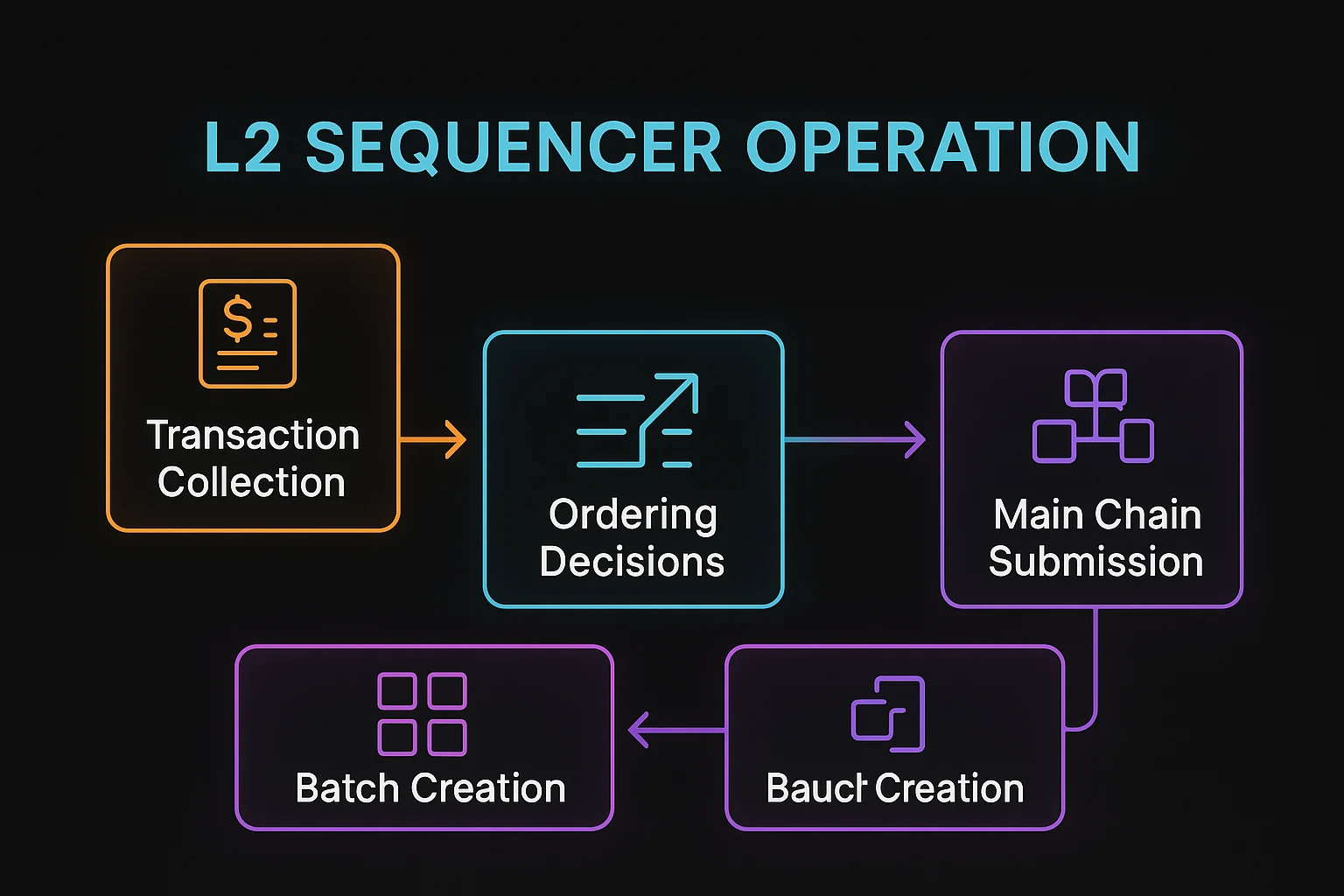
L2 sequencer operation showing transaction collection, ordering decisions, batch creation, and main chain submission

Real-World Examples

  • Arbitrum sequencer operated by Offchain Labs with plans for decentralization
  • Optimism runs centralized sequencing with revenue sharing for public goods funding
  • Base uses Coinbase-operated sequencing with similar centralization trade-offs

Why Beginners Should Care

Centralization risks as most L2s currently use single sequencers that could censor transactions or extract MEV unfairly.

Performance benefits from centralized sequencing that enables faster transaction confirmation and better user experience.

Decentralization roadmaps vary among L2 providers, with different timelines and approaches for reducing sequencer centralization.

Related Terms: Layer 2, MEV, Transaction Ordering, Centralization Risk

Back to Crypto Glossary

Similar Posts

  • Gaming Token

    Gaming Token: In-Game Digital CurrencyGaming tokens are cryptocurrencies designed specifically for use within video games and virtual worlds. They enable player ownership, trading, and monetization of in-game assets and achievements.Gaming tokens are cryptocurrencies created for specific video games or gaming ecosystems, enabling player ownership of in-game assets, rewards, and economic participation. These tokens bridge traditional gaming…

  • Block Building

    Block Building: Transaction Assembly ProcessBlock building is the process of selecting and organizing transactions into blocks that will be added to the blockchain. It's like a chef choosing ingredients and assembling them into a complete meal that satisfies both taste and nutritional requirements.Block building refers to the process where miners or validators select, order, and…

  • Privacy Coin

    Privacy Coin: Digital Cash That Actually Hides Privacy coins use advanced cryptography to hide transaction details like amounts, senders, and receivers. They’re what Bitcoin was supposed to be before everyone realized blockchain transactions are completely transparent. Privacy coins are cryptocurrencies designed to provide anonymous or untraceable transactions through advanced cryptographic techniques. Unlike Bitcoin where all…

  • Market Cap

    Market Cap: How to Value Crypto Projects Market cap tells you how much the entire crypto market values a project. It’s the most important number for comparing different cryptocurrencies. Market capitalization is the total value of all coins in circulation, calculated by multiplying the current price by the circulating supply. It shows the relative size…

  • Transaction

    Transaction: Moving Value on the BlockchainA cryptocurrency transaction transfers value from one address to another on a blockchain network. It's like writing a check, but with mathematical guarantees instead of trust.A transaction is a digitally signed transfer of cryptocurrency from one wallet address to another, recorded permanently on the blockchain. Every transaction includes sender information, recipient…

  • Mixing Service

    Mixing Service: Shuffling Coins for Privacy Mixing services (or tumblers) pool cryptocurrencies from multiple users then redistribute different coins to break transaction links. It’s like exchanging your marked bills for unmarked ones. A mixing service is a privacy tool that pools cryptocurrencies from multiple users and redistributes them to break the link between sending and…