
ZK-EVM

ZK-EVM: Zero-Knowledge Ethereum Compatibility

ZK-EVM provides Ethereum compatibility while using zero-knowledge proofs for scalability and privacy. It’s like having Ethereum that’s faster, cheaper, and more private.

ZK-EVM is a zero-knowledge rollup that maintains full compatibility with Ethereum’s execution environment while using ZK proofs for validation. This enables existing Ethereum applications to run without modification while benefiting from ZK scalability.

How ZK-EVM Works

EVM compatibility ensures existing smart contracts, tools, and applications work without changes, providing seamless migration from Ethereum.

Zero-knowledge proofs validate transaction execution without revealing details, enabling both scalability and privacy simultaneously.

Bytecode execution processes Ethereum transactions and smart contracts identically to mainnet while generating cryptographic proofs of correctness.
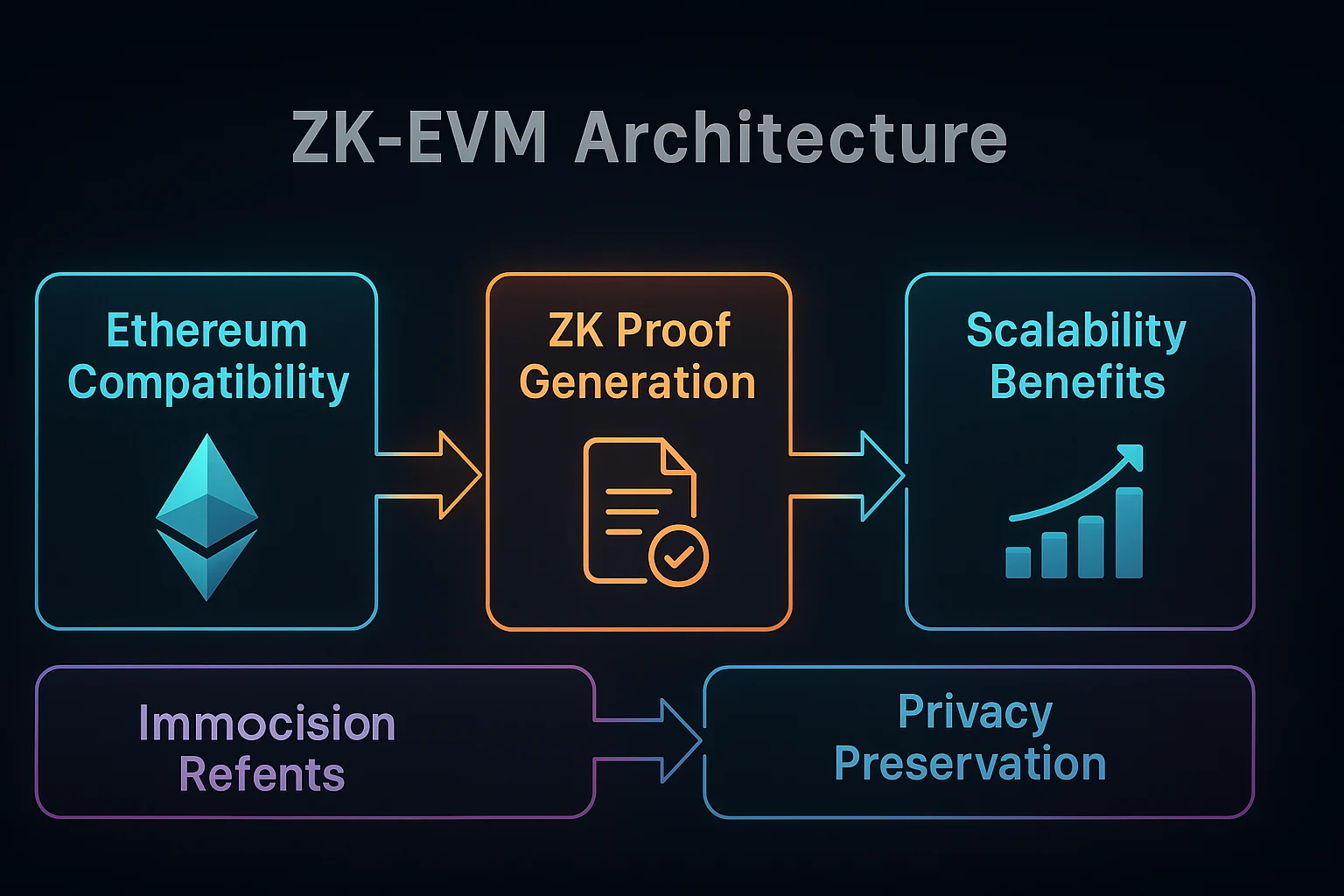
ZK-EVM architecture showing Ethereum compatibility, ZK proof generation, scalability benefits, and privacy preservation

Real-World Examples

  • Polygon zkEVM provides full Ethereum compatibility with ZK proof validation
  • Scroll implements native zkEVM with focus on maintaining exact Ethereum behavior
  • Linea (ConsenSys) offers enterprise-focused zkEVM infrastructure

Why Beginners Should Care

Best of both worlds combining Ethereum’s mature ecosystem with ZK rollup benefits of speed, cost, and privacy.

Developer experience remains identical to Ethereum, enabling easy migration of existing applications and tools.

Technical complexity in ZK proof generation creates different trade-offs compared to optimistic rollups in terms of finality and computational requirements.

Related Terms: Zero-Knowledge Proof, EVM, Layer 2, Smart Contract Compatibility

Back to Crypto Glossary

Similar Posts

  • Layer 1

    Layer 1: The Foundation Blockchain Layer 1 refers to the base blockchain protocol that processes transactions and maintains consensus. It’s the foundation that everything else builds on top of. Layer 1 (L1) is the main blockchain network that handles transaction processing, consensus, and security independently without relying on other blockchains. These are the foundational networks…

  • Pump and Dump

    Pump and Dump: Coordinated Market Manipulation Pump and dump schemes are crypto’s version of old-school stock manipulation. Coordinated groups artificially inflate prices, then dump on unsuspecting victims. A pump and dump is a form of market manipulation where a group artificially inflates an asset’s price through coordinated buying and false promotion, then sells at peak…

  • Capital Preservation

    Capital Preservation: Protecting Investment PrincipalCapital preservation focuses on protecting the original investment amount rather than maximizing returns. It's like choosing a safe over a lottery ticket for your money.Capital preservation is an investment strategy that prioritizes protecting the original principal amount over generating high returns. This conservative approach minimizes downside risk while accepting lower potential upside.How…

  • Premium

    Premium: Price Above Fair ValuePremium refers to the amount by which an asset's price exceeds its underlying value or reference price. It's like paying extra for convenience or brand name compared to the basic product cost.Premium is the additional amount paid above an asset's fair value, net asset value, or reference price. In cryptocurrency markets, premiums…

  • Sustainable Yield

    Sustainable Yield: Long-Term Return GenerationSustainable yield refers to returns that can be maintained long-term without depleting the underlying value source. It's like earning interest that doesn't eventually destroy the principal.Sustainable yield represents returns generated from real economic activity and value creation rather than unsustainable token emissions or Ponzi-like mechanisms. These yields can theoretically continue indefinitely.How Sustainable…

  • Cross Chain Communication

    Cross Chain Communication: Blockchain Network MessagingCross-chain communication enables different blockchain networks to exchange information and coordinate actions. It's like having universal translators that help different blockchain languages understand each other.Cross-chain communication refers to protocols and technologies that enable different blockchain networks to exchange data, verify states, and coordinate actions across network boundaries. This enables interoperability and…