
Soulbound Token (SBT)

Soulbound Token (SBT): Non-Transferable Achievements

Soulbound tokens are NFTs that cannot be transferred or sold once received. They represent achievements, credentials, or identity elements that should remain permanently attached to specific individuals.

A Soulbound Token (SBT) is a non-fungible token that is permanently bound to a specific wallet address and cannot be transferred or sold. They represent personal achievements, credentials, or identity elements that shouldn’t be tradeable.

How Soulbound Tokens Work

Transfer restrictions are built into the smart contract code, preventing SBTs from being moved between wallets after initial minting.

Identity binding creates permanent associations between individuals and their achievements, credentials, or reputation markers.

Composable reputation allows multiple SBTs to build comprehensive identity profiles across different domains and time periods.
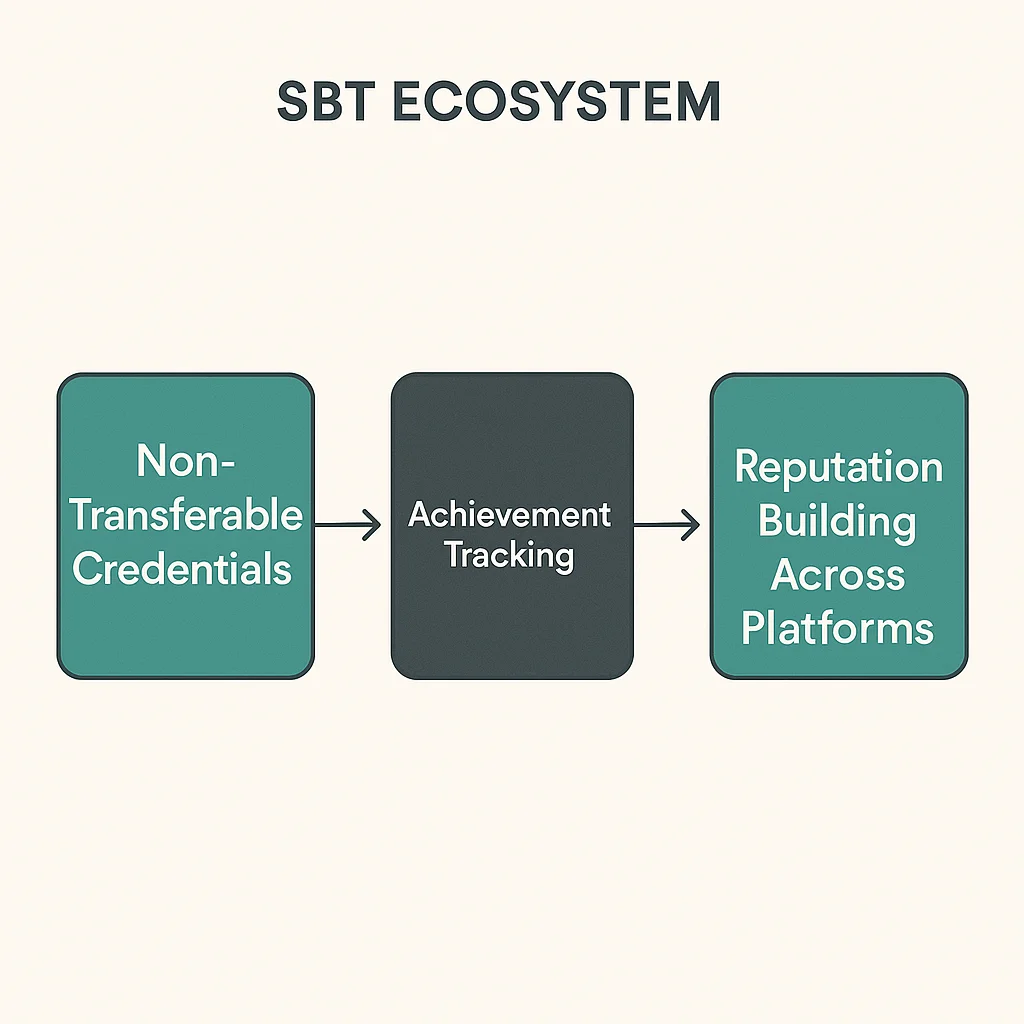
SBT ecosystem diagram showing non-transferable credentials, achievement tracking, and reputation building across platforms.

Real-World Examples

  • University diplomas as SBTs would prevent credential fraud and enable instant verification
  • Professional certifications could be issued as SBTs for permanent skill verification
  • Event attendance tokens prove participation without allowing secondary market trading

Why Beginners Should Care

Authentic credentials that can’t be bought or sold, ensuring achievements represent genuine accomplishment rather than financial resources.

Reputation systems built on SBTs could enable more meaningful social and professional networking based on verified accomplishments.

Privacy considerations as permanent credential binding could enable unwanted tracking and discrimination based on past activities.

Related Terms: NFT, Decentralized Identity, Reputation System, Credentials

Back to Crypto Glossary

Similar Posts

  • Sidechain

    Sidechain: Independent Chains with Main Chain Connections Sidechains operate independently while maintaining bridges to main blockchains. They’re like having a separate express lane that connects back to the main highway when needed. A sidechain is an independent blockchain that runs parallel to a main blockchain and is connected through a two-way bridge allowing asset transfers….

  • Multi-Chain

    Multi-Chain: Using Multiple Blockchain Networks Multi-chain refers to applications, strategies, or ecosystems that operate across multiple different blockchain networks simultaneously. It’s like being multilingual in the blockchain world. Multi-chain describes systems that utilize multiple different blockchain networks rather than being limited to a single chain. This approach leverages the unique strengths of different blockchains while…

  • Dynamic NFTs (dNFTs)

    Dynamic NFTs (dNFTs): Evolving Digital Assets Dynamic NFTs can change their metadata, appearance, or properties based on external data or on-chain events. They’re like digital collectibles that grow and evolve over time. Dynamic NFTs (dNFTs) are non-fungible tokens that can modify their metadata, attributes, or visual appearance in response to external data feeds, user actions,…

  • Reentrancy Attack

    Reentrancy Attack: Exploiting Function Recursion Reentrancy attacks exploit smart contracts by repeatedly calling functions before previous executions complete. It’s like withdrawing money from an ATM that forgets to update your balance between transactions. A reentrancy attack is a smart contract exploit where malicious contracts repeatedly call vulnerable functions before state changes are finalized, potentially draining…

  • Light Node

    Light Node: Efficient Blockchain ParticipationA light node participates in blockchain networks without storing the complete blockchain history. It's like having a summary of the news instead of keeping every newspaper ever published.A light node is a type of blockchain node that maintains network connectivity and basic verification capabilities without storing the complete blockchain history or…

  • Appchain

    Appchain: Application-Specific Blockchains Appchains are blockchains designed for single applications or use cases rather than general-purpose smart contracts. They’re like having a dedicated highway for one type of vehicle instead of mixed traffic. An appchain is a blockchain optimized for a specific application or use case rather than supporting general-purpose smart contracts. This specialization enables…