
Decentralized Identity (DID)

Decentralized Identity (DID): Self-Sovereign Digital Identity

DIDs give users control over their digital identity without relying on centralized authorities like governments or tech companies. It’s like having a passport that you issue and control yourself.

Decentralized Identity (DID) is a digital identity framework that gives individuals control over their personal data and identity verification without central authorities. Users can prove who they are and what credentials they hold without depending on third-party identity providers.

How DIDs Work

Self-sovereign control means users generate and manage their own identity credentials rather than relying on institutions to vouch for their identity.

Cryptographic verification enables proving identity ownership through digital signatures without revealing underlying personal information.

Interoperability standards allow DID credentials to work across different platforms and services that support the decentralized identity framework.
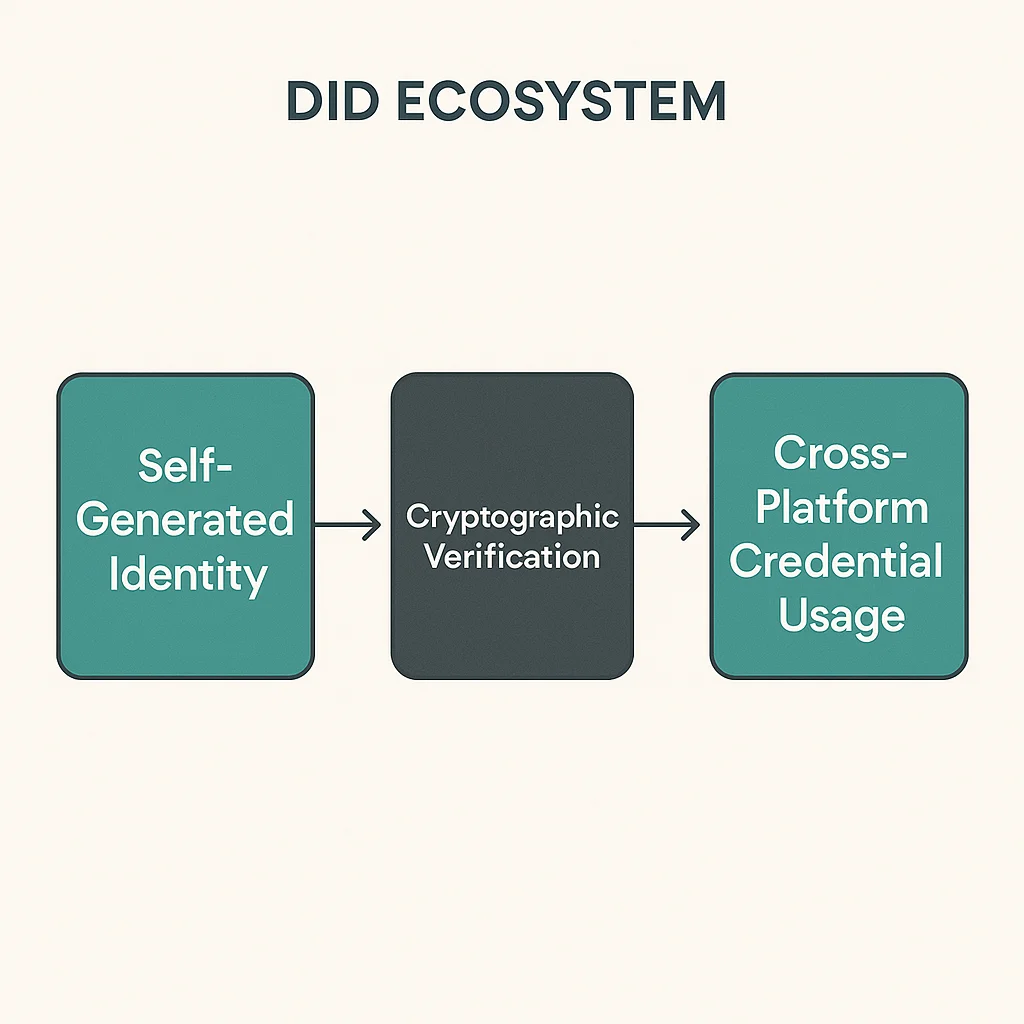
DID ecosystem diagram showing self-generated identity, cryptographic verification, and cross-platform credential usage in a decentralized framework.

Real-World Examples

  • ENS domains provide basic decentralized identity through blockchain-based naming
  • Ceramic Network enables composable identity and reputation across Web3 applications
  • Microsoft ION builds enterprise DID solutions on Bitcoin’s blockchain

Why Beginners Should Care

Privacy control over personal data sharing, allowing selective disclosure of only necessary information for specific use cases.

Reduced platform dependence eliminates risks of losing digital identity when centralized platforms ban accounts or shut down.

Credential portability enables taking verified achievements, reputation, and identity across different platforms and services.

Related Terms: Self-Sovereign Identity, ENS, Verifiable Credentials, Web3

Back to Crypto Glossary

Similar Posts

  • Private Key

    Private Key: Your Crypto’s Secret Password Your private key is the most important thing you’ll ever own in crypto. Lose it, and your money’s gone forever. No customer service number to call. A private key is a secret code that proves you own your cryptocurrency and allows you to spend it. It’s like the combination…

  • Gasless Transactions

    Gasless Transactions: Fee-Free User Experience Gasless transactions eliminate the need for users to hold native tokens for transaction fees by having third parties sponsor the gas costs. It’s like having someone else pay for your Uber rides. Gasless transactions enable users to interact with blockchain applications without holding native tokens for gas fees. Third parties,…

  • Gas Token

    Gas Token: Optimizing Transaction Costs Gas tokens store cheap gas for later use when network fees are high. It’s like buying gasoline when prices are low and using it when prices spike. A gas token is a cryptocurrency designed to optimize transaction costs by storing cheap gas during low-demand periods for use when fees are…

  • Validator Set Rotation

    Validator Set Rotation: Dynamic Network Security Validator set rotation periodically changes which nodes validate transactions, preventing long-term centralization and maintaining network security through diversity. It’s like jury rotation for blockchain consensus. Validator set rotation is a mechanism that periodically changes which validators are active in securing a blockchain network. This prevents permanent centralization and ensures…

  • Omnichain

    Omnichain: Universal Blockchain ConnectivityOmnichain refers to applications and protocols that operate seamlessly across multiple blockchain networks as if they were a single unified system. It's like having apps that work on every phone brand without modification.Omnichain describes systems that can operate across multiple blockchain networks simultaneously, providing unified functionality and user experiences regardless of which…

  • Data Availability Layer

    Data Availability Layer: Ensuring Information Access Data availability layers ensure that blockchain data remains accessible for verification without requiring full nodes to store everything. It’s like having a library system where you can verify any book exists without storing them all. A data availability layer guarantees that blockchain transaction data is published and remains accessible…