
Gas Token

Gas Token: Optimizing Transaction Costs

Gas tokens store cheap gas for later use when network fees are high. It’s like buying gasoline when prices are low and using it when prices spike.

A gas token is a cryptocurrency designed to optimize transaction costs by storing cheap gas during low-demand periods for use when fees are expensive. These tokens exploit gas refund mechanisms to provide cost savings.

How Gas Tokens Work

Storage optimization involves executing transactions that store data when gas is cheap, then clearing that storage when gas is expensive to receive refunds.

Arbitrage mechanism captures value from gas price differences over time, allowing users to effectively “buy” gas at low prices for future use.

Refund exploitation uses Ethereum’s gas refund system where clearing storage returns gas to transaction senders, reducing effective transaction costs.
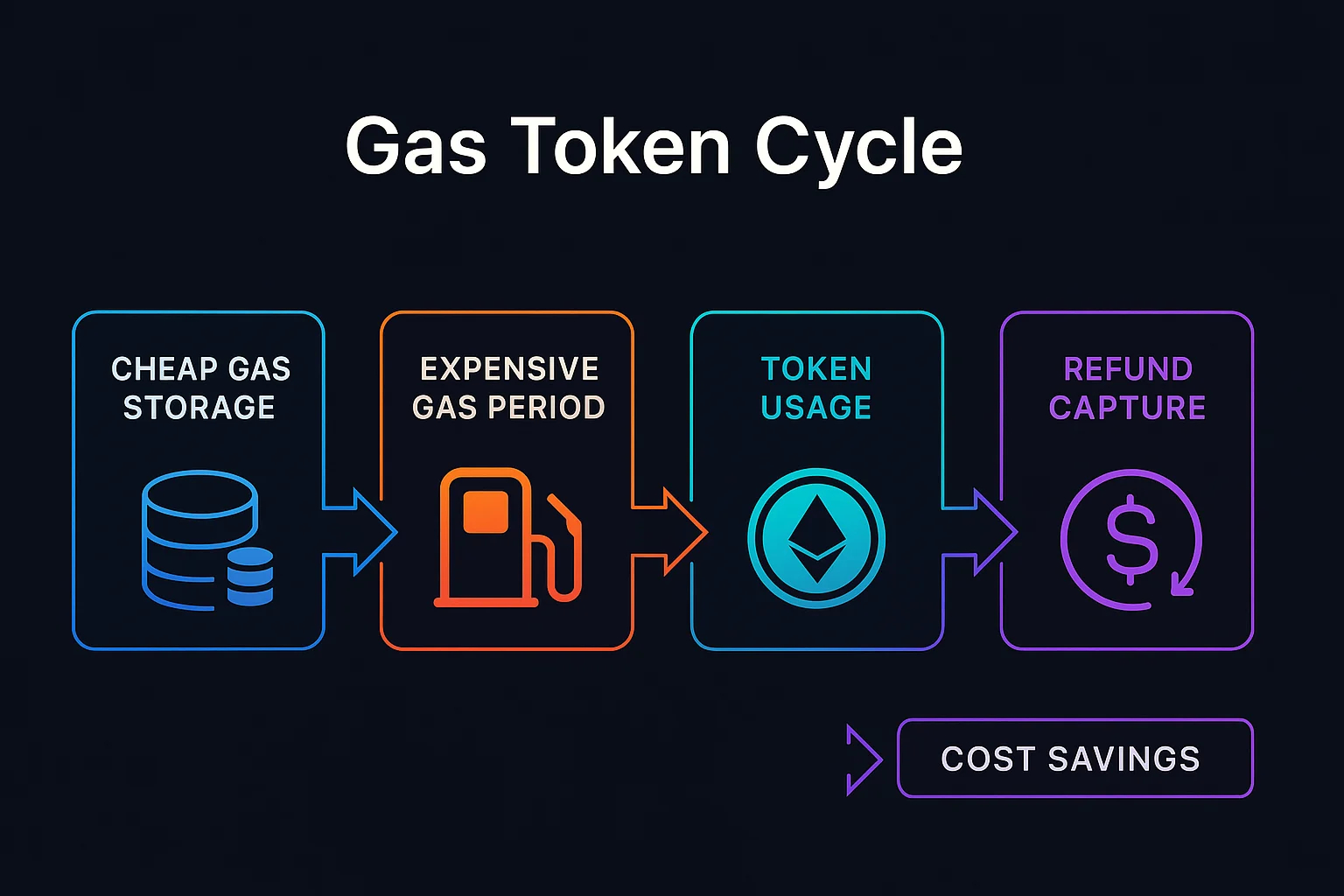
Gas token cycle showing cheap gas storage, high gas period usage, token burn refund, and cost savings

Real-World Examples

  • CHI token was designed specifically for gas optimization before EIP-3529 limited its effectiveness
  • GST2 provided gas savings through storage manipulation strategies
  • Various DeFi protocols have integrated gas optimization mechanisms into their operations

Why Beginners Should Care

Cost optimization strategies for regular DeFi users who can save significant amounts during high gas fee periods.

Technical complexity requires understanding gas mechanics and optimal usage timing to achieve meaningful savings.

Reduced effectiveness after Ethereum upgrades that limited gas refund mechanisms, making historical gas tokens less useful.

Related Terms: Gas Fees, Gas Optimization, Storage Refund, Transaction Cost

Back to Crypto Glossary

Similar Posts

  • DEX Aggregator

    DEX Aggregator: Optimal Trading Route FinderDEX aggregators find the best prices across multiple decentralized exchanges for cryptocurrency trades. They're like price comparison websites that automatically execute trades at the best available rates.A DEX aggregator is a service that compares prices and liquidity across multiple decentralized exchanges to find optimal trading routes for cryptocurrency swaps. These platforms…

  • Play-to-Earn (P2E)

    Play-to-Earn (P2E): Gaming Meets Income Play-to-earn games let players earn cryptocurrency and NFTs through gameplay. It’s turned gaming from entertainment expense into potential income source for millions worldwide. Play-to-earn (P2E) is a gaming model where players earn cryptocurrency tokens, NFTs, or other digital assets with real-world value through gameplay activities. Players own in-game assets that…

  • Synthetic Asset

    Synthetic Asset: Creating Anything on Blockchain Synthetic assets are blockchain tokens that track the value of real-world assets like stocks, commodities, or currencies. They’re like financial derivatives but programmable and globally accessible. A synthetic asset is a tokenized derivative that tracks the price of an underlying asset without requiring direct ownership of that asset. Smart…

  • Ledger

    Ledger: Hardware Wallet Security Leader Ledger is a leading hardware wallet company that provides secure offline storage for cryptocurrency private keys. They’re like the Fort Knox of crypto storage devices. Ledger is a hardware wallet manufacturer that creates secure devices for storing cryptocurrency private keys offline, protecting them from online threats and hacking attempts. These…

  • Social Token

    Social Token: Community-Powered Digital CurrencySocial tokens represent value within communities and enable creators to monetize their audience directly. They're like membership cards that have real value and can be traded.Social tokens are cryptocurrencies created by individuals, communities, or organizations to represent membership, access rights, or value within specific social ecosystems. These tokens enable direct monetization and…

  • Network Governance

    Network Governance: Blockchain Decision MakingNetwork governance encompasses the processes and mechanisms for making decisions about blockchain protocol changes and upgrades. It's like the constitutional system that determines how a digital nation changes its laws.Network governance refers to the systems and processes through which blockchain networks make decisions about protocol upgrades, parameter changes, and strategic direction. This…