
Appchain

Appchain: Application-Specific Blockchains

Appchains are blockchains designed for single applications or use cases rather than general-purpose smart contracts. They’re like having a dedicated highway for one type of vehicle instead of mixed traffic.

An appchain is a blockchain optimized for a specific application or use case rather than supporting general-purpose smart contracts. This specialization enables better performance, lower costs, and features tailored to specific needs.

How Appchains Work

Single-purpose optimization allows appchains to remove unnecessary features and optimize for specific use cases like gaming, payments, or social media.

Custom consensus mechanisms can be designed for specific application requirements rather than using generic blockchain consensus suitable for all applications.

Direct value capture enables applications to capture MEV and transaction fees directly rather than paying them to general-purpose blockchain validators.
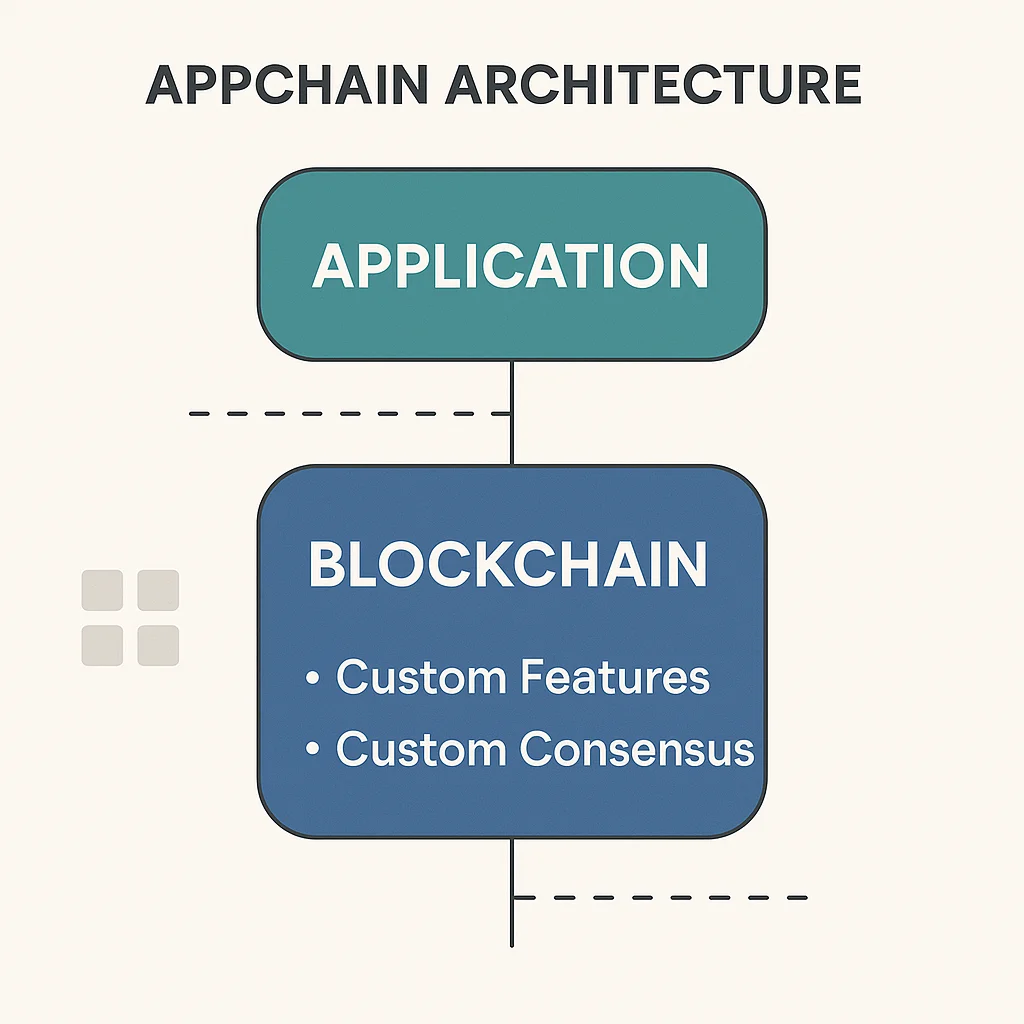
Appchain architecture diagram showing a specialized blockchain optimized for a specific application with custom features and consensus.

Real-World Examples

  • DYdX v4 runs on its own appchain optimized for derivatives trading
  • Immutable X provides a gaming-focused chain with NFT-optimized features
  • Cosmos ecosystem enables easy appchain creation through the Cosmos SDK

Why Beginners Should Care

Better performance from specialization can provide faster transactions, lower fees, and features impossible on general-purpose chains.

Sovereignty benefits give applications full control over their blockchain parameters, governance, and economic models.

Fragmentation concerns as appchains may reduce composability and liquidity compared to applications sharing common infrastructure.

Related Terms: Cosmos, Sovereignty, Application Layer,

Back to Crypto Glossary

Similar Posts

  • Challenge Period

    Challenge Period: Dispute Resolution WindowA challenge period is a time window during which participants can dispute or challenge proposed changes before they become final. It's like a cooling-off period for important decisions.A challenge period is a predetermined time frame that allows network participants to dispute transactions, withdrawals, or governance proposals before they become irreversible. This mechanism…

  • Democratic Governance

    Democratic Governance: Community-Controlled Decision MakingDemocratic governance enables community members to participate in project decisions through voting and proposal systems. It's like having a democracy where token holders are the citizens.Democratic governance refers to decision-making systems where community members have voting rights and influence over project direction, protocol changes, and resource allocation. Token holdings typically determine voting…

  • zk-SNARKs

    zk-SNARKs: Zero-Knowledge Proof Technologyzk-SNARKs are cryptographic proofs that verify information without revealing the underlying data. They're like proving you know a secret without telling anyone what the secret actually is.zk-SNARKs (Zero-Knowledge Succinct Non-Interactive Arguments of Knowledge) are cryptographic proofs that allow verification of computations without revealing the inputs or intermediate steps. This enables privacy and scalability…

  • Chain Reorg (Reorganization)

    Chain Reorg (Reorganization): Blockchain History Changes Chain reorgs occur when a blockchain adopts a different version of transaction history, potentially reversing confirmed transactions. It’s like time travel, but messier and more expensive. A chain reorganization (reorg) happens when a blockchain network adopts an alternative chain of blocks as the canonical history, potentially reversing previously confirmed…

  • Ledger

    Ledger: Hardware Wallet Security Leader Ledger is a leading hardware wallet company that provides secure offline storage for cryptocurrency private keys. They’re like the Fort Knox of crypto storage devices. Ledger is a hardware wallet manufacturer that creates secure devices for storing cryptocurrency private keys offline, protecting them from online threats and hacking attempts. These…

  • Network Governance

    Network Governance: Blockchain Decision MakingNetwork governance encompasses the processes and mechanisms for making decisions about blockchain protocol changes and upgrades. It's like the constitutional system that determines how a digital nation changes its laws.Network governance refers to the systems and processes through which blockchain networks make decisions about protocol upgrades, parameter changes, and strategic direction. This…