
EVM (Ethereum Virtual Machine)

EVM (Ethereum Virtual Machine): The World Computer

The EVM is the runtime environment where Ethereum smart contracts execute. It’s like having one giant computer that runs the same programs across thousands of machines worldwide.

The Ethereum Virtual Machine (EVM) is a decentralized computing environment that executes smart contracts on the Ethereum blockchain. Every Ethereum node runs an identical copy of the EVM, ensuring smart contracts produce the same results regardless of where they execute.

How the EVM Works

Bytecode execution converts smart contract code into EVM instructions that every node can understand and execute identically. This ensures deterministic results across the entire network.

Gas metering prevents infinite loops and resource abuse by charging computational costs for every operation. Complex operations cost more gas than simple ones.

State management tracks account balances, smart contract storage, and all other network data in a global state that updates with each block.
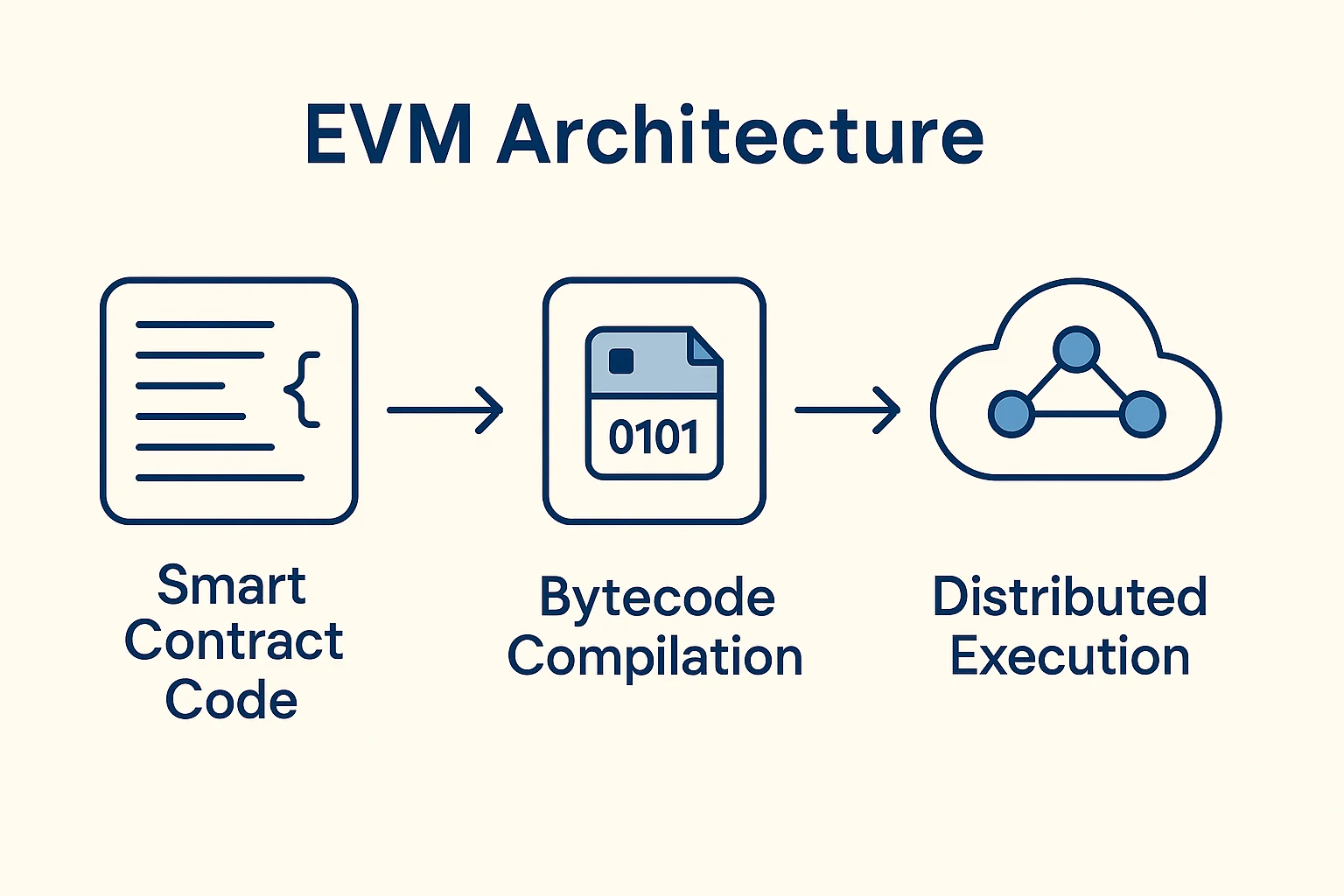
Infographic showing Ethereum Virtual Machine architecture with smart contract code, bytecode compilation, and distributed execution across nodes

Real-World Examples

  • All Ethereum dApps run on the EVM, from Uniswap to Compound to OpenSea
  • EVM-compatible chains like Polygon and Avalanche can run Ethereum smart contracts without modification
  • Layer 2 solutions often maintain EVM compatibility for seamless developer migration

Why Beginners Should Care

Developer network effects make EVM the most popular smart contract platform, with thousands of developers building compatible applications and tools.

Cross-chain compatibility allows moving dApps between EVM-compatible chains without rewriting code, providing flexibility and scaling options.

Learning investment in EVM-based platforms transfers to multiple blockchains, making it the most versatile smart contract skillset for developers.

Related Terms: Smart Contract, Gas Fees, Ethereum, dApp

Back to Crypto Glossary

Similar Posts

  • Liquidity Mining

    Liquidity Mining: Earning Tokens for Providing LiquidityLiquidity mining rewards users with tokens for providing liquidity to decentralized exchanges and protocols. It's like getting paid to be a market maker in the digital asset ecosystem.Liquidity mining is an incentive mechanism where DeFi protocols distribute tokens to users who provide liquidity to trading pools, lending markets, or…

  • Oracle

    Oracle: Connecting Blockchains to Reality Oracles are the bridges between blockchain smart contracts and real-world data. Without them, DeFi would be a closed system talking only to itself. An oracle is a service that provides external data to blockchain networks, enabling smart contracts to access real-world information like prices, weather, sports scores, or any off-chain…

  • Market Maker

    Market Maker: Providing Trading LiquidityMarket makers provide continuous buy and sell orders to ensure trading liquidity and narrow bid-ask spreads. They're like the vendors at a farmer's market who are always ready to trade.A market maker is an individual or entity that provides liquidity to trading markets by continuously offering to buy and sell assets…

  • DeFi Security

    DeFi Security: Protecting Decentralized FinanceDeFi security involves protecting decentralized finance protocols and users from smart contract vulnerabilities, economic attacks, and operational risks. It's cybersecurity for programmable money.DeFi security encompasses the practices, technologies, and protocols used to protect decentralized finance applications from hacks, exploits, and other security threats. This includes smart contract auditing, economic security, and user…

  • Merkle Tree

    Merkle Tree: Efficient Data Verification Merkle trees enable efficient verification of large datasets without downloading everything. They’re like having a fingerprint for an entire library that proves any book belongs. A Merkle tree is a binary tree structure where each leaf represents a data element and each branch contains cryptographic hashes of its children. The…

  • Voting

    Voting: Decentralized Decision MakingVoting in cryptocurrency enables token holders to participate in governance decisions that shape project direction and protocol changes. It's like being a shareholder who can vote on company decisions, except the company is a decentralized protocol owned by its users.Voting refers to the democratic process where cryptocurrency token holders express preferences on…