
Intent-Centric Protocols

Intent-Centric Protocols: What You Want, Not How

Intent-centric protocols let users specify desired outcomes while the system figures out how to achieve them. Instead of manually executing swap steps, you just say “I want USDC” and the protocol handles everything.

Intent-centric protocols allow users to express desired end states rather than specific transaction sequences. Users declare what they want to achieve, and sophisticated solvers compete to find the most efficient execution path.

How Intent-Centric Protocols Work

Intent declaration specifies desired outcomes like “swap my ETH for at least 1,800 USDC” without defining the specific DEXs, routes, or steps required.

Solver competition involves multiple parties competing to fulfill intents at the best possible prices, creating market-driven optimization.

Execution abstraction hides complex multi-step operations from users, who only see the final result rather than intermediate transactions.
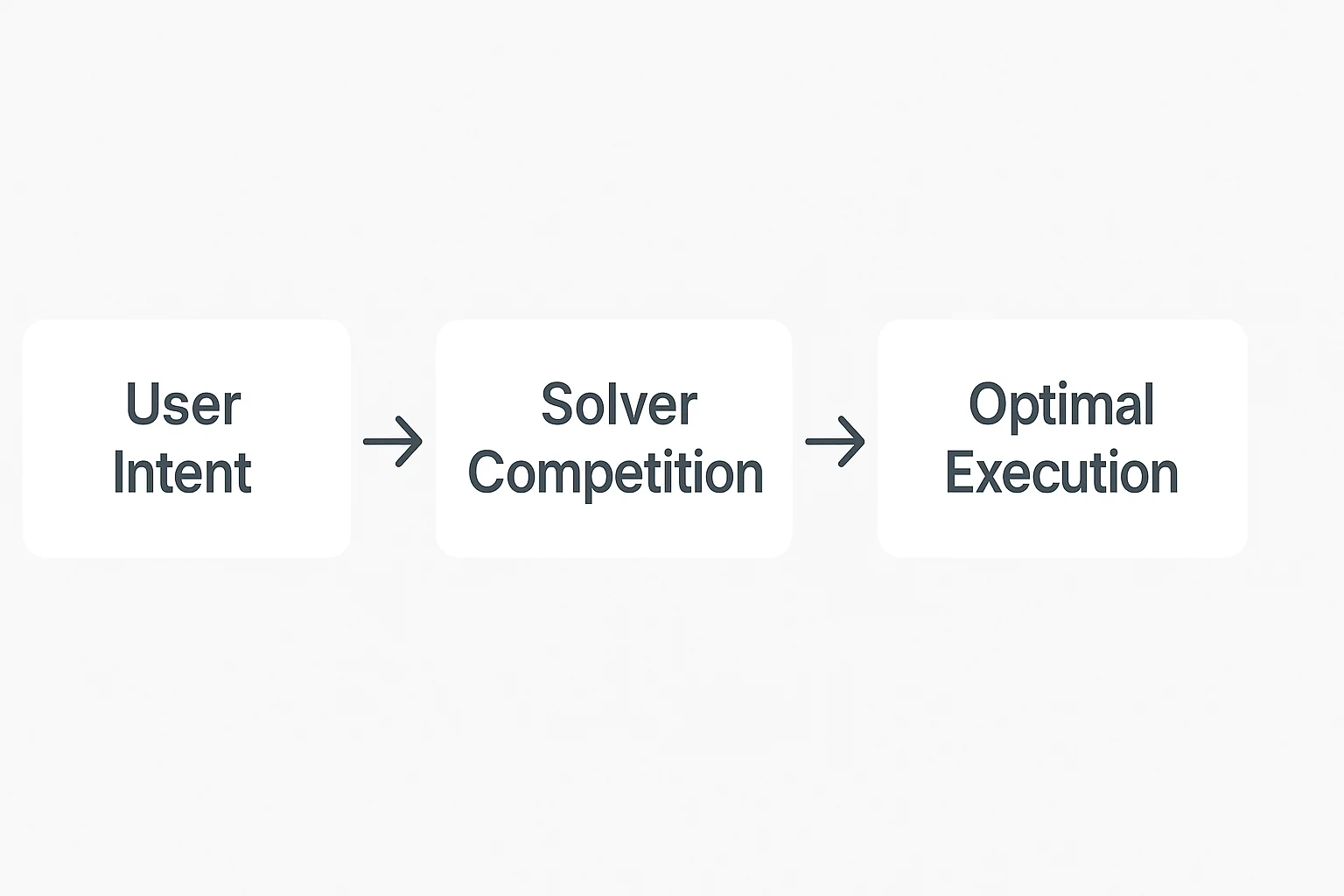
Intent-centric workflow showing user intent leading to solver competition, optimal execution, and desired outcome.

Real-World Examples

  • CoW Protocol uses intent-based trading with solver competition for better prices
  • 1inch Fusion combines intent expression with automated execution optimization
  • UniswapX enables gasless swaps through intent-based order matching

Why Beginners Should Care

Simplified complexity eliminates the need to understand optimal routing, slippage management, and multi-step DeFi operations.

Better execution through solver competition often achieves better prices than manual transaction construction.

Reduced friction makes DeFi more accessible by hiding technical complexity behind simple intent expressions.

Related Terms: MEV Protection, Solver Network, Order Flow

Back to Crypto Glossary

Similar Posts

  • Data Marketplace

    Data Marketplace: Trading Information AssetsA data marketplace enables buying and selling of data assets using cryptocurrency payments and blockchain verification. It's like eBay for information where data providers monetize their datasets.A data marketplace is a platform where data providers can sell access to information assets while buyers purchase data using cryptocurrency or token payments. Blockchain technology…

  • Algorithmic Trading

    Algorithmic Trading: Automated Trading StrategiesAlgorithmic trading uses computer programs to execute trades based on predetermined rules and market conditions. It's like having a robot trader that never sleeps and follows your strategy perfectly.Algorithmic trading involves using computer algorithms to automatically execute cryptocurrency trades based on predefined strategies, market signals, and risk parameters. These systems can operate…

  • Oracle

    Oracle: Connecting Blockchains to Reality Oracles are the bridges between blockchain smart contracts and real-world data. Without them, DeFi would be a closed system talking only to itself. An oracle is a service that provides external data to blockchain networks, enabling smart contracts to access real-world information like prices, weather, sports scores, or any off-chain…

  • MEV (Maximal Extractable Value)

    MEV (Maximal Extractable Value): The Hidden Tax on DeFi MEV is the extra profit that miners and validators can extract by reordering, including, or excluding transactions within blocks. It’s like cutting in line at the blockchain cafeteria. Maximal Extractable Value (MEV) is the additional profit that block producers can capture by strategically ordering transactions, beyond…

  • Systemic Risk

    Systemic Risk: Widespread System FailureSystemic risk refers to the potential for localized failures to cascade throughout the entire cryptocurrency ecosystem. It's like how one falling domino can knock down all the others in a chain reaction.Systemic risk describes the possibility that failure in one part of the cryptocurrency ecosystem could trigger widespread failures across multiple…

  • Social Engineering

    Social Engineering: Manipulating People for AccessSocial engineering involves manipulating people psychologically to reveal sensitive information or perform actions that compromise security. It's hacking humans instead of computers.Social engineering refers to psychological manipulation techniques used to trick people into revealing confidential information, performing actions, or making security mistakes that benefit attackers. These attacks exploit human psychology rather…