
On-Chain Gaming

On-Chain Gaming: Fully Decentralized Games

On-chain gaming runs game logic entirely on blockchain networks rather than traditional servers. It’s like having board games where the rules are enforced by mathematics instead of human referees.

On-chain gaming executes all game logic, state management, and interactions through smart contracts on blockchain networks. Unlike traditional games with centralized servers, on-chain games operate through decentralized infrastructure that players cannot manipulate.

How On-Chain Gaming Works

Smart contract logic handles all game rules, player actions, and state transitions through deterministic code that executes identically for all players.

Transparent mechanics make all game rules publicly visible and verifiable, preventing hidden advantages or manipulation by game operators.

Composable assets enable game items and characters to be used across different games and applications that support the same standards.
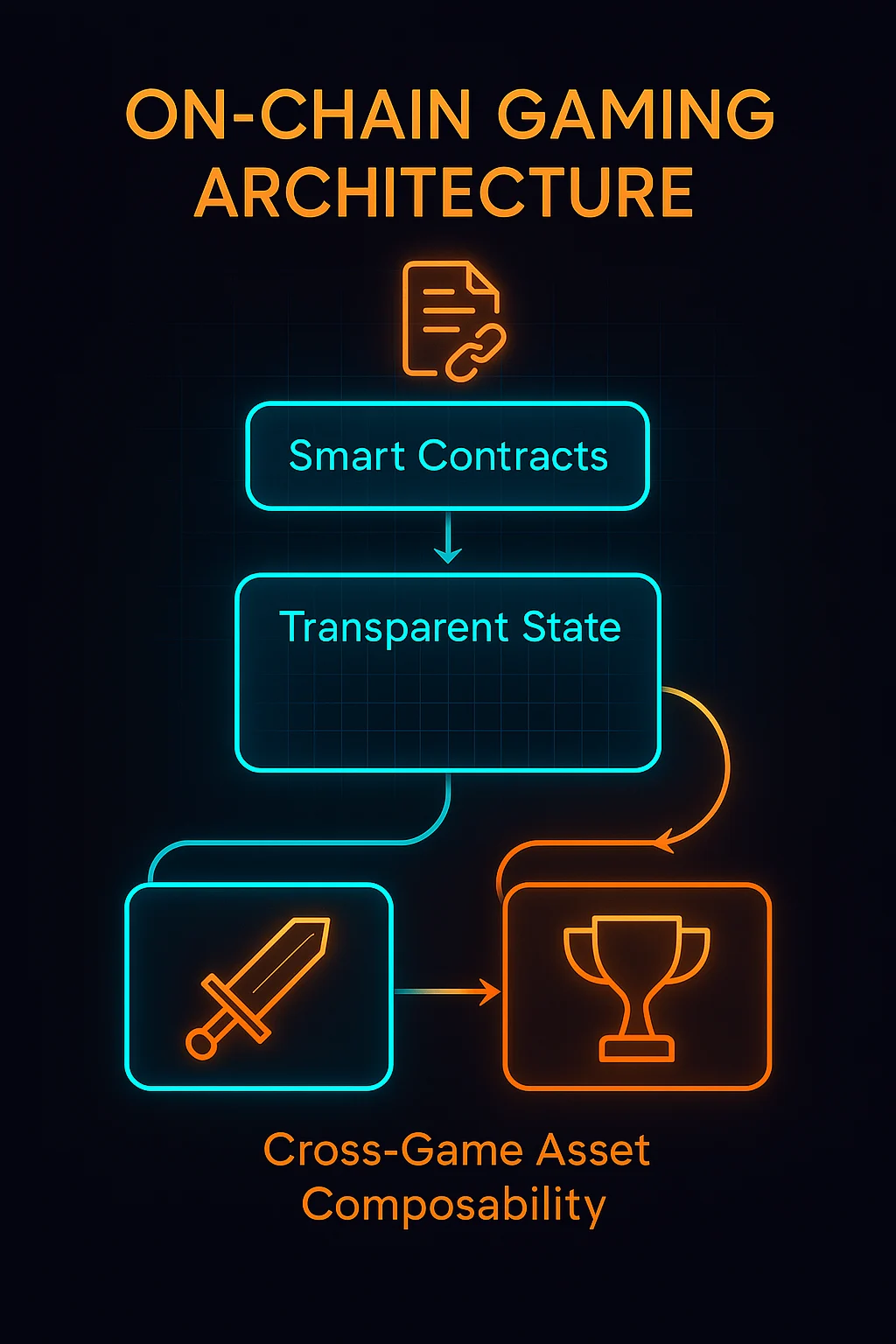
Illustration of on-chain gaming architecture, featuring smart contracts, transparent state management, and asset composability across multiple games.

Real-World Examples

  • Chess on-chain with provably fair random events and permanent game records
  • Strategy games where all moves and outcomes are cryptographically verifiable
  • Trading card games with truly scarce digital cards that work across multiple game implementations

Why Beginners Should Care

Provably fair gameplay eliminates concerns about rigged random number generation or hidden advantages for certain players.

Asset portability allows taking game items between different implementations and derivative games built by various developers.

Permanent records of achievements and gameplay history that persist even if original game developers stop supporting their games.

Related Terms: Smart Contract, Autonomous World, NFT Gaming, Verifiable Randomness

Back to Crypto Glossary

Similar Posts

  • DeFi Lending

    DeFi Lending: Decentralized Borrowing and LendingDeFi lending enables cryptocurrency borrowing and lending without traditional financial intermediaries through smart contracts. It's like peer-to-peer banking powered by code instead of humans.DeFi lending refers to decentralized finance protocols that enable users to lend and borrow cryptocurrencies through smart contracts without requiring traditional banks or credit checks. These systems operate…

  • Omnichain

    Omnichain: Universal Blockchain ConnectivityOmnichain refers to applications and protocols that operate seamlessly across multiple blockchain networks as if they were a single unified system. It's like having apps that work on every phone brand without modification.Omnichain describes systems that can operate across multiple blockchain networks simultaneously, providing unified functionality and user experiences regardless of which…

  • State Channel

    State Channel: Off-Chain Interaction Highways State channels enable instant, low-cost transactions between parties by moving interactions off-chain while maintaining blockchain security. It’s like having a private highway between two cities. A state channel is a two-way communication channel between blockchain users that enables off-chain transactions with on-chain security guarantees. Participants can transact instantly and cheaply,…

  • Rollups

    Rollups: Scaling Through Bundling Rollups process hundreds of transactions off-chain then bundle the results into single on-chain transactions. It’s like carpooling for blockchain transactions – everyone shares the gas costs. Rollups are Layer 2 scaling solutions that execute transactions off the main blockchain but post transaction data on-chain for security. They inherit the security of…

  • Layer Separation

    Layer Separation: Modular Blockchain ArchitectureLayer separation divides blockchain functionality into distinct layers that can be optimized independently. It's like having specialized departments in a company that each focus on what they do best.Layer separation refers to blockchain architectures that divide functionality into distinct layers such as consensus, execution, and data availability, enabling independent optimization and…

  • Public Ledger

    Public Ledger: Transparent Transaction Records Public ledgers record all transactions transparently where anyone can verify the complete history of asset movements. It’s like having a bank statement that everyone can read but no one can forge. A public ledger is a distributed database that records all transactions transparently, allowing anyone to verify and audit the…