
DeFi Insurance

DeFi Insurance: Protecting Against Smart Contract Risk

DeFi insurance provides coverage against smart contract failures, hacks, and protocol exploits. It’s like buying fire insurance for your digital assets in experimental financial protocols.

DeFi insurance offers protection against losses from smart contract bugs, hacks, oracle failures, and other technical risks in decentralized finance protocols. Users pay premiums to receive coverage for specific risks and amounts.

How DeFi Insurance Works

Risk assessment by insurance protocols evaluates smart contract security, team reputation, and historical performance to price coverage appropriately.

Premium payments fund insurance pools that pay out claims when covered events occur, with pricing based on perceived risk levels.

Claim verification often involves community governance or expert assessment to determine whether losses qualify for insurance payouts.
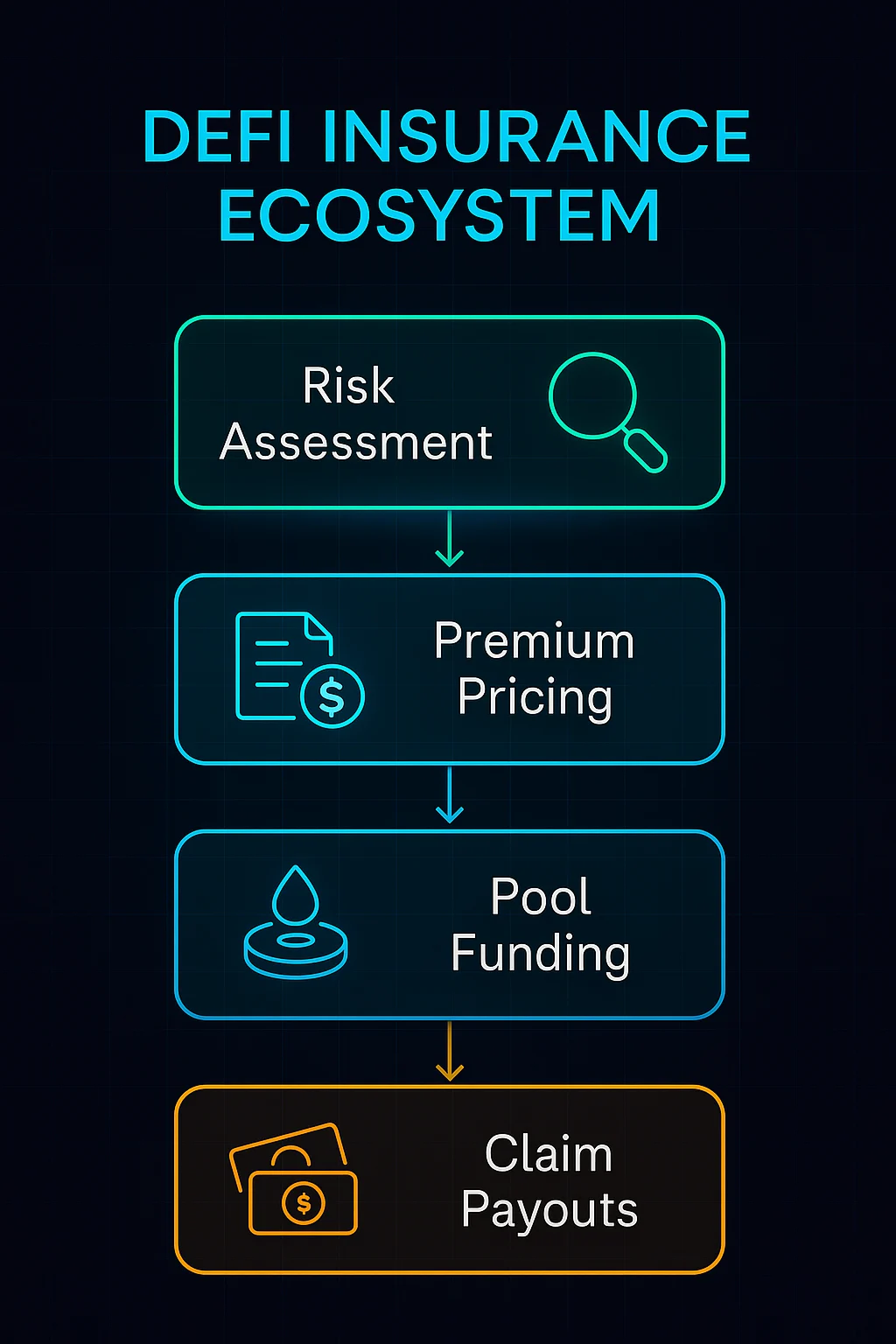
Infographic showing the DeFi insurance ecosystem: risk assessment, premium pricing, pool funding, and claim payouts

Real-World Examples

  • Nexus Mutual provides community-driven smart contract insurance coverage
  • Cover Protocol offers decentralized insurance markets for DeFi risks
  • Unslashed Finance creates insurance pools for various crypto risks

Why Beginners Should Care

Risk mitigation for experimental DeFi protocols that may have undiscovered vulnerabilities or face sophisticated attacks.

Cost considerations as insurance premiums can be expensive, sometimes offsetting potential yield gains from high-risk protocols.

Coverage limitations since insurance typically doesn’t cover market risks, impermanent loss, or user errors – only technical failures.

Related Terms: Smart Contract Risk, Protocol Security, Risk Management, Premium

Back to Crypto Glossary

Similar Posts

  • Launchpad

    Launchpad: The Crypto Startup Accelerator Launchpads are platforms that help new crypto projects raise funds and launch tokens. They’re like Kickstarter for cryptocurrencies, but with more speculation and less product delivery. A launchpad is a platform that facilitates fundraising and token launches for new cryptocurrency projects. They provide infrastructure, marketing, and community access to help…

  • Dispute Resolution

    Dispute Resolution: Solving Blockchain ConflictsDispute resolution mechanisms help resolve conflicts that arise in decentralized systems where no central authority can make binding decisions. It's like having a digital court system.Dispute resolution in blockchain systems refers to mechanisms for resolving conflicts between parties in decentralized environments where traditional legal systems may be inadequate or unavailable. These systems…

  • Modular Execution Layer

    Modular Execution Layer: Specialized Transaction Processing Modular execution layers handle transaction processing separately from consensus and data availability. It’s like having specialized assembly lines instead of one worker doing everything. A modular execution layer is a specialized blockchain component that focuses solely on processing transactions and executing smart contracts while relying on other layers for…

  • Stable Yield

    Stable Yield: Predictable DeFi Returns Stable yield refers to DeFi strategies that provide consistent returns with lower volatility than traditional yield farming. It’s like finding the boring but reliable investment in a casino full of slot machines. Stable yield strategies focus on generating consistent returns from DeFi protocols with lower risk and volatility than high-APY…

  • Conservative Investing

    Conservative Investing: Low-Risk Investment ApproachConservative investing prioritizes capital preservation and steady returns over high-risk, high-reward strategies. It's like choosing the scenic route that takes longer but is much safer than the dangerous mountain pass.Conservative investing refers to investment strategies that prioritize capital preservation and risk reduction over maximum returns, typically focusing on established assets and…

  • Appchain

    Appchain: Application-Specific Blockchains Appchains are blockchains designed for single applications or use cases rather than general-purpose smart contracts. They’re like having a dedicated highway for one type of vehicle instead of mixed traffic. An appchain is a blockchain optimized for a specific application or use case rather than supporting general-purpose smart contracts. This specialization enables…