
LayerZero

LayerZero: Omnichain Interoperability Protocol

LayerZero is an interoperability protocol that enables applications to send messages and transfer assets across different blockchains. It’s like having a universal translator for blockchain networks.

LayerZero is a cross-chain communication protocol that enables decentralized applications to operate across multiple blockchains seamlessly. It provides infrastructure for omnichain applications that can access liquidity and users across different networks.

How LayerZero Works

Message passing enables smart contracts on different chains to communicate and trigger actions without requiring users to manually bridge assets.

Ultra Light Nodes provide security verification with minimal overhead by using oracle and relayer networks rather than running full nodes for each supported chain.

Omnichain applications can deploy across multiple networks while maintaining unified state and user experience through LayerZero’s messaging infrastructure.
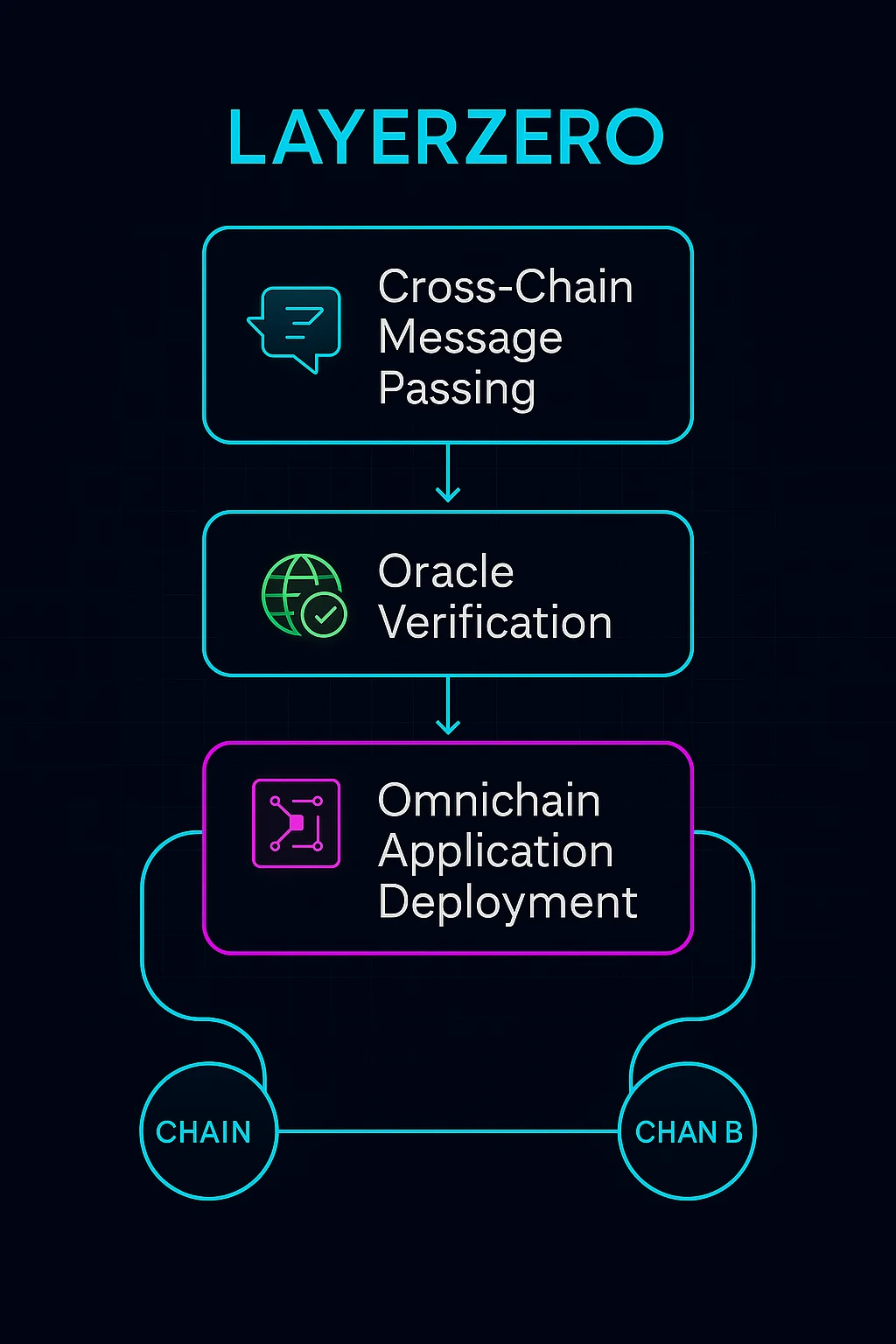
LayerZero architecture diagram showing cross-chain message passing, oracle validation, and omnichain app deployment

Real-World Examples

  • Stargate Finance provides unified liquidity across chains using LayerZero messaging
  • Radiant Capital creates omnichain lending markets through LayerZero infrastructure
  • Various DeFi protocols use LayerZero for cross-chain governance and treasury management

Why Beginners Should Care

Simplified user experience for accessing multi-chain applications without manual bridging or managing assets across different networks.

Infrastructure dependency creates centralization risks if LayerZero experiences outages or technical problems affecting dependent applications.

Expanding ecosystem enables new types of applications that weren’t possible with single-chain limitations or manual bridging requirements.

Related Terms: Cross-Chain Protocol, Omnichain, Message Passing, Interoperability

Back to Crypto Glossary

Similar Posts

  • Airdrop

    Airdrop: Free Tokens From the Sky Airdrops distribute free tokens to wallet addresses, usually to reward early users or generate buzz for new projects. Some are worth pennies, others change lives. An airdrop is the distribution of free cryptocurrency tokens to wallet addresses, typically as a marketing strategy, reward for early adoption, or method of…

  • Challenge Period

    Challenge Period: Dispute Resolution WindowA challenge period is a time window during which participants can dispute or challenge proposed changes before they become final. It's like a cooling-off period for important decisions.A challenge period is a predetermined time frame that allows network participants to dispute transactions, withdrawals, or governance proposals before they become irreversible. This mechanism…

  • Synthetic Yield

    Synthetic Yield: Engineered Return Products Synthetic yield creates artificial return streams through derivatives and structured products rather than underlying asset productivity. It’s like manufacturing dividends through financial engineering. Synthetic yield refers to returns generated through derivative strategies, structured products, or financial engineering rather than from the underlying asset’s inherent productivity. These products create yield where…

  • Market Cycle

    Market Cycle: Recurring Price PatternsMarket cycles are recurring patterns of price movements in cryptocurrency markets driven by investor psychology and market dynamics. They're like seasons that markets go through repeatedly over time.Market cycles refer to recurring patterns of price appreciation and depreciation in cryptocurrency markets driven by alternating periods of optimism and pessimism among investors. These…

  • Collection

    Collection: Grouped NFT SeriesA collection is a group of related NFTs that share common themes, artwork, or attributes. It's like a series of trading cards or stamps that belong to the same set.A collection refers to a group of related NFTs that share common characteristics, themes, or attributes, typically created by the same artist or…

  • Gas Limit

    Gas Limit: Setting Your Transaction Budget Gas limit is the maximum amount of gas you’re willing to spend on a transaction. Set it too low and your transaction fails. Set it too high and you overpay for simple operations. Gas limit is the maximum amount of computational work (measured in gas units) that a user…