
DeFi Insurance

DeFi Insurance: Protecting Against Smart Contract Risk

DeFi insurance provides coverage against smart contract failures, hacks, and protocol exploits. It’s like buying fire insurance for your digital assets in experimental financial protocols.

DeFi insurance offers protection against losses from smart contract bugs, hacks, oracle failures, and other technical risks in decentralized finance protocols. Users pay premiums to receive coverage for specific risks and amounts.

How DeFi Insurance Works

Risk assessment by insurance protocols evaluates smart contract security, team reputation, and historical performance to price coverage appropriately.

Premium payments fund insurance pools that pay out claims when covered events occur, with pricing based on perceived risk levels.

Claim verification often involves community governance or expert assessment to determine whether losses qualify for insurance payouts.
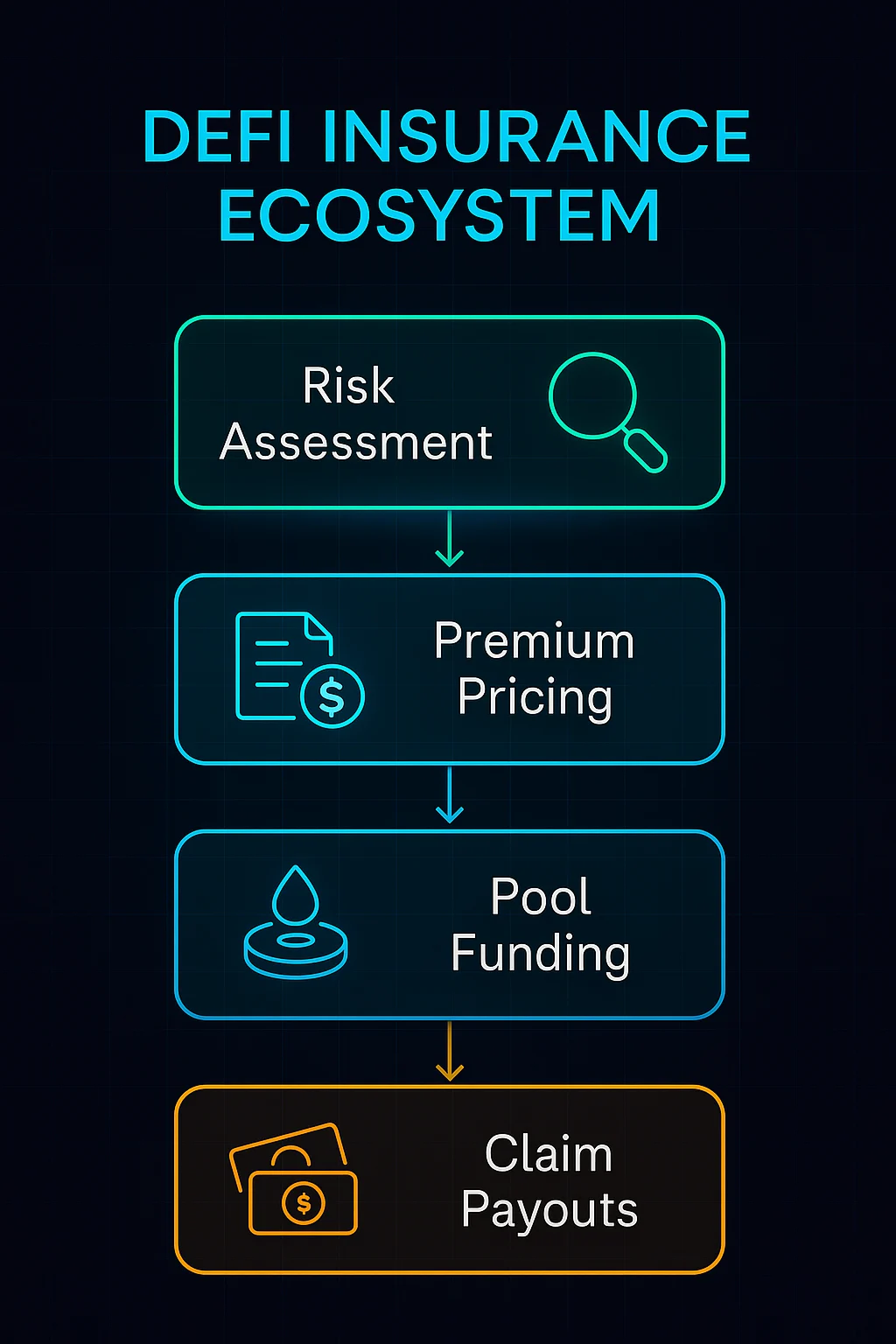
Infographic showing the DeFi insurance ecosystem: risk assessment, premium pricing, pool funding, and claim payouts

Real-World Examples

  • Nexus Mutual provides community-driven smart contract insurance coverage
  • Cover Protocol offers decentralized insurance markets for DeFi risks
  • Unslashed Finance creates insurance pools for various crypto risks

Why Beginners Should Care

Risk mitigation for experimental DeFi protocols that may have undiscovered vulnerabilities or face sophisticated attacks.

Cost considerations as insurance premiums can be expensive, sometimes offsetting potential yield gains from high-risk protocols.

Coverage limitations since insurance typically doesn’t cover market risks, impermanent loss, or user errors – only technical failures.

Related Terms: Smart Contract Risk, Protocol Security, Risk Management, Premium

Back to Crypto Glossary

Similar Posts

  • Liquidity Lock

    Liquidity Lock: Securing Trading LiquidityLiquidity lock prevents withdrawal of trading liquidity for specified time periods to ensure market stability and prevent rug pulls. It's like putting trading funds in a time-locked safe that can't be opened early.Liquidity lock refers to mechanisms that prevent withdrawal of liquidity provider tokens or trading pair liquidity for predetermined time…

  • Restaking

    Restaking: Double-Duty for Staked Assets Restaking allows already-staked cryptocurrency to secure additional networks and earn extra rewards. It’s like getting paid twice for the same job, but with twice the risk. Restaking is a mechanism that allows staked cryptocurrency to simultaneously secure multiple networks or protocols, earning additional rewards beyond the base staking yield. Validators…

  • Node

    Node: The Network’s Backbone Nodes are individual computers that maintain copies of the blockchain and enforce network rules. They’re the distributed infrastructure that makes cryptocurrency possible. A node is a computer that participates in a blockchain network by maintaining a copy of the distributed ledger and relaying transactions. Nodes validate transactions, store blockchain history, and…

  • Sharding

    Sharding: Splitting Networks for Speed Sharding divides blockchain networks into smaller pieces that process transactions in parallel. It’s like adding more checkout lanes at the grocery store – same capacity, faster service. Sharding is a scaling technique that splits a blockchain network into smaller, parallel chains called shards that process transactions independently. Each shard handles…

  • Social Engineering

    Social Engineering: Manipulating People for AccessSocial engineering involves manipulating people psychologically to reveal sensitive information or perform actions that compromise security. It's hacking humans instead of computers.Social engineering refers to psychological manipulation techniques used to trick people into revealing confidential information, performing actions, or making security mistakes that benefit attackers. These attacks exploit human psychology rather…

  • Algorithmic Stablecoin

    Algorithmic Stablecoin: Code-Controlled Price StabilityAlgorithmic stablecoins maintain price stability through automated mechanisms rather than asset backing. They're like self-driving cars for currency stability – controlled by code instead of human intervention.An algorithmic stablecoin is a cryptocurrency that maintains price stability through automated protocols and market mechanisms rather than collateral backing. These systems use smart contracts to…