
Stable Yield

Stable Yield: Predictable DeFi Returns

Stable yield refers to DeFi strategies that provide consistent returns with lower volatility than traditional yield farming. It’s like finding the boring but reliable investment in a casino full of slot machines.

Stable yield strategies focus on generating consistent returns from DeFi protocols with lower risk and volatility than high-APY farming opportunities. These approaches prioritize capital preservation and predictable income over maximum yield extraction.

How Stable Yield Works

Stablecoin strategies use dollar-pegged assets to eliminate token price volatility while earning yield from lending, liquidity provision, or protocol rewards.

Blue-chip protocol focus concentrates on established, well-audited platforms with proven track records rather than experimental high-yield opportunities.

Risk management through diversification, position sizing, and avoiding leverage or complex strategies that could amplify losses.
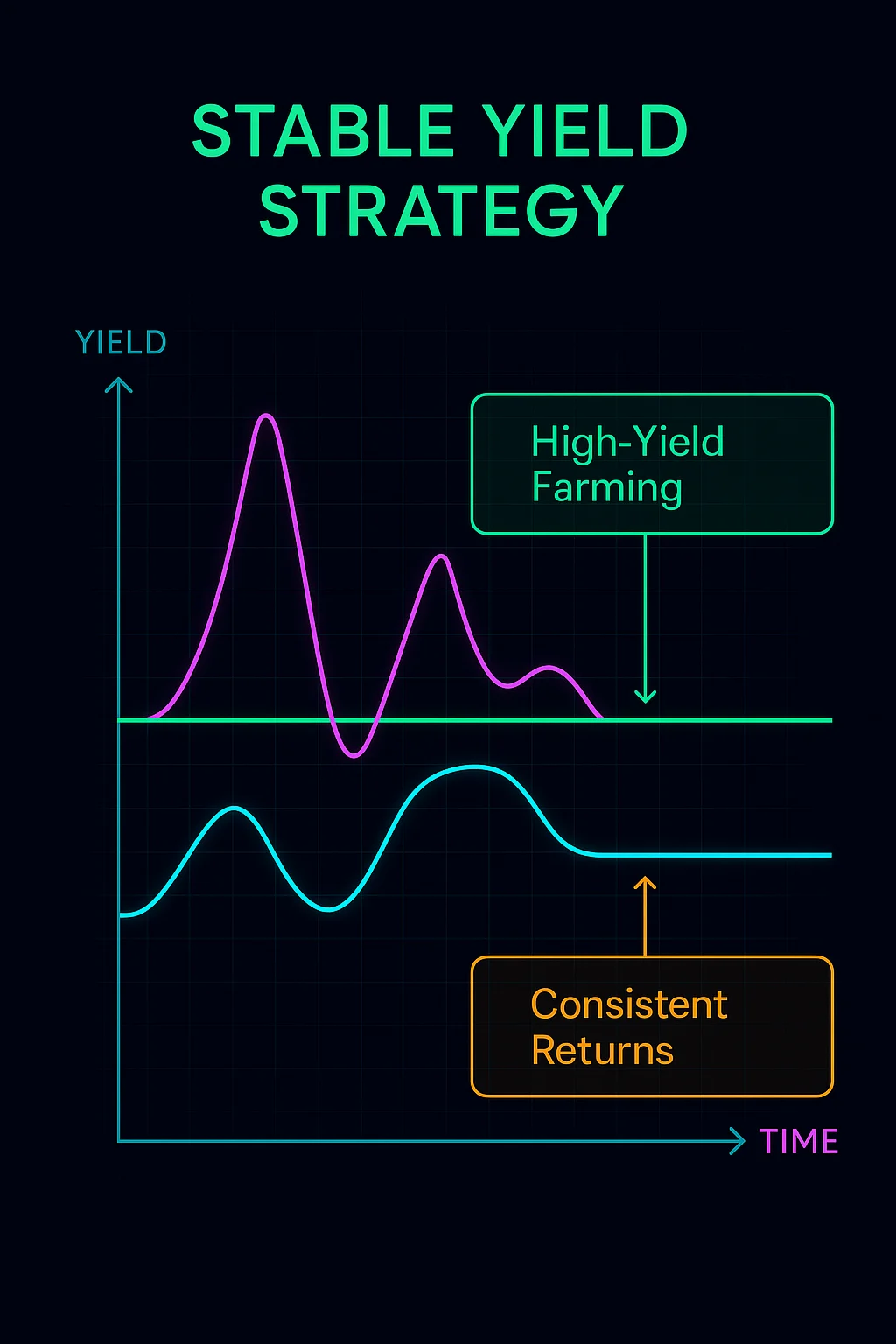
Infographic comparing stable yield strategies and high-yield farming with yield performance over time

Real-World Examples

  • USDC lending on Aave or Compound for steady 3-5% returns without token price risk
  • Curve stablecoin pools providing consistent yields from trading fees and CRV rewards
  • Treasury bill protocols offering on-chain access to government bond yields

Why Beginners Should Care

Sustainable returns that don’t depend on unsustainable token emissions or speculative trading activity for yield generation.

Lower complexity compared to active yield farming strategies that require constant monitoring and position management.

Inflation hedge potential as stable yields often exceed traditional savings account rates while maintaining dollar exposure.

Related Terms: Yield Farming, Stablecoin, Risk Management, Capital Preservation

Back to Crypto Glossary

Similar Posts

  • Restaking

    Restaking: Double-Duty for Staked Assets Restaking allows already-staked cryptocurrency to secure additional networks and earn extra rewards. It’s like getting paid twice for the same job, but with twice the risk. Restaking is a mechanism that allows staked cryptocurrency to simultaneously secure multiple networks or protocols, earning additional rewards beyond the base staking yield. Validators…

  • Bitcoin (BTC)

    Bitcoin (BTC): Digital Money That Banks Can’t Control Bitcoin isn’t just another investment – it’s the financial revolution that started it all. When traditional banks failed us in 2008, Bitcoin emerged as the answer. Bitcoin is digital money that operates without banks, governments, or middlemen controlling it. Think of it as cash for the internet…

  • Ring Signatures

    Ring Signatures: Anonymous Group AuthorizationRing signatures enable one member of a group to create signatures on behalf of the group without revealing which specific member signed. It's like having a group of people where any one can speak for the group anonymously, but observers know the statement came from a legitimate group member.Ring signatures are…

  • Collateral Ratio

    Collateral Ratio: Loan Security MeasurementCollateral ratio measures the value of assets securing a loan compared to the loan amount. It's like the down payment percentage when buying a house with a mortgage.Collateral ratio is the percentage relationship between the value of collateral assets and the amount borrowed against them. Higher ratios provide more security for lenders…

  • Light Node

    Light Node: Efficient Blockchain ParticipationA light node participates in blockchain networks without storing the complete blockchain history. It's like having a summary of the news instead of keeping every newspaper ever published.A light node is a type of blockchain node that maintains network connectivity and basic verification capabilities without storing the complete blockchain history or…

  • Wallet Address

    Wallet Address: Your Cryptocurrency Bank Account NumberA wallet address is a unique identifier that enables receiving cryptocurrency payments. It's like a bank account number that others can send money to, but it's generated from your private keys.A wallet address is a unique alphanumeric string that serves as a destination for cryptocurrency transactions. These addresses are derived…